
dbt Labs dbt-Analytics-Engineering dbt Analytics Engineering Certification Exam Exam Practice Test
Total 65 questions
dbt Analytics Engineering Certification Exam Questions and Answers
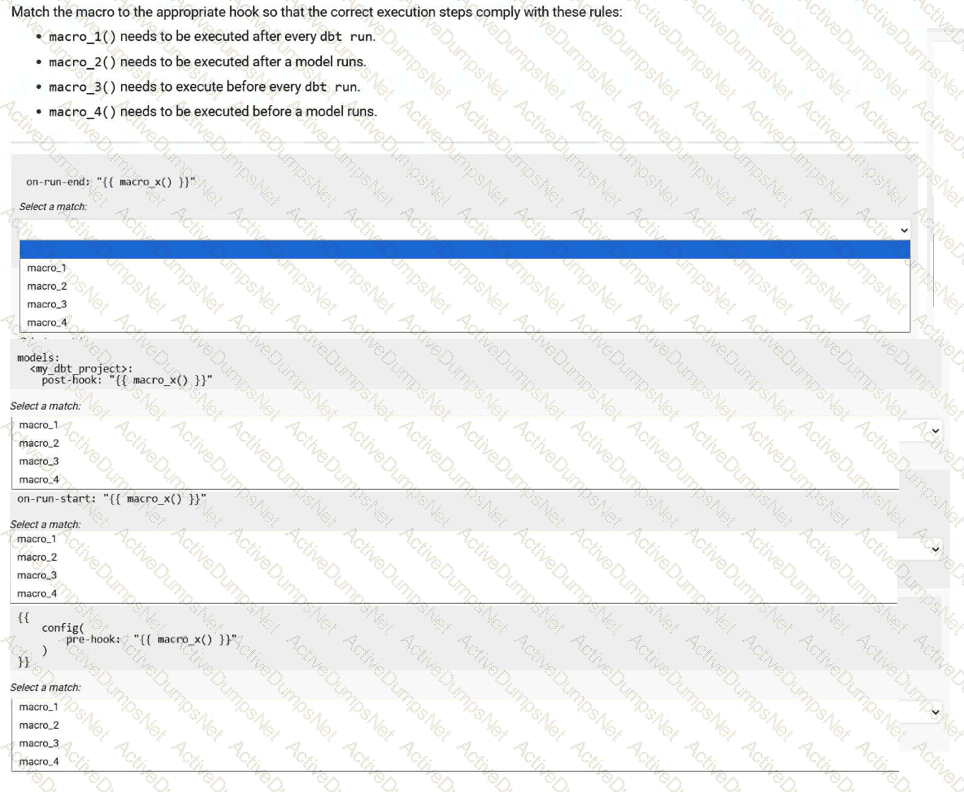
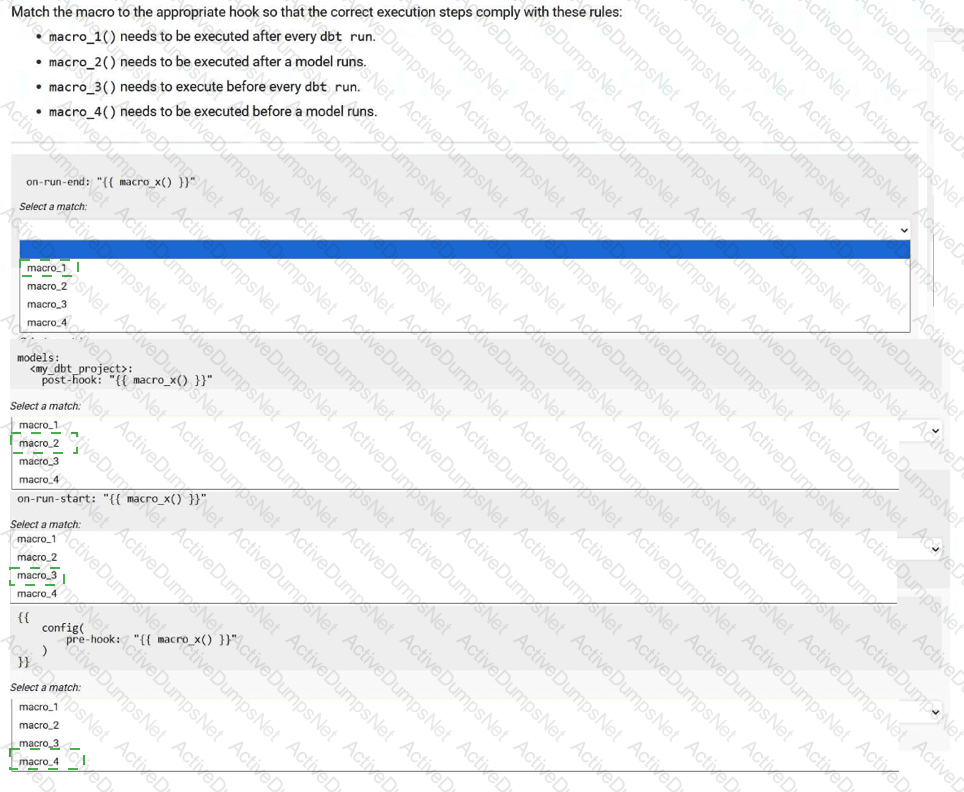
Match the macro to the appropriate hook so that the correct execution steps comply with these rules:
macro_1() needs to be executed after every dbt run.
macro_2() needs to be executed after a model runs.
macro_3() needs to execute before every dbt run.
macro_4() needs to be executed before a model runs.
13. An analyst on your team has informed you that the business logic creating the is_active column of your stg_users model is incorrect.
You update the column logic to:
case
when state = 'Active'
then true
else false
end as is_active
Which test can you add on the state column to support your expectations of the source data? Choose 1 option.
You have created a model called stg_tasks and now you need to implement tests.
You provide this in schema.yml:
version: 2
models:
- name: stg_tasks
columns:
- name: completed_at
tests:
- not_null:
- config:
where: "state = 'completed'"
You receive this compilation error:
[WARNING]: Did not find matching node for patch with name 'stg_tasks' in the 'models' section of file 'models/example/schema.yml'
How can you change the configuration on the not_null test to fix this compiler error?
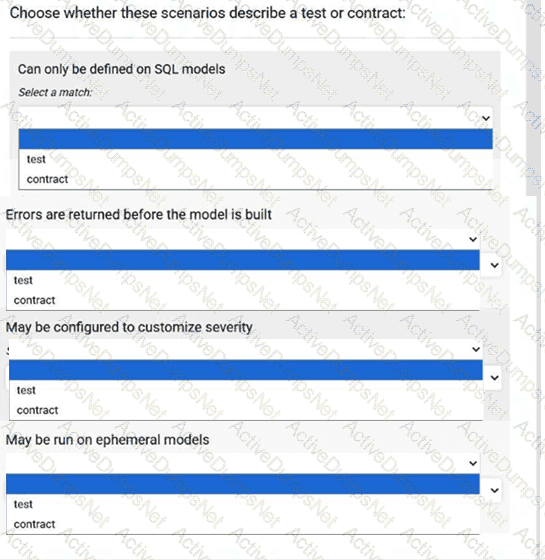
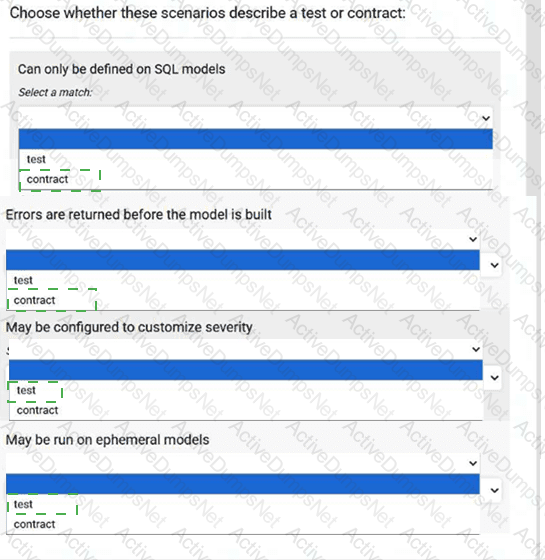
Choose whether these scenarios describe a test or a contract:
What must happen before you can build models in dbt?
Choose 1 option.
You wrote this test against your fct_orders model to confirm status filters were properly applied by a parent model:
{{
config(
enabled=true,
severity='error'
)
}}
select *
from {{ ref('fct_orders') }}
where status_code = 13
Which statement about this test is true?
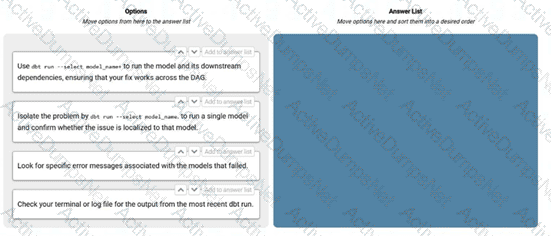
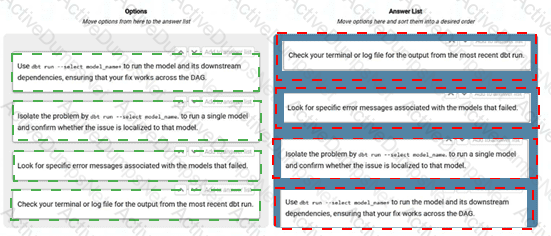
A dbt run failed with an error message.
Order these steps to fix your pipeline.
Your model has a contract on it.
When renaming a field, you get this error:
This model has an enforced contract that failed.
Please ensure the name, data_type, and number of columns in your contract match
the columns in your model's definition.
| column_name | definition_type | contract_type | mismatch_reason |
|-------------|------------------|----------------|-----------------------|
| ORDER_ID | TEXT | TEXT | missing in definition |
| ORDER_KEY | TEXT | | missing in contract |
Which two will fix the error? Choose 2 options.
Is this materialization supported by Python models in dbt?
Ephemeral
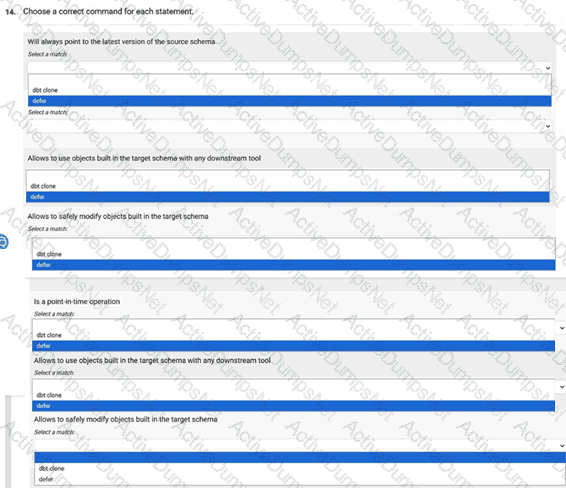
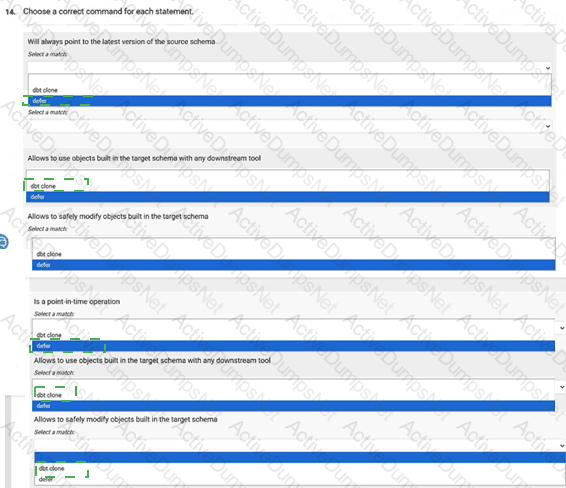
Choose a correct command for each statement.
You have just executed dbt run on this model:
select * from {{ source("{{ env_var('input') }}", 'table_name') }}
and received this error:
Compilation Error in model my_model
expected token ':', got '}'
line 14
{{ source({{ env_var('input') }}, 'table_name') }}
How can you debug this?
Consider this DAG:
app_data.detail_categories -> stg_detail_categories -> skills_with_details
app_data.details -> stg_details -> lessons_with_details
What will support making this DAG more modular? Choose 1 option.
Which two are true for a dbt retry command?
Choose 2 options.
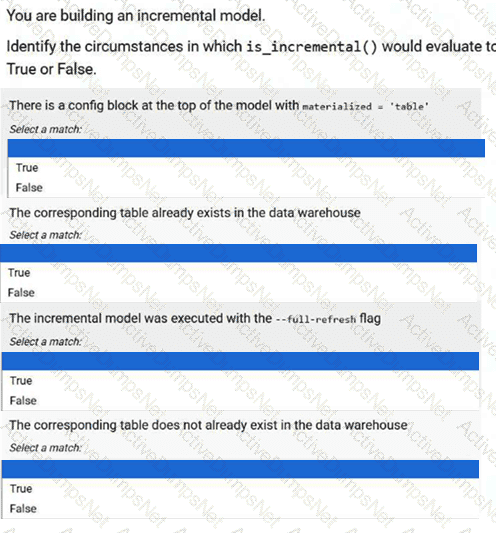
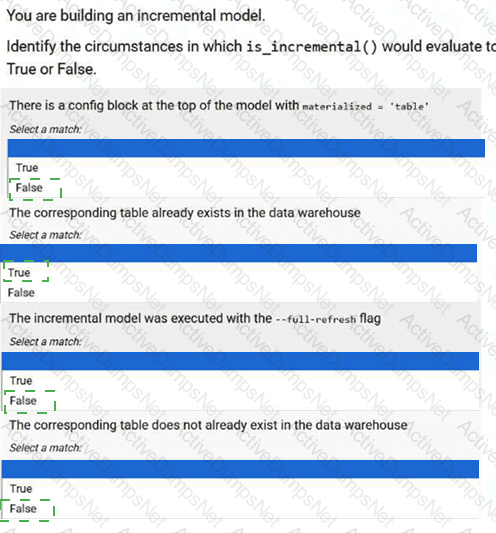
You are building an incremental model.
Identify the circumstances in which is_incremental() would evaluate to True or False.
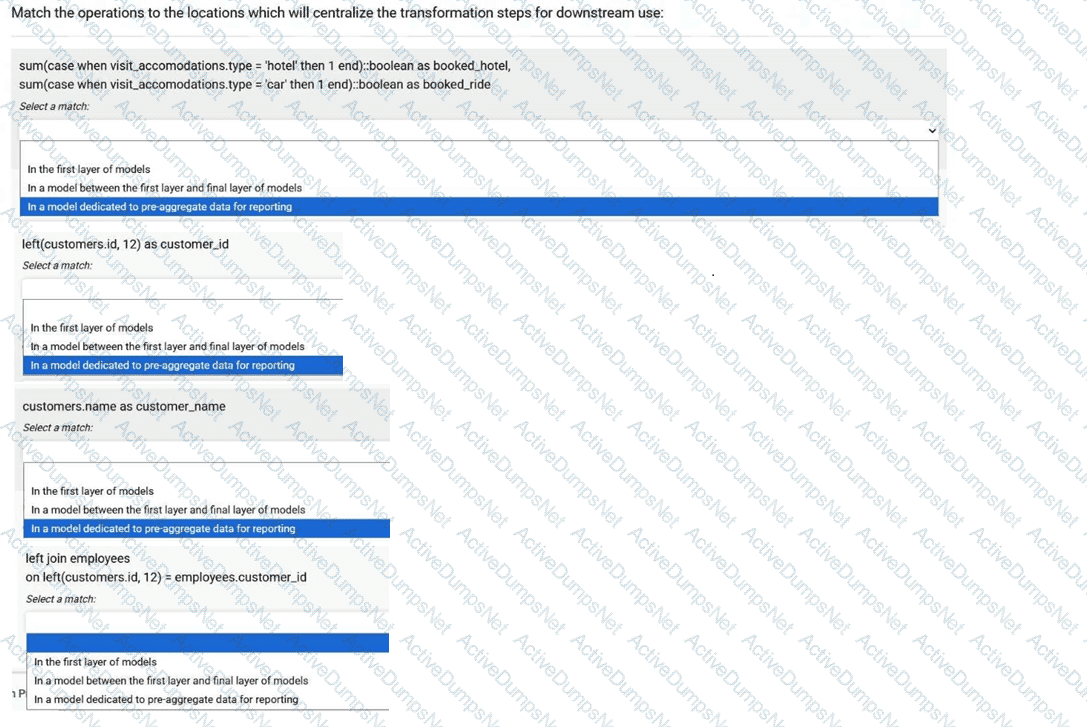
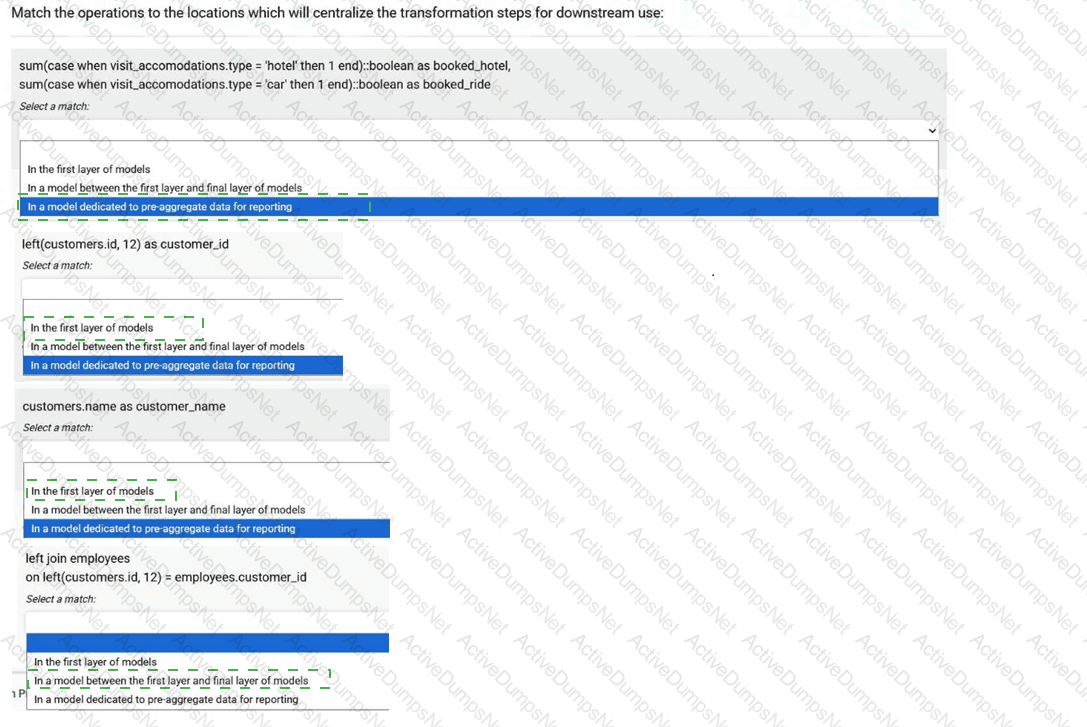
Examine the code:
select
left(customers.id, 12) as customer_id,
customers.name as customer_name,
case when employees.employee_id is not null then true else false end as is_employee,
event_signups.event_name,
event_signups.event_date,
sum(case when visit_accomodations.type = 'hotel' then 1 end)::boolean as booked_hotel,
sum(case when visit_accomodations.type = 'car' then 1 end)::boolean as booked_ride
from customers
-- one customer can sign up for many events
left join event_signups
on left(customers.id, 12) = event_signups.customer_id
-- an event signup for a single customer can have many types of accommodations booked
left join visit_accomodations
on event_signups.signup_id = visit_accomodations.signup_id
and left(customers.id, 12) = visit_accomodations.customer_id
-- an employee can be a customer
left join employees
on left(customers.id, 12) = employees.customer_id
group by 1, 2
A developer imports a package from a private repository called timeformat for use within their project.
Which statement is correct? Choose 1 option.
Options:
16. Your tests folder looks like:
tests
└── generic
└── furniture_customers_test.sql
macro_stg_tpch_orders_assert_pos_price.sql
macro_stg_tpch_suppliers_assert_pos_acct_bal.sql
stg_tpch_orders_assert_positive_price.sql
You run the command:
dbt test --select 'test_type:singular'
What will the command run?
Options from screenshot:
Total 65 questions