
Scrum PSPO-I Professional Scrum Product Owner (PSPO I) Exam Exam Practice Test
Professional Scrum Product Owner (PSPO I) Exam Questions and Answers
In order to maximize the value of the product, a Product Owner needs awareness of the following: (choose the best answer)
Options:
Competitive research.
Customer feedback.
Product vision.
Forecasting and feasibility.
All of the above.
None of the above.
Answer:
EExplanation:
In order to maximize the value of the product, a Product Owner needs awareness of the following:
Competitive research. The Product Owner should be aware of the competitive landscape and the market trends that affect the product. They should know who are the competitors, what are their strengths and weaknesses, how do they differentiate themselves, and what are their strategies and goals. This can help the Product Owner to identify opportunities, threats, and gaps in the market, and to position the product accordingly.
Customer feedback. The Product Owner should be aware of the customer needs, preferences, expectations, and satisfaction with the product. They should collect and analyze feedback from various sources, such as surveys, interviews, reviews, analytics, etc. This can help the Product Owner to validate assumptions, test hypotheses, measure outcomes, and discover insights that can inform the product decisions and priorities.
Product vision. The Product Owner should be aware of the product vision, which is a clear and compelling statement of the desired future state of the product. The product vision describes the purpose, value proposition, target audience, and key features of the product. It also aligns with the organizational vision and mission. This can help the Product Owner to communicate and inspire the stakeholders, to guide and focus the Scrum Team, and to evaluate and adjust the product direction.
Forecasting and feasibility. The Product Owner should be aware of the forecasting and feasibility of the product. They should estimate and plan the scope, time, cost, quality, and risk of delivering the product. They should also assess the technical, operational, legal, ethical, and social feasibility of developing and releasing the product. This can help the Product Owner to optimize the value of the work of the Scrum Team, to manage expectations and dependencies, and to handle uncertainties and changes.
What is the accountability of the Product Owner during Sprint 0?
(choose the best answer)
Options:
Determine the composition of the Scrum Team to meet the release plan.
There is no such thing as Sprint 0.
Create the overall release plan to ensure that organizational goals are met.
Make sure enough Product Backlog items are refined to fill the first 3 Sprints.
Gathering, eliciting, and analyzing the requirements to build the Product Backlog.
Answer:
BExplanation:
Sprint 0 is a term that some organizations use to describe a phase of work before the first official Sprint, where they do some upfront planning, design, architecture, or analysis1. However, this term is not consistent with the Scrum framework, which does not prescribe any pre-Sprint activities or phases2. Scrum starts with a Product Backlog that contains at least one valuable and feasible Product Goal, and enough Product Backlog items to initiate the first Sprint[3][3] . The Product Owner is accountable for maximizing the value of the product and the work of the Developers, and for managing the Product Backlog4. The Product Owner does not have any specific accountability during Sprint 0, because Sprint 0 is not a part of Scrum.
Who must attend the Daily Scrum?
(choose the best answer)
Options:
The Scrum Master and Product Owner.
The Developers and Scrum Master.
The Developers.
The Developers and Product Owner.
The Scrum Team.
Answer:
CTrue or False: The Scrum Team is accountable for creating a valuable increment every Sprint.
Options:
True
False
Answer:
AExplanation:
The Scrum Team is accountable for creating a valuable increment every Sprint. The Increment is the sum of all Product Backlog items Done during a Sprint and the value of all the previous Increments.The entire Scrum Team is accountable for creating a valuable and useful Increment every Sprint1.The Product Owner is responsible for maximizing the value of the product resulting from the work of the Scrum Team1.The Developers are responsible for creating a Done Increment that meets the Sprint Goal1.The Scrum Master is responsible for establishing Scrum as defined in the Scrum Guide and helping everyone understand Scrum theory, practices, rules, and values1.References:
Scrum Guide
What is an Increment and how Does it Connect with the other Elements of Scrum?
The Professional Product Owner
Who has the final decision about the order of items in the Product Backlog?
(choose the best answer)
Options:
The Scrum Master.
The Stakeholders.
The Scrum Team.
The Developers.
The Product Owner.
Answer:
DExplanation:
In Scrum, the Product Owner is responsible for maximizing the value of the product resulting from the work of the Development Team. One of the primary ways the Product Owner does this is by managing the Product Backlog, which includes clearly expressing Product Backlog items, ordering the items to best achieve goals and missions, and ensuring that the Product Backlog is visible, transparent, and clear to all. This means that the Product Owner has the final authority on the order of items in the Product Backlog, as they are best positioned to understand the strategic and market value of the work to be done.
The Scrum Guide and the Professional Scrum Product Owner™ (PSPO I) study materials, specifically the sections on ‘Managing Products with Agility’ and ‘Understanding and Applying the Scrum Framework’, which outline the accountabilities of the Product Owner in managing the Product Backlog
Several Sprints into a project, the Product Owner tells the Scrum Master that a key stakeholder
just started using the product. The stakeholder is unhappy with the quality of the product. What
are two good options for the Scrum Master?
(choose the best two answers)
Options:
Coach the Product Owner on how to talk with the Developers about thisconcern.
Wait to bring this up until the Sprint Retrospective.
Explain to the Product Owner that it is up to the Developers to decide onacceptable quality standards.
Encourage the Product Owner to put quality specifications on the ProductBacklog and express the stakeholder ' s concern to the Developers.
Bring the concern to the testers to improve how the Product is verified.
Answer:
A, DExplanation:
If a stakeholder is unhappy with the quality of the product, the Scrum Master can coach the Product Owner on how to effectively communicate this concern to the Developers1.The Scrum Master can also encourage the Product Owner to put quality specifications on the Product Backlog1.This allows the Developers to understand the stakeholder’s expectations and work towards meeting them1.The Developers are responsible for building quality into the product, but the stakeholders (through the Product Owner) are responsible for setting what is expected in terms of product and process quality1.
An organization has decided to adopt Scrum, but management wants to change the
terminology to fit with terminology already used. What will likely happen if this is done?
(choose the best answer)
Options:
Without a new vocabulary as a reminder of the change, very little change mayactually happen.
The organization may not understand what has changed within Scrum and thebenefits of Scrum may be lost.
Management may feel less anxious.
All answers apply.
Answer:
DScrum requires that the Product Owner must use which of the following techniques?
(Choose the best answer)
Options:
Feature burn-up.
There is no required technique.
Critical Path Analysis.
Burndown chart.
Answer:
BExplanation:
The correct answer isB.
Scrum does not require the Product Owner to use any specific technique or reporting tool. The Scrum Guide defines accountabilities, events, artifacts, and commitments, but it does not prescribe tools such as burn-up charts, burndown charts, or Critical Path Analysis.
The Product Owner is accountable for maximizing value and for effective Product Backlog management, but how this is done can vary depending on the context. Techniques like burn-up charts or burndown charts may be useful, but they are optional and not mandatory in Scrum.
Why the other options are incorrect:
A. Feature burn-up— may be useful, but Scrum does not require it.
C. Critical Path Analysis— belongs more to traditional project management and is not a Scrum requirement.
D. Burndown chart— commonly used by some teams, but not required by Scrum.
When is a Product Backlog item considered complete?
(choose the best answer)
Options:
When the item has gained product sponsor approval.
When the item passes all acceptance criteria.
When the item meets the Definition of Done.
At the end of the Sprint.
Answer:
CExplanation:
The Definition of Done is a shared understanding of what it means for work to be complete, and ensures transparency of the quality of the work done1. A Product Backlog item is considered complete when it meets the Definition of Done, which means that it is usable and potentially releasable, and that it meets the quality standards set by the Scrum Team and the stakeholders2. The other options are not sufficient to determine the completeness of a Product Backlog item, as they may not reflect the actual value and quality of the product.
Which two ways of creating Scrum Teams are consistent with Scrum ' s values?
(choose the best two answers)
Options:
Managers personally re-assign current subordinates to new teams.
The Chief Product Owner determines the new team structures and assignments.
Managers collaborate to assign individuals to specific teams.
Existing teams propose how they would like to go about organizing into the newstructure.
Bring all the people together and let them organize into Scrum Teams.
Answer:
D, EExplanation:
The Scrum values are commitment, focus, openness, respect, and courage1. These values are embodied by the Scrum Team, which is a self-managing unit that organizes its own work and delivers a valuable product2. The Scrum Team consists of one Scrum Master, one Product Owner, and Developers[3][3] . The best way to create Scrum Teams is to respect the self-management and empowerment of the people who will do the work, and let them decide how to organize themselves into Scrum Teams. This can be done by bringing all the people together and letting them form Scrum Teams based on their skills, interests, and alignment with the product vision4. Alternatively, existing teams can propose how they would like to reorganize themselves into Scrum Teams, based on their feedback and experience5. These ways of creating Scrum Teams are consistent with the Scrum values, as they foster commitment, focus, openness, respect, and courage among the team members and stakeholders. The other options are not consistent with the Scrum values, as they involve managers or the Chief Product Owner imposing their decisions on the team members, which undermines their self-management and empowerment, and creates a lack of trust and collaboration.
You are the Scrum Master of a new, to be developed Product. Development is going to require
45 people. What is a good first question for you to suggest the group thinks about when forming into teams?
(choose the best answer)
Options:
What is the right mixture of senior and junior people on each team?
Who are the subject matter experts on each team?
Who are going to be the team leads?
How will we make sure all teams have the right amount of expertise?
Answer:
DExplanation:
When forming a Scrum team, it is important to ensure that the team has all the skills and knowledge necessary to deliver a working product12. The Scrum team should be cross-functional and self-managing, without relying on external experts or team leads34. Therefore, the question of how to make sure all teams have the right amount of expertise is a good first question to consider when forming into teams.
Who is accountable for managing the progress of work during a Sprint?
(choose the best answer)
Options:
The Developers.
The most junior member of the team.
The Scrum Master.
The Product Owner.
Answer:
AExplanation:
The Developers are accountable for managing the progress of work during a Sprint, as they are the ones who plan, execute, and deliver the work. The Scrum Guide states that " The Developers are the people in the Scrum Team that are committed to creating any aspect of a usable Increment each Sprint. " 1 The Developers are also responsible for conducting the Daily Scrum, a 15-minute event for the Developers to synchronize activities and create a plan for the next 24 hours.1 The Developers are self-managing, which means they decide how best to accomplish their work, rather than being directed by others outside the Scrum Team.1
1: The Scrum Guide2, page 7
2: The Scrum Guide
True or False: A Product Owner with multiple teams working on one product should maintain separate Product Backlogs for each team.
Options:
True
False
Answer:
BExplanation:
In Scrum, there is only one product and one Product Backlog for a given product. The Product Backlog is the single source of truth for the Scrum Team and the stakeholders. It contains all the requirements, features, functions, enhancements, fixes, and anything else that can deliver value to the customers and users of the product. The Product Backlog is ordered by the Product Owner based on the product vision, goals, and value.
Having multiple Product Backlogs for one product would create confusion, duplication, inconsistency, and waste. It would also make it harder to align the Scrum Teams and the stakeholders on the same product direction and priorities. Therefore, a Product Owner with multiple teams working on one product should not maintain separate Product Backlogs for each team.
The Product Owner is accountable for maximizing the value of the product resulting from the work of the Scrum Team. The Product Owner is responsible for managing and refining the Product Backlog, collaborating with the stakeholders and the Developers, and ordering the items in a way that best achieves goals and missions. The Product Owner represents the interests of everyone with a stake in the product and ensures that the Scrum Team works on the right things at the right time.
In some cases, when there are multiple Scrum Teams working on one product, it may be necessary to have some form of scaling or coordination mechanism to ensure alignment and collaboration among the teams. However, this does not mean that there should be multiple Product Owners or Product Backlogs. Instead, there should be ways to facilitate communication, feedback, integration, and transparency among the teams and with the Product Owner. For example, some frameworks or practices that can help with scaling Scrum are Nexus, LeSS, SAFe, or Scrum of Scrums.
At the end of a Sprint, a Product Backlog item worked on during the Sprint does not meet the
Definition of Done. What two things should happen with the undone Product Backlog item?
(choose the best two answers)
Options:
Review the item, add the done part of the estimate to the velocity and create aStory for the remaining work.
If the stakeholders agree, the Product Owner can accept it and release it to theusers.
Do not include the item in the Increment this Sprint.
Put it on the Product Backlog for the Product Owner to decide what to do with it.
Answer:
C, DExplanation:
According to the Scrum Guide, if a Product Backlog item does not meet the Definition of Done, it should not be included in the Increment for the Sprint1. The item is considered unfinished and therefore cannot be part of the Increment that may be released or presented as ‘Done’. The undone work should be re-estimated and put back on the Product Backlog for the Product Owner to prioritize for future Sprints2. This ensures transparency and maintains the integrity of the Increment’s quality.
The Scrum Guide provides clear guidance on handling undone work and emphasizes the importance of the Definition of Done as a quality standard for the Increment1. The Professional Scrum Product Owner™ (PSPO I) materials also align with this approach, underscoring the Product Owner’s role in managing the Product Backlog and ensuring that only ‘Done’ items are considered for release
When does a Sprint conclude?
(choose the best answer)
Options:
When all the tasks are completed by the Developers.
When the Sprint Retrospective is complete.
When all Product Backlog items meet their Definition of Done.
When the Product Owner decides enough has been delivered to meet the SprintGoal.
Answer:
DExplanation:
A Sprint is a time-boxed period when a Scrum Team works to complete a set amount of work that delivers value to the customer1.A Sprint concludes when the time-box expires, regardless of whether all the tasks, Product Backlog items, or Definition of Done arecompleted or not23.The Product Owner has the authority to cancel a Sprint if they determine that the Sprint Goal is obsolete or the work done is no longer valuable1. Therefore, the Product Owner decides when enough has been delivered to meet the Sprint Goal, and the Sprint ends accordingly.
Who determines how work is performed during the Sprint?
(choose the best answer)
Options:
The Scrum Master.
The Scrum Team.
Team manager.
The Developers
Subject matter experts.
Answer:
DExplanation:
The Developers are the people in the Scrum Team who are committed to creating any aspect of a usable Increment each Sprint. The Developers are accountable for organizing and managing their work.Only the Developers can decide how to perform the work during the Sprint1. The Developers plan the work necessary to create an Increment that meets the Definition of Done during the Sprint Planning event. This is often done by decomposing Product Backlog items into smaller work items of one day or less.How this is done is at the sole discretion of the Developers2.The Developers also inspect their progress toward the Sprint Goal and adapt their plan during the Daily Scrum1.The Developers are self-managing, which means they decide internally who does what, when, and how1. The Scrum Master, the Product Owner, the team manager, and the subject matter experts are not involved in determining how the work is performed during the Sprint.They may provide guidance, feedback, or support, but they do not interfere with the Developers’ autonomy and accountability134.References:
Scrum Guide
What is a Developer?
Who Determines How Work Is Performed During The Sprint?
What is Sprint Planning?
True or False: During the Sprint Review the stakeholder ' s role is to reorder the Product Backlog.
Options:
True
False
Answer:
BExplanation:
During the Sprint Review, the stakeholder’s role is not to reorder the Product Backlog, but rather to provide feedback and suggestions on the product and the process. Therefore, the answer is false because:
The Sprint Review is an informal meeting, not a status meeting, and the presentation of the Increment is intended to elicit feedback and foster collaboration. The stakeholders are invited to attend the Sprint Review as observers, participants, or customers, and they can share their opinions, ideas, or requests regarding the product and its features, functionality, quality, value, etc.
The ordering of the Product Backlog is the sole responsibility of the Product Owner. They order Product Backlog items to best achieve goals and missions. The Product Owner may consider the feedback and suggestions from the stakeholders, as well as other factors such as dependencies, risks, costs, etc., when ordering the Product Backlog. However, they are not obliged to follow or implement them.
The Product Backlog is not a fixed or final list of requirements, but rather an emergent and dynamic artifact that represents all the possible changes to the product. The Product Owner is accountable for effective Product Backlog management, which includes refining, communicating, and optimizing the Product Backlog items. The Product Owner may update the Product Backlog at any time, not only during the Sprint Review.
In the middle of the Sprint, the customer decides that there are two new features she wants.
The Product Owner could:
(choose the best two answers)
Options:
Introduce these features at the next Daily Scrum.
Ask the Developers to consider whether they can add these features to thecurrent Sprint without endangering the Sprint Goal.
Add these features to the Product Backlog.
Have the Scrum Master add these features to the current Sprint.
Answer:
B, CExplanation:
The Product Owner is accountable for maximizing the value of the product resulting from the work of the Scrum Team. The Product Owner is responsible for managing and refining the Product Backlog, collaborating with the stakeholders and the Developers, and ordering the items in a way that best achieves goals and missions. The Product Owner represents the interests of everyone with a stake in the product and ensures that the Scrum Team works on the right things at the right time.
The Developers are accountable for creating a “Done” Increment that meets the Definition of Done each Sprint. The Developers are responsible for planning and executing the Sprint Backlog, designing and building the product functionality, testing and improving the product quality, and delivering a potentially releasable Increment. The Developers work closely with the Product Owner to understand and clarify the Product Backlog items, provide feedback and estimates, and suggest improvements and innovations.
A Sprint is a timebox of one month or less within which a “Done” product Increment is created. A Sprint consists of the Sprint Planning, Daily Scrums, the development work, the Sprint Review, and the Sprint Retrospective. A Sprint is also a feedback loop that allows the Scrum Team and the stakeholders to inspect and adapt the product and the process.
The Sprint Goal is a short statement of what the Scrum Team intends to achieve during a Sprint. It provides guidance and direction for the Scrum Team, as well as a basis for inspecting and adapting the product and the process. The Sprint Goal is aligned with the product vision and goals, and it reflects the value and purpose of the Sprint.
In the middle of a Sprint, if a customer decides that there are two new features she wants, there are two possible ways that a Product Owner could handle this situation:
Ask the Developers to consider whether they can add these features to the current Sprint without endangering the Sprint Goal: The Product Owner could discuss with the Developers if they have enough capacity and skills to accommodate these new features in their current Sprint Backlog. The Product Owner could also explain why these features are valuable or urgent for the customer or user. The Developers could then decide if they can or want to add these features to their current work plan, or if they prefer to defer them to a future Sprint. The Developers should not compromise on quality or scope to fit these features in their current Sprint. The Developers should also ensure that these features are aligned with or support the current Sprint Goal.
Add these features to the Product Backlog: The Product Owner could add these new features to the Product Backlog as new items. The Product Owner could then order these items based on their value, risk, priority, dependency, feedback, or market conditions. The Product Owner could also refine these items with more details or acceptance criteria. The Product Owner could then plan to include these items in a future Sprint, depending on their order and availability.
The other options are not valid or relevant ways that a Product Owner could handle this situation. They are either too disruptive, impractical, or irrelevant. They are:
Introduce these features at the next Daily Scrum: This is not a valid way for a Product Owner to handle this situation. The Daily Scrum is an event for the Developers to inspect their progress toward the Sprint Goal and adapt their plan for the next 24 hours. The Daily Scrum is not a status meeting or a reporting session for anyone else. The Product Owner may attend the Daily Scrum as an observer or as an invited participant if they have something valuable to contribute or if they need some clarification from the Developers. However, introducing new features at this event would be disruptive and inappropriate for both parties.
Have the Scrum Master add these features to the current Sprint: This is not a valid way for a Product Owner to handle this situation. The Scrum Master is not responsible for adding or removing any work from the current Sprint. The Scrum Master is accountable for establishing Scrum as defined in the Scrum Guide. The Scrum Master is responsible for promoting and supporting Scrum as defined in the Scrum Guide. The Scrum Master does this by helping everyone understand Scrum theory and practice, both within the Scrum Team and the organization.
When should a Sprint Goal be created?
(choose the best answer)
Options:
A Sprint Goal is not mandatory in Scrum.
It should have been created in the previous Sprint during Product Backlogrefinement.
It must be established before Sprint Planning in order to begin planning.
During Sprint Planning.
At any time during the Sprint.
Answer:
DExplanation:
The Sprint Goal is a short statement that gives the Sprint a purpose, direction, and focus. It is created by the entire Scrum Team during Sprint Planning, based on the Product Owner’s draft and the Developers’ input. The Sprint Goal is then added to the Sprint Backlog and guides the Developers’ work during the Sprint.
What is a Sprint Goal?
The Sprint Goal
How to Write and Use a Sprint Goal (With 5 Templates)
Which two things are appropriate for a Scrum Master to do, if the Scrum Team does not have
the tools and environment to completely finish each selected Product Backlog item?
(choose the best two answers)
Options:
Coach the Scrum Team to improve its skills, tools and environment over timeand adjust the Definition of Done accordingly.
Refocus the current Sprint on establishing the Scrum Team ' s environmentinstead of delivering an Increment.
Encourage the Product Owner to accept partially done Increments until thesituation improves.
Have the Scrum Team establish a Definition of Done that is actually possible toachieve given current circumstances.
Declare the Scrum Team not ready for Scrum.
Answer:
A, DExplanation:
 Scrum
Scrum
Explore
The correct answers are A and D.
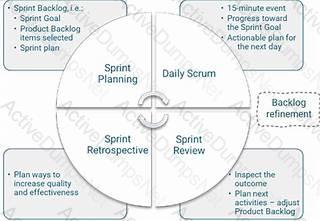
A. Coach the Scrum Team to improve its skills, tools and environment over time and adjust the Definition of Done accordingly. This is an appropriate action for a Scrum Master, as it helps the Scrum Team to overcome the impediments that prevent them from delivering a potentially releasable Increment.The Definition of Done should reflect the current reality of the Scrum Team, but also be a source of continuous improvement12.
D. Have the Scrum Team establish a Definition of Done that is actually possible to achieve given current circumstances. This is also an appropriate action for a Scrum Master, as it ensures that the Scrum Team has a clear and shared understanding of what it means to complete a Product Backlog item.The Definition of Done should be realistic and achievable, but also challenging and ambitious12.
B. Refocus the current Sprint on establishing the Scrum Team’s environment instead of delivering an Increment. This is not an appropriate action for a Scrum Master, as it violates the purpose of the Sprint, which is to deliver a valuable product Increment that meets the Sprint Goal.The Scrum Team should not change the Sprint Goal or scope during the Sprint, unless the Product Owner decides to cancel the Sprint3.
C. Encourage the Product Owner to accept partially done Increments until the situation improves. This is not an appropriate action for a Scrum Master, as it compromises the quality and value of the product. The Product Owner should only accept Increments that meet the Definition of Done and the acceptance criteria.Partially done Increments increase technical debt and risk, and reduce transparency and feedback12.
E. Declare the Scrum Team not ready for Scrum. This is not an appropriate action for a Scrum Master, as it undermines the Scrum values and principles. The Scrum Master should support the Scrum Team in adopting and applying Scrum, regardless of the challenges and constraints they face. The Scrum Master should foster a culture of empiricism, self-organization, collaboration, and continuous improvement.
What are two effective ways for a Scrum Team to ensure security concerns are satisfied? (choose the best two answers)
Options:
Add security concerns to the Definition of Done.
Delegate the work to the security department.
Have the Scrum Team create Product Backlog items for each concern.
Add a Sprint to specifically resolve all security concerns.
Postpone the work until a specialist can perform a security audit and create a list of security-related Product Backlog items.
Answer:
A, CExplanation:
These are the best answers because they ensure that security concerns are addressed in a transparent and consistent way. By adding security criteria to the Definition of Done, the Scrum Team can make sure that every Increment meets a high standard of quality and security. By creating Product Backlog items for specific security concerns, the Scrum Team can prioritize and plan them in collaboration with the Product Owner and stakeholders. References:
Scrum Guide, page 14: “The Definition of Done is a formal description of the state of the Increment when it meets the quality measures required for the product.”
Scrum Guide, page 15: “The Product Backlog is an emergent, ordered list of what is needed to improve the product.”
What typically happens if the Product Backlog is not sufficiently clear at Sprint Planning?
(choose the best answer)
Options:
The Product Owner should select the Sprint Goal for the Scrum Team so that work can begin.
The Developers will find it difficult to create a Sprint forecast they are confident they can meet.
Nothing in particular.
The Scrum Master should not allow this to happen. Look for a new Scrum Master and re-start the Sprint.
Sprint Planning is canceled so refinement can be done first.
Answer:
BExplanation:
If the Product Backlog is not sufficiently clear at Sprint Planning, the Developers will find it difficult to create a Sprint forecast they are confident they can meet. This is because:
Sprint Planning is an event where the Scrum Team plans for the upcoming Sprint. The purpose of Sprint Planning is to align the entire Scrum Team around a common goal and a plan for delivering an Increment that meets that goal.
The Developers are accountable for creating a Sprint forecast, which is a selection of Product Backlog items that they intend to work on during the Sprint. The Sprint forecast should be realistic, achievable, and valuable.
The Product Owner is accountable for ensuring that the Product Backlog is transparent, visible, and understood by everyone who needs to work on it. They must collaborate with the Developers and provide clarifications, feedback, and guidance on what items are most important and valuable for the product.
If the Product Backlog is not sufficiently clear at Sprint Planning, it means that there are items that are not well defined, ordered, or estimated. This may make it hard for the Developers to understand what they are supposed to build and why. It may also make it hard for them to estimate how much work they can do or how long it will take them to do it. This may result in a poor or inaccurate Sprint forecast that may affect the quality or value of the Increment.
Other options, such as the Product Owner selecting the Sprint Goal for the Scrum Team so that work can begin, nothing in particular happening, the Scrum Master not allowing this to happen or looking for a new Scrum Master and re-starting the Sprint, or Sprint Planning being canceled so refinement can be done first, are not valid answers as they do not reflect what typically happens or what should happen in Scrum.
True or False: When there are multiple teams working on one product, each Scrum Team should have a separate Product Owner.
Options:
True
False
Answer:
BExplanation:
When there are multiple teams working on one product, each Scrum Team should not have a separate Product Owner. This is because:
The Product Owner is accountable for maximizing the value of the product resulting from the work of the Scrum Team. They are responsible for identifying and articulating the Product Goal, which is a long-term objective for the product that guides all the activities of the Scrum Team.
The Product Owner is the sole person responsible for managing the Product Backlog, which is an emergent, ordered list of what is needed to improve the product. They must ensure that the Product Backlog is transparent, visible, and understood by everyone who needs to work on it.
Having multiple Product Owners for one product may lead to conflicts, inconsistencies, or confusion among the Scrum Teams and the stakeholders. It may also reduce the alignment, collaboration, and ownership of the product development.
Instead of having multiple Product Owners, it is recommended to have one Product Owner who works with representatives from each Scrum Team to ensure that they have a shared understanding of the product vision, goals, and priorities. The Product Owner may also delegate some of the Product Backlog management tasks to these representatives, but they remain accountable for the final decisions.
You are the Scrum Master for four Scrum Teams working from the same Product Backlog
Several of the Developers come to you complaining that work identified for the upcoming two
Sprints will require full-time commitment from a specialist who is external to the teams.
What should the Scrum Master consider in this situation?
(choose the best two answers)
Options:
The need to have enough work to keep all Developers busy.
The benefit of Developers figuring out a solution for themselves.
The desire to maintain a stable velocity.
The ability of the Scrum Teams to produce integrated Increments.
Answer:
B, DExplanation:
According to the documentation of Professional Scrum Product Owner™ (PSPO I), the Scrum Master should consider the following two answers in this situation:
B. The benefit of Developers figuring out a solution for themselves.
D. The ability of the Scrum Teams to produce integrated Increments.
The reason for choosing these two answers is that they align with the Scrum Master’s role as a servant leader, coach, and facilitator of the Scrum Team12. The Scrum Master should not interfere with the team’s autonomy and creativity, but rather support them in achieving their goals and delivering value to the stakeholders12. The Scrum Master should also ensure that the team can work together effectively and deliver a potentially releasable Increment at the end of each Sprint12.
The other two answers are not as relevant or appropriate for this situation:
A. The need to have enough work to keep all Developers busy.
C. The desire to maintain a stable velocity.
The need to have enough work to keep all Developers busy is not a valid reason for involving an external specialist in the Scrum Team12. The Scrum Team should be self-organizingand cross-functional, meaning that they can decide how to best accomplish their tasks without depending on external resources or expertise12. Moreover, having too much work can lead to scope creep, which can compromise the quality and value of the product12.
The desire to maintain a stable velocity is also not a valid reason for involving an external specialist in the Scrum Team12. Velocity is a measure of how much work can be completed by the team in a given time period, such as a Sprint or a release cycle12. It is not a fixed or objective number, but rather depends on various factors such as team size, complexity, skills, motivation, etc.12. Therefore, having an external specialist does not guarantee that the team will maintain a stable velocity, but rather may introduce additional challenges such as communication barriers, coordination issues, dependency risks, etc.12.
I hope this answer helps you understand how to apply your knowledge of Professional Scrum Product Owner™ (PSPO I) objectives and content in this situation. If you have any further questions or feedback, please let me know. Thank you for using Bing!????
When multiple Scrum Teams are working on the same product, should all of their Increments be integrated every Sprint?
(choose the best answer)
Options:
Yes, in order to accurately inspect what is done.
Yes, but only for Scrum Teams whose work has dependencies.
No, each Scrum Team stands alone.
No, that is far too hard and must be done in a hardening Sprint.
Answer:
AExplanation:
When multiple Scrum Teams are working on the same product, they should integrate their Increments every Sprint because:
It allows them to accurately inspect what is done and what is potentially releasable. By integrating their work frequently, they can ensure that the product is in a usable and valuable state at the end of each Sprint, and that it meets the Definition of Done and the Sprint Goal.
It enables them to adapt to changes and feedback faster. By integrating their work frequently, they can reduce the complexity and risk of integration, and discover and resolve any issues or dependencies sooner. They can also incorporate any new insights or requirements into their Product Backlog and Sprint Planning.
It fosters collaboration and alignment among the teams. By integrating their work frequently, they can share their learnings and best practices, and coordinate their efforts towards a common vision and goal. They can also leverage the collective intelligence and creativity of the teams to deliver a better product.
During a Sprint, when is new work or further decomposition of work added to the Sprint
Backlog?
(choose the best answer)
Options:
During the Daily Scrum after the Developers approve it.
When the Scrum Master has time to enter it.
When the Product Owner identifies new work.
As soon as possible after it is identified.
Answer:
DExplanation:
New work or further decomposition of work is added to the Sprint Backlog as soon as possible after it is identified because:
It reflects the current state of the Sprint. The Sprint Backlog is a plan that the Developers create and update throughout the Sprint, based on their progress, learnings, and changes. By adding new work or further decomposition of work to the Sprint Backlog promptly, the Developers can ensure that the Sprint Backlog is transparent, accurate, and up-to-date.
It enables the Developers to self-manage their work. The Developers are accountable for organizing and managing their own work, and they have the authority to change the Sprint Backlog as needed. By adding new work or further decomposition of work to the Sprint Backlog promptly, the Developers can exercise their autonomy and empowerment, and adjust their plan accordingly.
It supports the achievement of the Sprint Goal. The Sprint Goal is a single objective that provides guidance and focus for the Developers throughout the Sprint. By adding new work or further decomposition of work to the Sprint Backlog promptly, the Developers can ensure that their work is aligned with and contributes to the Sprint Goal.
True or False: Dependencies could influence how the Product Owner orders Product Backlog items.
Options:
True
False
Answer:
AExplanation:
Correct Answer: True
Dependencies are relationships between Product Backlog items that affect their order of implementation. For example, a Product Backlog item may depend on another one to be completed first, or it may have a dependency on a third-party system or resource. Dependencies could influence how the Product Owner orders Product Backlogitems, as they may introduce risks, constraints, or uncertainties that affect the value delivery. The Product Owner should try to minimize dependencies and order the Product Backlog items in a way that maximizes value and minimizes waste.
[Professional Scrum Product Owner], chapter 6: “Dependencies are relationships between Product Backlog items that affect their order of implementation.”
[Managing Dependencies on Agile Projects]: “Dependencies can have a significant impact on the delivery of value.”
The Scrum Master observes the Product Owner struggling with ordering the Product Backlog.
What is an appropriate action for the Scrum Master to take?
(choose the best answer)
Options:
Offer the Product Owner help in understanding that the goal of ordering the ProductBacklog is to maximize value.
Suggest that the Developers order the Product Backlog to be sure that it is a feasibleordering of work.
Encourage the Product Owner to work with the Developers to see which itemstechnically are fastest to implement.
Suggest the Product Owner extend the Sprint, so he can have more time to order theProduct Backlog.
Present the Product Owner with an ordered Product Backlog to use.
Answer:
AExplanation:
The Scrum Master’s role includes coaching the Scrum Team and helping them understand Scrum practices. If the Product Owner is struggling with ordering the Product Backlog, the Scrum Master should offer guidance and support to help the Product Owner understand that the primary goal of ordering the Product Backlog is to maximize the value delivered to the customer. This involves considering factors such as business value, risk, return on investment (ROI), dependencies, and impact. The Scrum Master can facilitate this understanding and help the Product Owner apply it to the ordering of the Product Backlog items.
The Scrum Guide and resources from Scrum.org provide insights into the role of the Scrum Master in supporting the Product Owner and ensuring that the Product Backlog is ordered in a way that maximizes value
Which is NOT a valid consideration when ordering a Product Backlog?
(choose the best answer)
Options:
Dependencies on other Product Backlog items.
Importance to customers.
Alignment with business strategy and goals.
Tools and techniques.
Risk.
Answer:
DExplanation:
The Product Backlog is an ordered list of everything that is known to be needed in the product. It is the single source of truth for the Scrum Team and the stakeholders. It contains all the requirements, features, functions, enhancements, fixes, and anything else that can deliver value to the customers and users of the product.
The Product Owner is accountable for ordering the Product Backlog. The Product Owner orders the items in the Product Backlog based on factors such as value, risk, priority, dependency, feedback, or market conditions. The order of the Product Backlog items provides a clear and consistent indication of what is most important and urgent for the product. The order of the Product Backlog items also helps the Scrum Team and the stakeholders to plan and forecast effectively.
The tools and techniques used to create, manage, or refine the Product Backlog are not a valid consideration when ordering the Product Backlog. The tools and techniques are means to an end, not an end in themselves. The tools and techniques do not affect the value or quality of the product or service delivered. The tools and techniques may vary from one Product Owner to another, depending on their preferences, skills, or context. The tools and techniques may also change over time, as new technologies or practices emerge or evolve.
How should a Scrum Team deal with non-functional requirements?
(choose the best answer)
Options:
Manage them during the Integration Sprint prior to the Release Sprint.
Assign them to the lead developers on the team.
Ensure every Increment meets them.
Make sure the release department understands these requirements, but it is not theScrum Team ' s responsibility.
Answer:
CExplanation:
In Scrum, non-functional requirements are part of the quality and completeness criteria for the product. They should be incorporated into the Definition of Done, ensuring that each Increment meets these requirements, making it potentially shippable and usable by stakeholders.
Developers are self-managing, which of the following do they manage?
(choose the best answer)
Options:
Product Backlog ordering.
When to release, based on its progress.
Sprint Backlog.
Stakeholders for the Sprint Review.
Sprint length.
Answer:
CExplanation:
Developers are self-managing, which means that they decide how much work they can do in a Sprint, and how they will do it1. They manage the Sprint Backlog, which is the plan for how the Developers will achieve the Sprint Goal, and the single source of truth for the work to be done in the Sprint2. The Developers create and update the Sprint Backlog throughout the Sprint as more is learned[3][3] . The other options are not managed by the Developers, but by the Product Owner or the Scrum Team as a whole. The Product Owner is accountable for ordering the Product Backlog, which is an ordered list of everything that is known to be needed in the product4. The Product Owner also decides when to release the product, based on the value, risk, and stakeholder feedback5. The Scrum Team collaborates on inviting the stakeholders for the Sprint Review, which is an event where the Scrum Team and the stakeholders inspect the product Increment and adapt the Product Backlog. The Scrum Team also decides the Sprint length, which is the time-box within which the Scrum Team delivers a product Increment.
1: The Scrum Guide, November 2020, p. 6
2: The Scrum Guide, November 2020, p. 10
[3][3] : The Scrum Guide, November 2020, p. 10
4: The Scrum Guide, November 2020, p. 6
5: Managing Products with Agility, Scrum.org, accessed on December 16, 2023
The Scrum Guide, November 2020, p. 13
The Scrum Guide, November 2020, p. 9
Every Scrum Team should have:
(choose the best answer)
Options:
One Lead Developer and no more than 8 other members.
The competencies and skills needed to deliver an Increment in a Sprint.
At least one representative from each major department, such as, Quality Assurance,Development, and Marketing.
Answer:
BExplanation:
A Scrum Team is a cross-functional, self-managing team that has all the necessary competencies and skills to deliver a potentially releasable Increment of value at the end of each Sprint. The Scrum Team consists of one Scrum Master, one Product Owner, and Developers. The Scrum Team does not rely on external roles or hierarchies to complete their work. (Must be taken from Professional Scrum Product Owner™ (PSPO I) resources)
Professional Scrum Product Owner™ I Certification
Professional Scrum Product Owner™ Training
What should the Scrum Team do during the first Sprint?
(Choose the best answer)
Options:
Make up a plan for the rest of the project.
Define the major product features and a release plan architecture.
Create at least one valuable and useful Increment.
Analyze, describe, and document the requirements for the subsequent Sprints.
Answer:
CExplanation:
The correct answer isC.
The purpose of every Sprint, including the first Sprint, is to create a valuable, useful Increment. Scrum is based on empiricism, meaning teams learn through doing, inspecting results, and adapting. Therefore, the first Sprint should produce something tangible and valuable rather than focusing only on long-term planning or documentation.
Why the other options are incorrect:
A. Make up a plan for the rest of the project— Scrum does not require full up-front planning for the whole project. Plans emerge and adapt over time.
B. Define the major product features and a release plan architecture— this may happen in some organizations, but it is not the main purpose of the first Sprint.
D. Analyze, describe, and document the requirements for the subsequent Sprints— Scrum is not a phase-based requirements process. The goal is to deliver value each Sprint.
What does it mean to say that an event has a timebox?
(choose the best answer)
Options:
The event can take no more than a maximum amount of time.
The event must take at least a minimum amount of time.
The event must happen by a given time.
The event must happen at a set time.
Answer:
AExplanation:
To say that an event has a timebox means that the event has a fixed duration that cannot be exceeded. The Scrum Guide states that " All events are time-boxed events, such that every event has a maximum duration. Once a Sprint begins, its duration is fixed and cannot be shortened or lengthened. The remaining events may end whenever the purpose of the event is achieved, ensuring an appropriate amount of time is spent without allowing waste in the process. " 1 This means that the timebox sets an upper limit for the event, but the event can end sooner if the goal is met.
1: The Scrum Guide2, page 10
2: The Scrum Guide
Which of the following are the Developers accountable for?
(choose the best two answers)
Options:
Organizing the work required to meet the Sprint Goal.
Selecting the Product Owner.
Reporting productivity.
Creating a plan for the Sprint, the Sprint Backlog.
Answer:
A, DExplanation:
The Developers are the people in the Scrum Team who are committed to creating any aspect of a usable Increment each Sprint. The Developers are accountable for organizing and managing their work.Only the Developers can decide how to perform the work during the Sprint1. The Developers plan the work necessary to create an Increment that meets the Definition of Done during the Sprint Planning event. This is often done by decomposing Product Backlog items into smaller work items of one day or less. How this is done is at the sole discretion of the Developers.The Sprint Backlog is the set of Product Backlog items selected for the Sprint, plus a plan for delivering the product Increment and realizing the Sprint Goal1.The Developers are responsible for creating and maintaining the Sprint Backlog1.The Developers are not accountable for selecting the Product Owner, reporting productivity, or any other activities that are not related to creating a Done Increment that meets the Sprint Goal123.References:
Scrum Guide
What is a Developer?
Who Determines How Work Is Performed During The Sprint?
[What is Sprint Planning?]
Who is responsible for the sizing of Product Backlog items?
(choose the best answer)
Options:
The Product Owner with input from the Developers.
The Scrum Master.
The Developers, alone.
The Developers after clarifying requirements with the Product Owner.
The most senior people in the organization, including architects and subject matterexperts.
Answer:
DExplanation:
According to Scrum.org, the Developers who will be doing the work are responsible for the sizing of Product Backlog items1.The Product Owner may influence the Developersby helping them understand and select trade-offs1.This implies that the Developers size the items after clarifying requirements with the Product Owner1.
The Developers find out during the Sprint that they are not likely to build everything they forecast. What would you expect a Product Owner to do?
(choose the best answer)
Options:
Skip Product Backlog refinement activities.
Inform management that more Developers are needed.
Change the Sprint Goal.
Re-work the selected Product Backlog items with the Developers to meet the Sprint Goal.
Cancel the Sprint.
Answer:
DExplanation:
If the Developers find out during the Sprint that they are not likely to build everything they forecast, the best response from the Product Owner is to re-work the selected Product Backlog items with the Developers to meet the Sprint Goal. This is because:
The Sprint Goal is a short-term objective that provides guidance and focus to the Scrum Team throughout the Sprint. It is a flexible and negotiable commitment that can be adjusted as more is learned throughout the Sprint.
The Developers are accountable for creating a “Done” Increment in every Sprint. They must ensure that every Product Backlog item they work on meets the Definition of Done before it is considered complete.
The Product Owner is accountable for maximizing the value of the product resulting from the work of the Scrum Team. They must inspect the Increment at the end of each Sprint and assess how it delivers value and contributes to the Product Goal.
The Product Owner and the Developers must collaborate closely throughout the Sprint to ensure that they have a shared understanding of what they are building and why. The Product Owner must provide clarifications, feedback, and guidance to the Developers as needed to help them create a valuable Increment.
If the Developers find out during the Sprint that they are not likely to build everything they forecast, it means that there is a gap between their initial plan and their actual progress. This may happen due to various reasons, such as new insights, changing requirements, technical challenges, or unforeseen circumstances.
In this situation, the Product Owner should work with the Developers to re-work the selected Product Backlog items to meet the Sprint Goal. This may involve adding, removing, or modifying some items, as long as they still support the Sprint Goal and deliver value. The Product Owner should also communicate any changes or impacts to the stakeholders and customers as appropriate.
Other options, such as skipping Product Backlog refinement activities, informing management that more Developers are needed, changing the Sprint Goal, or canceling the Sprint, are not valid responses from the Product Owner as they do not reflect what should happen in Scrum or how to deal with uncertainty and complexity.
The Product Owner is the person who will be held accountable if a product does not achieve its goals or deliver value. Does this mean that the Product Owner has the final say over the Definition of Done?
(choose the best answer)
Options:
Yes, the Product Owner decides the Definition of Done. The Developers may beconsulted.
No, the Scrum Team decides the Definition of Done, if it is not a standard of the organization. The Product Owner is just one member of the Scrum Team.
Answer:
BExplanation:
The Definition of Done is a formal description of the state of the Increment when it meets the quality measures required for the product. The Definition of Done is used to assess when work is complete on the product Increment.
The Definition of Done is defined by the Scrum Team, not by the Product Owner alone. The Scrum Team consists of one Product Owner, one Scrum Master, and Developers. They are all accountable for creating a valuable, useful, and potentially releasable product Increment each Sprint.
The Product Owner is accountable for maximizing the value of the product resulting from the work of the Scrum Team. The Product Owner is responsible for managing and refining the Product Backlog, collaborating with the stakeholders and the Developers, and ordering the items in a way that best achieves goals and missions. The Product Owner represents the interests of everyone with a stake in the product and ensures that the Scrum Team works on the right things at the right time.
The Developers are accountable for creating a “Done” Increment that meets the Definition of Done each Sprint. The Developers are responsible for planning and executing the Sprint Backlog, designing and building the product functionality, testing and improving the product quality, and delivering a potentially releasable Increment. The Developers work closely with the Product Owner to understand and clarify the Product Backlog items, provide feedback and estimates, and suggest improvements and innovations.
The Scrum Master is accountable for establishing Scrum as defined in the Scrum Guide. The Scrum Master is responsible for promoting and supporting Scrum as defined in the Scrum Guide. The Scrum Master does this by helping everyone understand Scrum theory and practice, both within the Scrum Team and the organization.
The Definition of Done may vary from one Scrum Team to another, depending on the context and domain of work. However, it must be consistent within one team. If there are multiple Scrum Teams working on one product, they must share a common Definition of Done. If there is an organizational standard for a Definition of Done, all Scrum Teams must follow it as a minimum.
If Product Backlog refinement is needed, when is the ideal time for refinement to take place and
who should participate?
(choose the best two answers)
Options:
The Scrum Team during the current Sprint, if they have been unable duringpreceding Sprints to define Product Backlog items with enough precision tobegin work.
Business analysts in the organization should do this work for the Scrum Team 1- 2 Sprints ahead of the development Sprints.
The Product Owner must do this as essential work in Sprint O.
The Product Owner takes the time between the end of one Sprint and the startof the next Sprint to complete refinement.
The Scrum Team on an ongoing basis, defining Product Backlog items intosmaller more precise items that are ready for selection.
Answer:
A, EExplanation:
The ideal time for refinement to take place and who should participate are the Scrum Team during the current Sprint, if they have been unable during preceding Sprints to define Product Backlog items with enough precision to begin work, and the Scrum Team on an ongoing basis, defining Product Backlog items into smaller more precise items that are ready for selection. This is because:
Product Backlog refinement is the act of adding detail, estimates, and order to Product Backlog items. It is an ongoing and collaborative process that involves the whole Scrum Team.
The Scrum Team should refine the Product Backlog as needed to ensure that there are enough items that are sufficiently clear and ready for selection in Sprint Planning. The amount of time spent on refinement usually varies from one Scrum Team to another, but it is recommended not to exceed 10% of the capacity of the Developers.
The Scrum Team may also use a Sprint to refine the Product Backlog if they have not been able to do so in previous Sprints. This may happen when the product is new or complex, or when there is a significant change in the product vision or direction. However, this should be an exception rather than a rule, as it may delay the delivery of value and feedback.
Other options, such as business analysts doing the refinement work for the Scrum Team, the Product Owner doing the refinement alone in Sprint 0 or between Sprints, or handing off the ownership of the Product Backlog to someone else, are not consistent with the principles and values of Scrum. They may lead to misunderstandings, misalignment, or loss of ownership and accountability.
Why is the Daily Scrum held at the same time and same place?
(choose the best answer)
Options:
The Product Owner demands it.
Rooms are hard to book and must be booked in advance.
The place can be named.
The consistency reduces complexity.
Answer:
DExplanation:
The Daily Scrum is held at the same time and same place because:
The consistency reduces complexity. By having a fixed time and place for the Daily Scrum, the Developers can avoid wasting time and energy on scheduling, logistics, or coordination issues. They can also establish a routine and a rhythm that helps them focus on their work and their Sprint Goal.
The consistency increases transparency. By having a fixed time and place for the Daily Scrum, the Developers can ensure that everyone is aware of when and where the meeting takes place, and that everyone has an opportunity to participate and share their progress, plans, and challenges. They can also invite other stakeholders or observers, if they find it useful, to provide feedback or support.
The consistency enhances collaboration. By having a fixed time and place for the Daily Scrum, the Developers can create a safe and comfortable space for them to communicate, interact, and collaborate with each other. They can also build trust, rapport, and accountability among themselves, and foster a sense of team spirit and ownership.
True or False: The Product Owner makes sure the Developers select enough from the Product
Backlog for a Sprint to satisfy the stakeholders.
Options:
True
False
Answer:
BExplanation:
The Product Owner does not make sure the Developers select enough from the Product Backlog for a Sprint to satisfy the stakeholders. The Developers are the ones who determine how many Product Backlog items they select for a Sprint, based on their capacity and the Sprint Goal1. The Product Owner and the Developers collaborate on the scope of the Sprint during Sprint Planning, but the final decision is up to the Developers2. The Product Owner is accountable for maximizing the value of the product and the work of the Developers, and for managing the Product Backlog[3][3] . The Product Owner does not have the authority to tell the Developers how much work they should do, as this would violate the principle of self-management4.
What might indicate to a Product Owner that she needs to work more with the Scrum Team?
(choose the best answer)
Options:
The acceptance criteria do not appear to be complete.
She is not working full time with the Scrum team.
People leave the Scrum Team.
The Increment presented at the Sprint Review does not reflect what she thought she had asked for.
Answer:
DExplanation:
One of the possible indicators that a Product Owner needs to work more with the Scrum Team is when the Increment presented at the Sprint Review does not reflect what she thought she had asked for. This means that there is a gap or a misunderstanding between the Product Owner and the Developers regarding the Product Backlog items, the acceptance criteria, the Definition of Done, or the product vision and goals.
The Product Owner is accountable for maximizing the value of the product resulting from the work of the Scrum Team. The Product Owner is responsible for managing and refining the Product Backlog, collaborating with the stakeholders and the Developers, and ordering the items in a way that best achieves goals and missions. The Product Owner represents the interests of everyone with a stake in the product and ensures that the Scrum Team works on the right things at the right time.
The Developers are accountable for creating a “Done” Increment that meets the Definition of Done each Sprint. The Developers are responsible for planning and executing the Sprint Backlog, designing and building the product functionality, testing and improving the product quality, and delivering a potentially releasable Increment. The Developers work closely with the Product Owner to understand and clarify the Product Backlog items, provide feedback and estimates, and suggest improvements and innovations.
The Sprint Review is an event that occurs at the end of each Sprint, where the Scrum Team and the stakeholders inspect the Increment and adapt the Product Backlog if needed. The Sprint Review is an opportunity for the Product Owner to validate that the Increment meets her expectations and delivers value to the customers and users. The Sprint Review is also an opportunity for the Developers to demonstrate their work and receive feedback from the Product Owner and the stakeholders.
If the Increment presented at the Sprint Review does not reflect what the Product Owner thought she had asked for, it may indicate that there was insufficient or ineffective communication, collaboration, or alignment between the Product Owner and the Developers during the Sprint. This may result in wasted effort, rework, delays, or dissatisfaction for both parties. To avoid or resolve this situation, the Product Owner needs to work more with the Scrum Team by doing some of the following actions:
Engage in frequent and regular interactions with the Developers throughout the Sprint to clarify, refine, and review the Product Backlog items and their acceptance criteria.
Provide clear and concise descriptions of what is needed and why it is valuable for each Product Backlog item.
Involve key stakeholders in defining and prioritizing the Product Backlog items and their acceptance criteria.
Empower and trust the Developers to make technical decisions and trade-offs that best meet the product goals and quality standards.
Solicit and incorporate feedback from the Developers on how to improve or simplify the Product Backlog items or their acceptance criteria.
Inspect and adapt based on empirical evidence from testing, data, or customer feedback.
A Product Backlog is:
(choose the best three answers)
Options:
An exhaustive list of upfront approved requirements to be implemented.
Managed by the Product Owner.
An inventory of things to be done for the Product.
Ordered based on priority, value, dependencies, and risk.
Only visible to the Product Owner and stakeholders.
Answer:
B, C, DExplanation:
A Product Backlog is:
Managed by the Product Owner. The Product Owner is the sole person responsible for managing the Product Backlog, which is an emergent, ordered list of what is needed to improve the product. They must ensure that the Product Backlog is transparent, visible, and understood by everyone who needs to work on it.
An inventory of things to be done for the Product. The Product Backlog contains all the features, functions, requirements, enhancements, and fixes that constitute the changes to be made to the product in future releases. The Product Backlog items have a description, an order, an estimate, and a value.
Ordered based on priority, value, dependencies, and risk. The Product Owner orders the Product Backlog items based on various factors that affect their importance and urgency for the product. These may include customer needs, business value, stakeholder feedback, technical dependencies, or market opportunities.
Other options, such as an exhaustive list of upfront approved requirements to be implemented or only visible to the Product Owner and stakeholders, are not valid descriptions of a Product Backlog. They may reflect a misunderstanding of what a Product Backlog is or how Scrum works.
The job of a Product Owner focuses on the following:
(choose the best two answers)
Options:
Working with customers and stakeholders to identify the most valuable productrequirements.
Writing clear, transparent User Stories.
Being with the Scrum Team all the time, just in case they need me to clarify arequirement.
Clearly communicating project or release status and strategies to customers andstakeholders.
Answer:
A, DExplanation:
The Product Owner is accountable for maximizing the value of the product resulting from the work of the Scrum Team. The Product Owner is responsible for managing and refining the Product Backlog, collaborating with the stakeholders and the Developers, and ordering the items in a way that best achieves goals and missions. The Product Owner represents the interests of everyone with a stake in the product and ensures that the Scrum Team works on the right things at the right time.
The job of a Product Owner focuses on the following aspects:
Working with customers and stakeholders to identify the most valuable product requirements: The Product Owner engages in frequent and regular interactions with the people who have a stake or interest in the product, such as customers, users, sponsors, managers, or other teams. The Product Owner solicits and incorporates their input, feedback, and insights to understand their needs and expectations, discover new opportunities or ideas, align and collaborate on the product direction and priorities, and validate and deliver value to them. The Product Owner translates these requirements into Product Backlog items that can deliver value to customers or users.
Clearly communicating project or release status and strategies to customers and stakeholders: The Product Owner communicates effectively and transparently with the customers and stakeholders about the progress, outcomes, and plans of the product development. The Product Owner shares relevant information and data about the product vision, goals, value proposition, roadmap, backlog, increment, feedback, or metrics. The Product Owner also communicates the strategies and decisions for delivering value to customers or users, such as release frequency, scope, quality, or risk management.
The other options are not valid or relevant aspects of a Product Owner’s job. They are either too narrow, unrealistic, or unrelated to the product value delivery. They are:
Writing clear, transparent User Stories: This is not a valid aspect of a Product Owner’s job. User Stories are a common format for expressing product requirements in an agile way. They consist of a brief description of a feature or function from the perspective of a user or customer. They usually follow a template such as “As a < role > , I want < goal > , so that < benefit > ”. However, User Stories are not mandatory or universal in Scrum. The Product Owner can use any format or method to express product requirements, as long as they are clear, concise, and valuable. The format or method does not affect the value or quality of the product or service delivered.
Being with the Scrum Team all the time, just in case they need me to clarify a requirement: This is not a realistic aspect of a Product Owner’s job. The Product Owner does not have to be physically present with the Scrum Team all the time. The Product Owner can work remotely or asynchronously with the Scrum Team, as long as they maintain effective communication and collaboration. The Product Owner should also empower and trust the Developers to make technical decisions and trade-offs that best meet the product goals and quality standards. The Product Owner should also ensure that the Product Backlog items are sufficiently clear and refined before they are selected for a Sprint.
A Scrum Team has been working on a product for 9 Sprints. A new Product Owner who is new to Scrum joins the team and understands she is accountable for the Product Backlog. However, she is unsure about the purpose of the Product Backlog. She has read that the Product Backlog
should be a list of all user features for the product. She goes to the Scrum Master asking where to put the other types of requirements that are going to be taken into account. Are all of the following types of requirements acceptable on a Product Backlog?
• Stability requirements
• Performance requirements
• Product Functionality
• Documentation
• Fixes
(choose the best answer)
Options:
Yes, they all belong on the Product Backlog. The Product Backlog is supposed to be the " single source of truth " for all the work for the product.
No. Product Backlog is a tool for the Product Owner. The Product Owner represents the users and stakeholders. Other types of requirements should be managedseparately by the Developers. They are not the Product Owner ' s concern.
Answer:
AExplanation:
The Product Backlog is an ordered list of everything that is known to be needed in the product. It is the single source of truth for the Scrum Team and the stakeholders. It contains all the requirements, features, functions, enhancements, fixes, and anything else that can deliver value to the customers and users of the product.
All types of requirements are acceptable on a Product Backlog, as long as they are aligned with the product vision and goals, and they are transparent, clear, and valuable. The Product Backlog can include stability requirements, performance requirements, product functionality, documentation, fixes, or any other aspects that contribute to the quality and usability of the product.
The Product Owner is accountable for maximizing the value of the product resulting from the work of the Scrum Team. The Product Owner is responsible for managing and refining the Product Backlog, collaborating with the stakeholders and the Developers, and ordering the items in a way that best achieves goals and missions. The Product Owner represents the interests of everyone with a stake in the product and ensures that the Scrum Team works on the right things at the right time.
The Developers are accountable for creating a “Done” Increment that meets the Definition of Done each Sprint. The Developers are responsible for planning and executing the Sprint Backlog, designing and building the product functionality, testing and improving the product quality, and delivering a potentially releasable Increment. The Developers work closely with the Product Owner to understand and clarify the Product Backlog items, provide feedback and estimates, and suggest improvements and innovations.
Which metrics will help a Product Owner determine if a product is delivering value?
(choose the best two answers)
Options:
Customer satisfaction.
Productivity.
Velocity.
Time to market.
Percentage of scope implemented.
Answer:
A, DExplanation:
The metrics that will help a Product Owner determine if a product is delivering value are customer satisfaction and time to market. This is because:
Customer satisfaction is a measure of how well the product meets the needs and expectations of the customers5. It reflects the value proposition of the product and the feedback from the users.
Time to market is a measure of how quickly the product can be delivered to the market. It reflects the agility and responsiveness of the Scrum Team and the ability to deliver value early and often.
Other metrics, such as productivity, velocity, and percentage of scope implemented, are not directly related to value delivery. They may indicate how efficiently or effectively the Scrum Team is working, but they do not necessarily reflect how valuable or desirable the product is for the customers or stakeholders.
Which three of the following are true about Scrum?
(choose the best three answers)
Options:
Scrum implements self-management by replacing Project Managers with ScrumMasters.
Scrum is based on empiricism and lean thinking.
Scrum is a framework for developing and sustaining complex products.
Scrum is a methodology where you can pick and choose which parts of Scrumyou think will work for your environment.
Each component of Scrum serves a specific purpose and is essential to Scrum ' ssuccess and your usage of Scrum to develop complex products.
Answer:
B, C, EExplanation:
The following are true about Scrum:
Scrum is based on empiricism and lean thinking. Empiricism is the principle of making decisions based on what is observed and experienced, rather than on theory or speculation. Lean thinking is the philosophy of eliminating waste and maximizing value in any process or system. Scrum applies these concepts by providing a framework for inspecting and adapting the product and the process, and by focusing on delivering the most valuable features to the customers and stakeholders.
Scrum is a framework for developing and sustaining complex products. A complex product is one that has unpredictable or unknown aspects that require creativity, experimentation, and adaptation to deliver. A framework is a set of minimal and essential rules and roles that provide structure and guidance, but leave room for flexibility and innovation. Scrum provides such a framework for teams to collaborate and deliver complex products iteratively and incrementally, while embracing change and feedback.
Each component of Scrum serves a specific purpose and is essential to Scrum’s success and your usage of Scrum to develop complex products. Scrum consists of three roles (Product Owner, Scrum Master, Developers), five events (Sprint, Sprint Planning, Daily Scrum, Sprint Review, Sprint Retrospective), and three artifacts (Product Backlog, Sprint Backlog, Increment). Each of these components has a clear definition, accountability, and goal that contributes to the overall effectiveness and value of Scrum. Removing or changing any of these components may cause the benefits of Scrum to be lost or diminished.
True or False: To get started in terms of what to build, Scrum requires no more than a Product
Owner with enough ideas for a first Sprint, Developers to implement those ideas, and a Scrum
Master to help guide the process.
Options:
True
False
Answer:
AExplanation:
Scrum is a framework that is designed to be lightweight and easy to adopt. To get started with Scrum, the minimal requirements are indeed a Product Owner with enough ideas for a first Sprint, a Development Team to implement those ideas, and a Scrum Master to facilitate and guide the process. This aligns with the core principles of Scrum, which emphasize self-organization, collaboration, and the ability to deliver increments of value quickly and frequently.
The Scrum Guide outlines the roles within a Scrum Team and the necessity of having a Product Backlog with enough ‘Ready’ items to fill a Sprint. The guide also emphasizes the importance of having a clear definition of ‘Done’ before starting the first Sprint
What is the typical size for a Scrum Team?
(choose the best answer)
Options:
At least 7.
9.
10 or fewer.
7 plus or minus 3.
Answer:
CExplanation:
The typical size for a Scrum Team is 10 or fewer people, including the Product Owner, the Scrum Master, and the Developers. The Scrum Guide states that " The Scrum Team is small enough to remain nimble and large enough to complete significant work within a Sprint. Fewer than three people decrease interaction and results in smaller productivity gains. Having more than ten people requires too much coordination. Large teams generate too much complexity for an empirical process to be useful. " 1 This means that the optimal Scrum Team size is between 3 and 10 people, depending on the context and the nature of the work.
1: The Scrum Guide2, page 6
2: The Scrum Guide
How much time must a Product Owner spend with the Developers?
(choose the best answer)
Options:
Enough so that the Product Owner is confident the Increment will meet the intended value.
40%, or more if the stakeholders agree.
As much time as the Developers tell the Product Owner to be present.
100%
Answer:
AExplanation:
The Product Owner must spend enough time with the Developers so that they are confident the Increment will meet the intended value. This is because:
The Developers are accountable for creating a “Done” Increment in every Sprint. They must ensure that every Product Backlog item they work on meets the Definition of Done before it is considered complete.
The Product Owner is accountable for maximizing the value of the product resulting from the work of the Scrum Team. They must inspect the Increment at the end of each Sprint and assess how it delivers value and contributes to the Product Goal.
The Product Owner and the Developers must collaborate closely throughout the Sprint to ensure that they have a shared understanding of what they are building and why. The Product Owner must provide clarifications, feedback, and guidance to the Developers as needed to help them create a valuable Increment.
The amount of time that the Product Owner must spend with the Developers may vary depending on the context, complexity, and uncertainty of the product development. However, it should be enough so that both parties are confident that the Increment will meet the intended value.
Other options, such as 40%, as much time as the Developers tell them to be present, or 100%, are not valid answers as they imply a fixed or arbitrary amount of time that does not reflect the actual needs and dynamics of the product development.
True or False: Multiple Scrum Teams working on the same product or system all select work
from the same Product Backlog.
Options:
True
False
Answer:
AUnlock PSPO-I Features
- PSPO-I All Real Exam Questions
- PSPO-I Exam easy to use and print PDF format
- Download Free PSPO-I Demo (Try before Buy)
- Free Frequent Updates
- 100% Passing Guarantee by Activedumpsnet
Questions & Answers PDF Demo
- PSPO-I All Real Exam Questions
- PSPO-I Exam easy to use and print PDF format
- Download Free PSPO-I Demo (Try before Buy)
- Free Frequent Updates
- 100% Passing Guarantee by Activedumpsnet