
Microsoft DP-750 Implementing Data Engineering Solutions Using Azure Databricks Exam Practice Test
Implementing Data Engineering Solutions Using Azure Databricks Questions and Answers
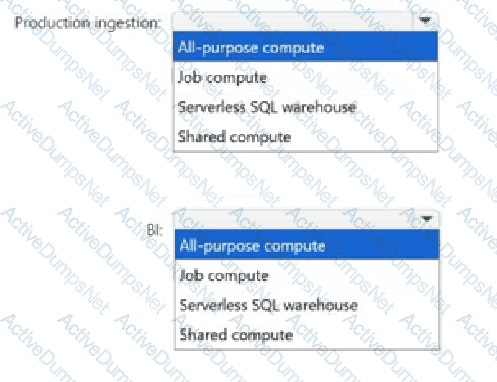
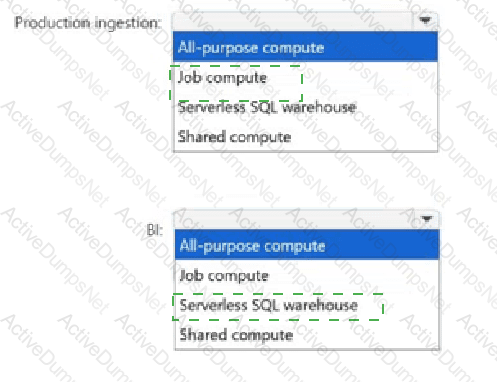
You need to recommend a compute type for the production ingestion workloads and BI workloads. The solution must meet the environment and compute requirements.
What should you recommend for each type of workload? To answer, select the appropriate options in the answer area.
NOTE: Each correct selection is worth one point.
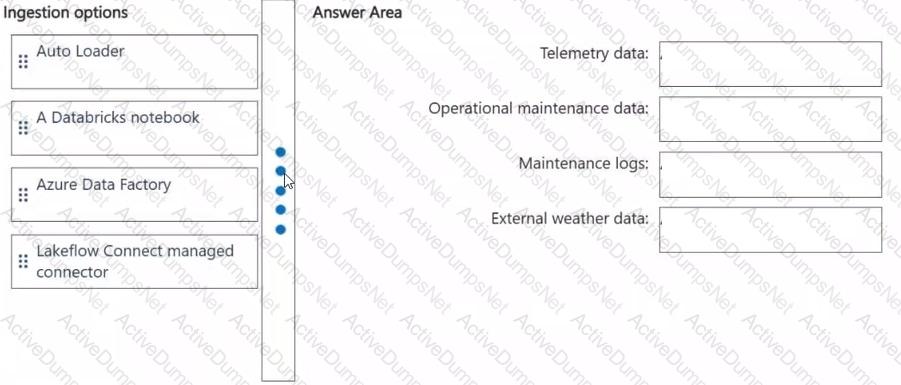
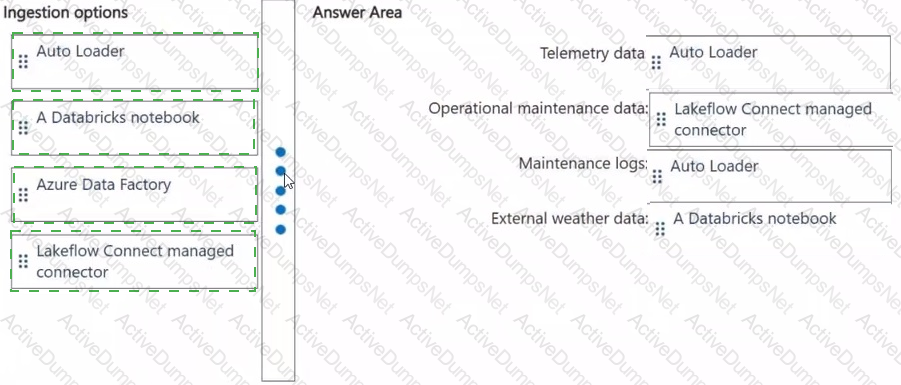
Which ingestion option should you recommend for each data source? To answer, drag the appropriate options to the correct data sources. Each option may be used once, more than once, or not at all. You may need to drag the split bar between panes or scroll to view content.
NOTE: Each correct selection is worth one point.
You need to develop the task logic for a new job in Lakeflow Jobs that processes telemetry data.
Each task must contain only the appropriate logic for its step in the pipeline. The solution must support the planned changes and meet the data ingestion and processing requirements.
What should you do?
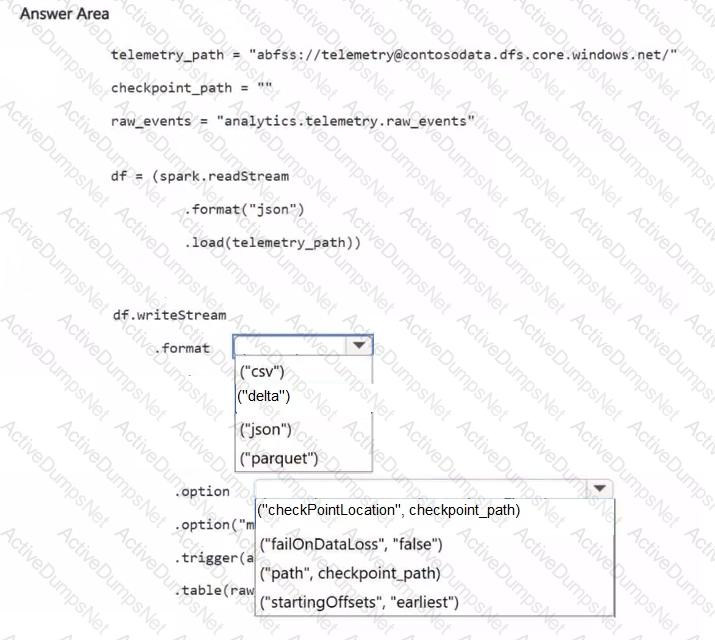
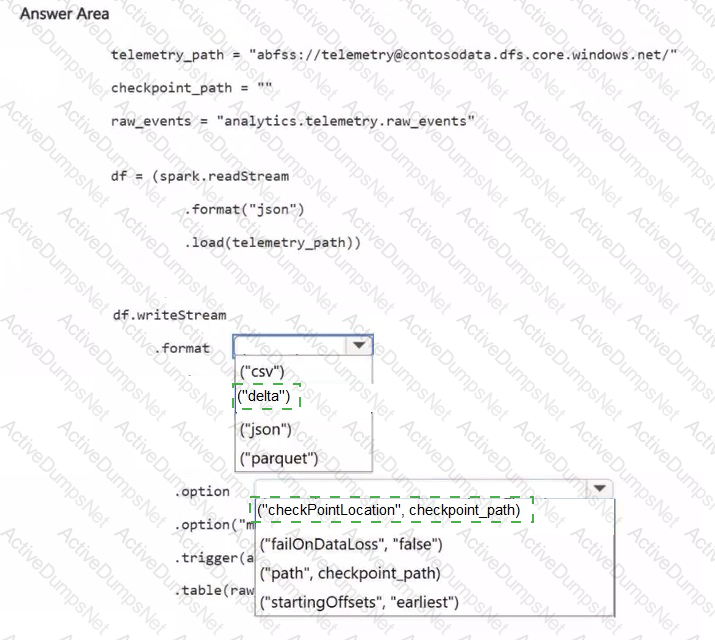
You need to complete the PySpark code for the Spark Structured Streaming pipelines. The solution must meet the data ingestion and processing requirements.
How should you complete the code segment? To answer, select the appropriate options in the answer area.
NOTE: Each correct selection is worth one point.
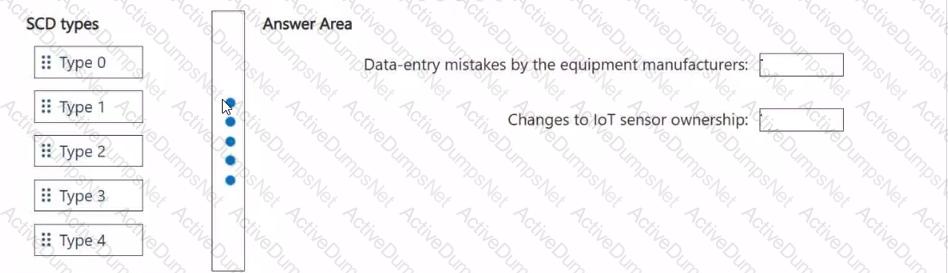
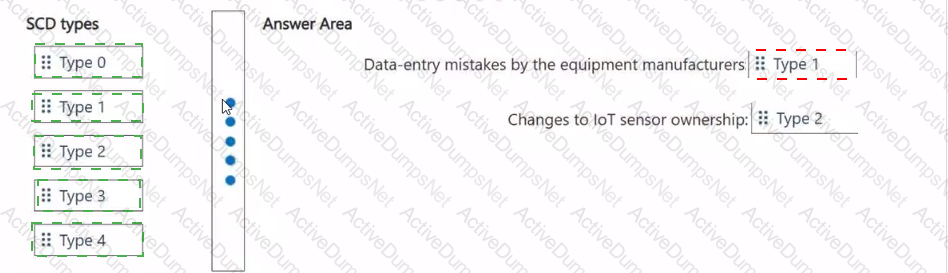
Which SCD type should you use to support the planned data modeling changes? To answer, drag the appropriate types to the correct issues. Each type may be used once, more than once, or not at all. You may need to drag the split bar between panes or scroll to view content.
NOTE: Each correct selection is worth one point.
You need to configure compute for the ingestion of telemetry data. The solution must meet the data ingestion and processing requirements.
What should you do?
You have an Azure Databricks workspace that is enabled for Unity Catalog and contains a catalog named Catalog 1. Catalog 1 contains a table named Transactions. Transactions contains the following columns:
• transaction_id
• customet_name
• email address
• credit_card_number
• transaction_amount
You need to ensure that business analysts can query all the tows in the Transactions table. The solution must meet the following requirements:
• Prevent the analysts from seeing the full values in the email_address and credit_catd_number columns.
• Ensure that the analysts can see only the values after the @ character in each email address.
• Ensure that the analysts can see only the last four digits of each credit card number.
• Enable the analysts to query the table without errors.
• Follow the principle of least privilege.
What should you do?
You have an Azure Databricks workspace that is enabled for Unity Catalog and contains a Delta table named Sales_orders. Sales.orders stores historical sales data.
You receive a daily CSV file daily that contains new sales records only. The file does NOT contain updates to existing rows You need to load the daily data into Sales.orders. The solution must meet the following requirements:
• Preserve the existing data.
• Add only the new records.
• Minimize processing effort.
Which command should include in the loading strategy?
You have an Azure Databricks workspace that is enabled for Unity Catalog and contains a managed Delta table named Table1. Table1 stores customer data.
You need to implement a data retention solution that meets the following requirements:
Deleted data must be retained for 30 days to support audits.
Deleted data that is older than 30 days must be removed permanently.
The solution must minimize administrative effort.
Which two properties should you configure? Each correct answer presents part of the solution.
NOTE: Each correct selection is worth one point.
You have an Azure Databricks workspace.
You have an Apache Spark Structured Streaming job named Job! that processes data continuously and fails periodically due to transient errors
You need to ensure that Job! meets the following requirements
• Resumes processing from the point that Job1 failed
• Minimizes how long it takes to restart Job!
• Minimizes the costs to restart Job!
What should you do?
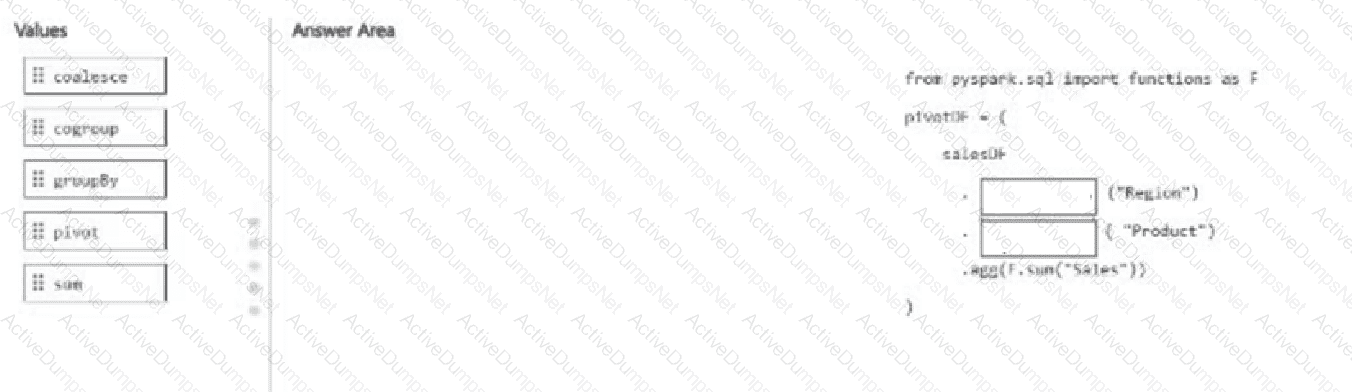
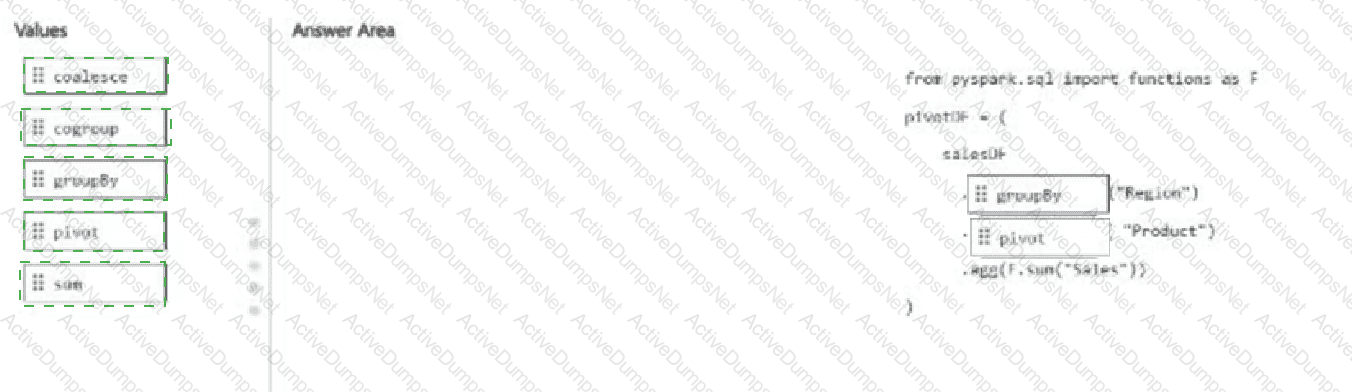
You have an Apache Spark DataFrame named salesDF that contains the following columns:
Product
Region
Sales
Date
You need to create a pivot table that shows the total sales by product for each region.
How should you complete the PySpark code segment? To answer, drag the appropriate values to the correct targets. Each value may be used once, more than once, or not at all. You may need to drag the split bar between panes or scroll to view content.
NOTE: Each correct selection is worth one point.
You have an Azure Databricks workspace that uses Unity Catalog.
You have a Lakeflow Spark Declarative Pipelines (SDP) pipeline that ingests data into a managed Delta table named Table1. Table1 is used for analytics.
New columns are added to the source data, causing pipeline failures during writes to Table1.
You need to prevent the pipeline failures. The solution must ensure that schema changes are detected and handled.
What should you do?
You have an Azure Databricks workspace that is enabled for Unity Catalog.
You need to recommend a pipeline that ingests files from cloud storage, performs cleansing and enrichment transformations, and writes created Delta tables for analytics. The solution must minimize development effort and provide built-in monitoring and automatic retries.
What should you include in the recommendation?
You need to curate Unity Catalog objects that reference the ERP data. The solution must meet the governance requirements.
What should you do?