Microsoft AI-200 Developing AI Cloud Solutions on Azure Exam Practice Test
Developing AI Cloud Solutions on Azure Questions and Answers
You deploy multiple instances of a change feed processor to handle a high ingestion rate within Azure Cosmos DB for NoSQL.
Each processor instance must process a different subset of partitions.
You need to ensure the workload is load-balanced across all processor instances.
What should you configure?
You deploy a production Azure Function app that connects to an Azure SQL Database.
The solution must provide the following functionality:
• Prevent secrets from being exposed in source control.
• Support secret rotation without redeploying the function app.
• Avoid downtime during credential updates.
You need to configure secure and maintainable secret management. What should you configure?
You plan to deploy a container to an Azure App Service API app named api1. You host the source code for api1 in a GitHub repository. The container uses the API key at runtime to connect to a backend service.
The container must be able to retrieve the API key at runtime without exposing it in the source repository or Git commit history. The API key must not be stored in application configuration directly. The API key must be accessed securely from Azure Key Vault.
You need to ensure that the API key is stored securely in Azure Key Vault and is available to the container at runtime without being exposed in source control or Git commit history.
Solution: Store the API key as a GitHub repository secret.
Does the solution meet the goal?
You are building a semantic search feature for a chatbot. You store document embeddings in Redis.
You review the following Python code that connects to Redis and stores an embedding value:
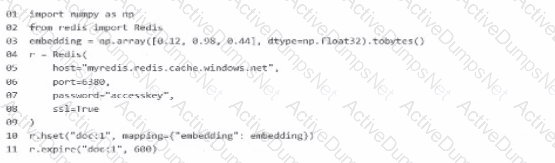
For each of the following statements, select Yes if the statement is true. Otherwise, select No.
NOTE: Each correct selection is worth one point.


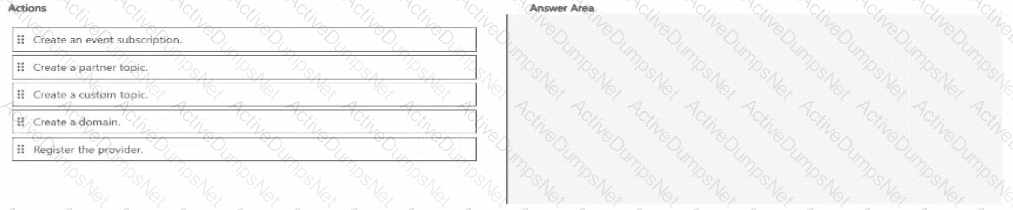
You have a newly provisioned Azure subscription. You are designing a custom Event Grid workflow for AI inference events.
You need to implement the Event Grid components to support routing of high-confidence events to a downstream processor.
Which three actions should you perform in sequence? To answer, move the appropriate actions from the list of actions to the answer area and arrange them in the correct order.
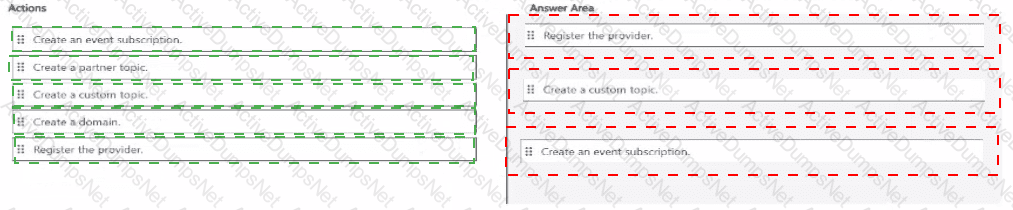
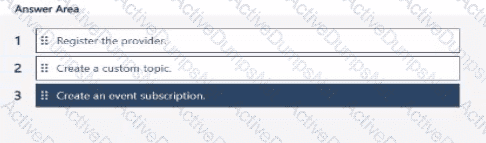
Hotspot Question
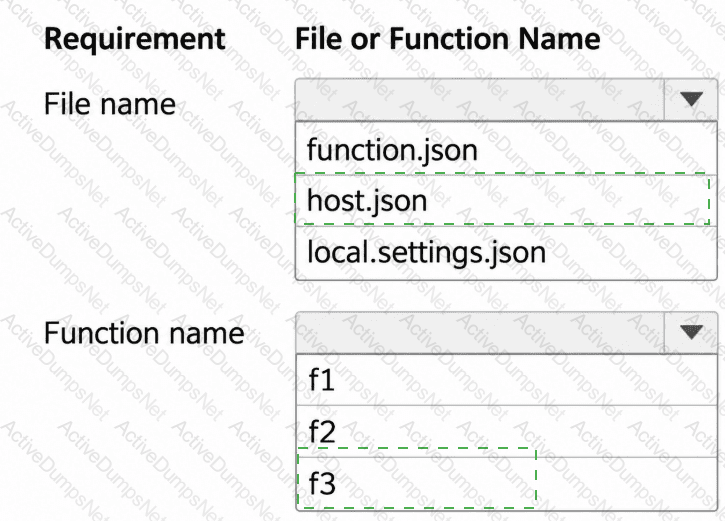
You have an Azure Functions app using the Consumption hosting plan for a company. The app contains the following functions:
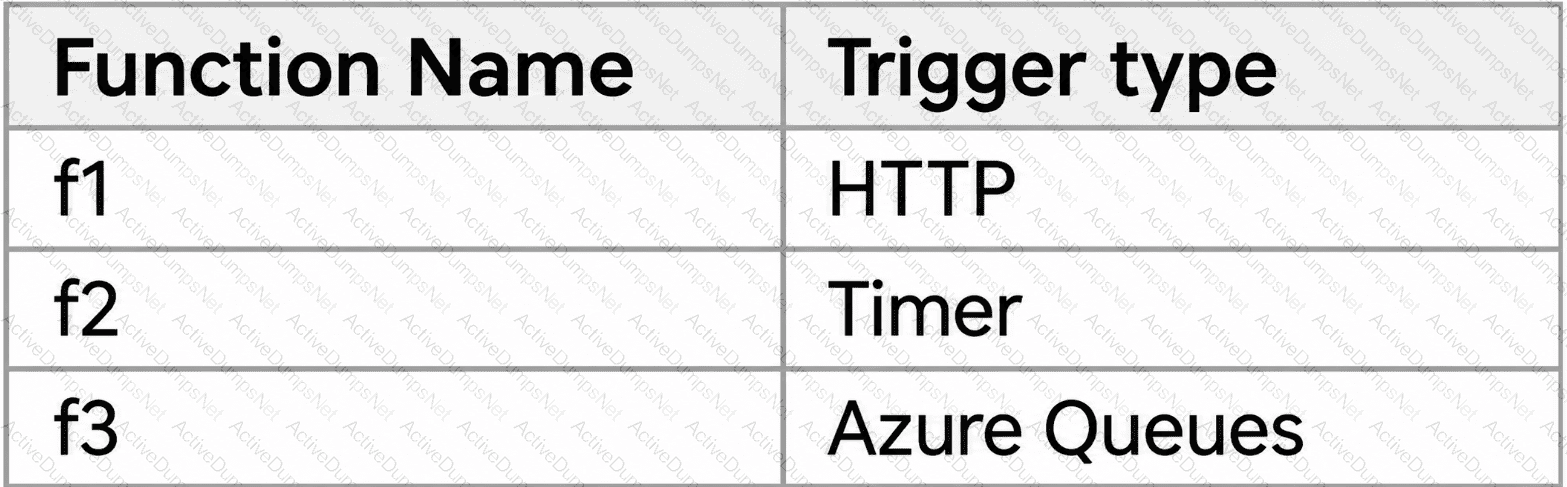
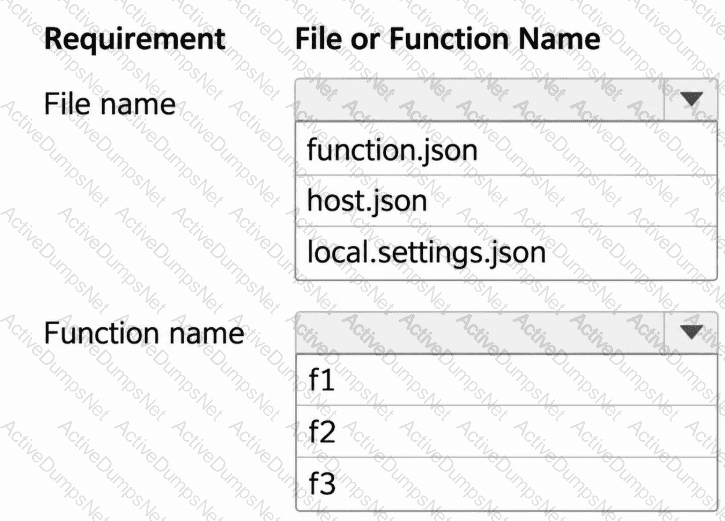
You plan to enable dynamic concurrency on the app. The company requires that each function has its concurrency level managed separately.
You need to configure the app for dynamic concurrency.
Which file or function names should you use? To answer, select the appropriate values in the answer area.
NOTE: Each correct selection is worth one point.
You are designing a solution that will use two Azure Functions apps: App1 and App2. App1 is Windows based and will be deployed as code. App2 is Linux based and will be deployed as a container image. Estimates show that the duration of the request processing for both apps will range from 1 to 10 minutes.
You plan to implement App1 and App2 by using the hosting plan to satisfy the following requirements:
• Request processing can complete within the estimated time range.
• The autoscaling behavior is event driven.
• The upper scaling limit is maximized.
You need to create the hosting plan for the implementation.
Which hosting plan should you create? To answer, move the appropriate hosting plans to the correct apps. You may use each hosting plan once, more than once, or not at all. You may..


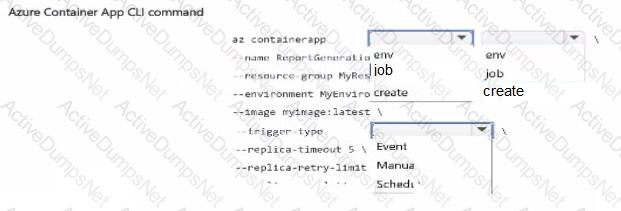
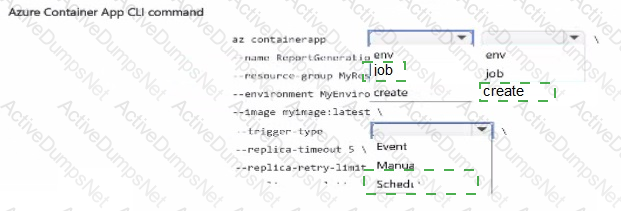
You are developing a microservices-based application that uses Azure Container Apps. The application consists of several containerized services that handle tasks, such as processing orders, managing inventory, and generating reports.
Report generation must be implemented as follows:
Process reports every Sunday at midnight.
Minimize app resources during report generation.
Record metrics in the same location as other containers.
Use the same virtual network as other containers.
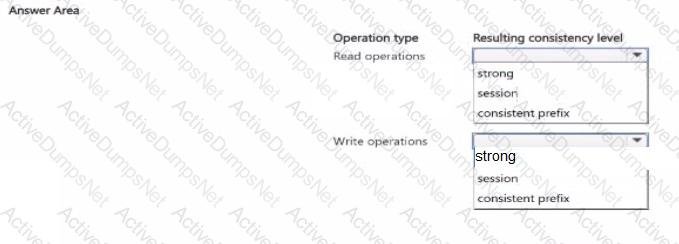
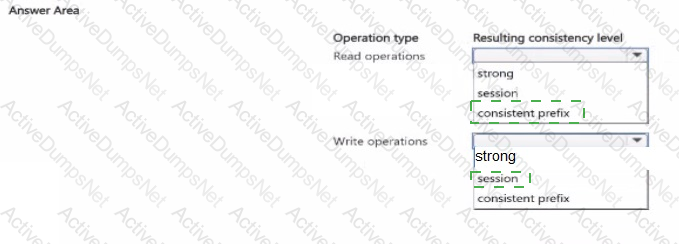
You provisioned an Azure Cosmos DB for NoSQL account named account1 with the default consistency level.
You plan to configure the consistency level on a per request basis. You plan to request Consistent Prefix consistency on a per-request basis.
You need to identify the resulting consistency level for read and write operations.
Which levels result from this configuration? To answer, select the appropriate options in the answer a rea.
NOTE: Each correct selection is worth one point.

You must ensure an Azure OpenAI-powered application never exceeds a defined token-per-minute budget across all users to avoid runaway costs.
What should you configure?
You are implementing an application by using Azure Event Grid to push near-real-time information to customers.
You have the following requirements:
• You must send events to thousands of customers that include hundreds of various event types.
• The events must be filtered by event type before processing.
• Authentication and authorization must be handled by using Microsoft Entra ID.
• The events must be published to a single endpoint
You need to implement Azure Event Grid
Solution: Publish events to a custom topic. Create an event subscription for each customer.
Does the solution meet the goal?
You are implementing an application by using Azure Event Grid to push near-real-time information to customers.
You have the following requirements:
• You must send events to thousands of customers that include hundreds of various event types.
• The events must be filtered by event type before processing.
• Authentication and authorization must be handled by using Microsoft Entra ID.
• The events must be published to a single endpoint
You need to implement Azure Event Grid
Solution: Publish events to a partner topic. Create an event subscription for each customer.
Does the solution meet the goal?
An application performs similarity search across 5 million embeddings stored in Azure Database for PostgreSQL with pgvector. Queries often filter by department before ranking by cosine distance.
P95 latency for vector similarity queries exceeds the SLA target. Monitoring shows sustained high CPU use during query execution.
You need to reduce P95 latency for filtered vector similarity queries.
What should you do?
A python web API uses OpenTelemetry for tracing. The call downstream service function makes an outbound HTTP request by using the requests library. The following code is the only OpenTelemetry configuration in the application:
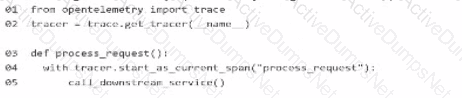
For each of the following statements, select Yes if the statement is true. Otherwise, select No.
NOTE: Each correct selectin is worth one point.


You need to configure a connection string for the partner-facing service according to the technical requirements.
What should you use?
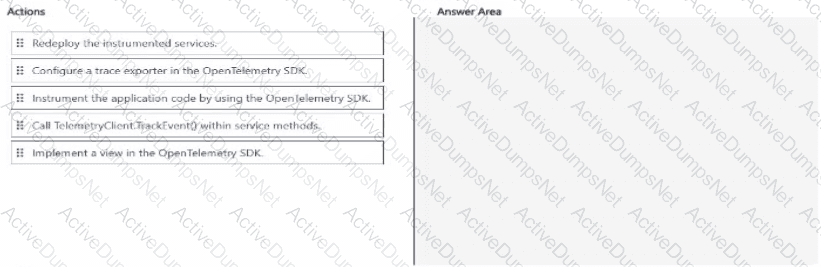
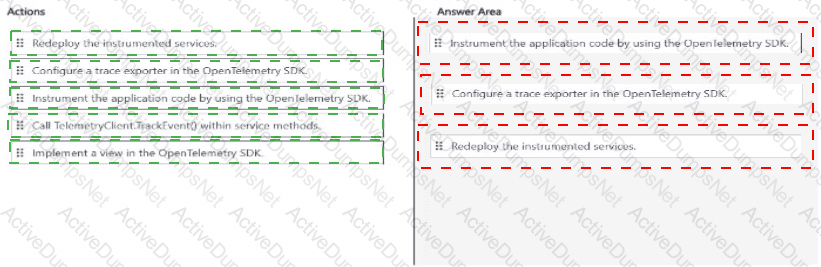
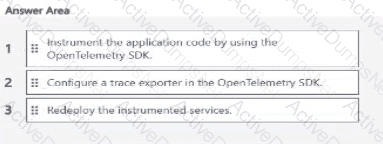
You need to implement trace correlation according to the business requirements.
Which three actions should you perform in sequence? To answer, move the appropriate actions from the list of actions to the answer area and arrange them in the correct order.
NOTE: More than one order of answer choices is correct. You will receive credit for any of the correct orders you se lect.
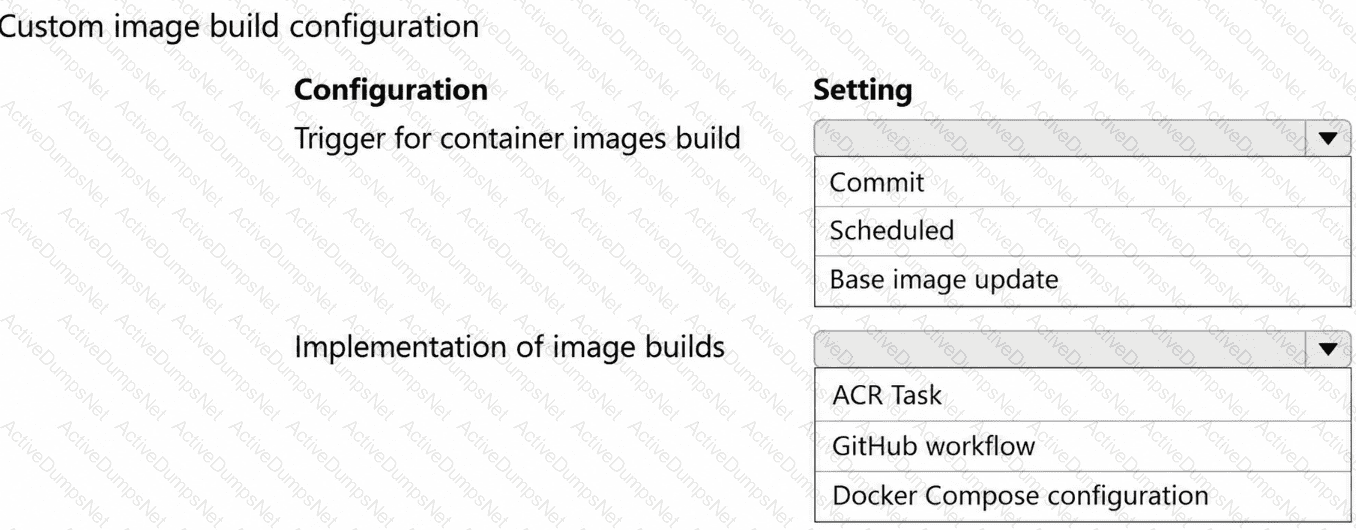
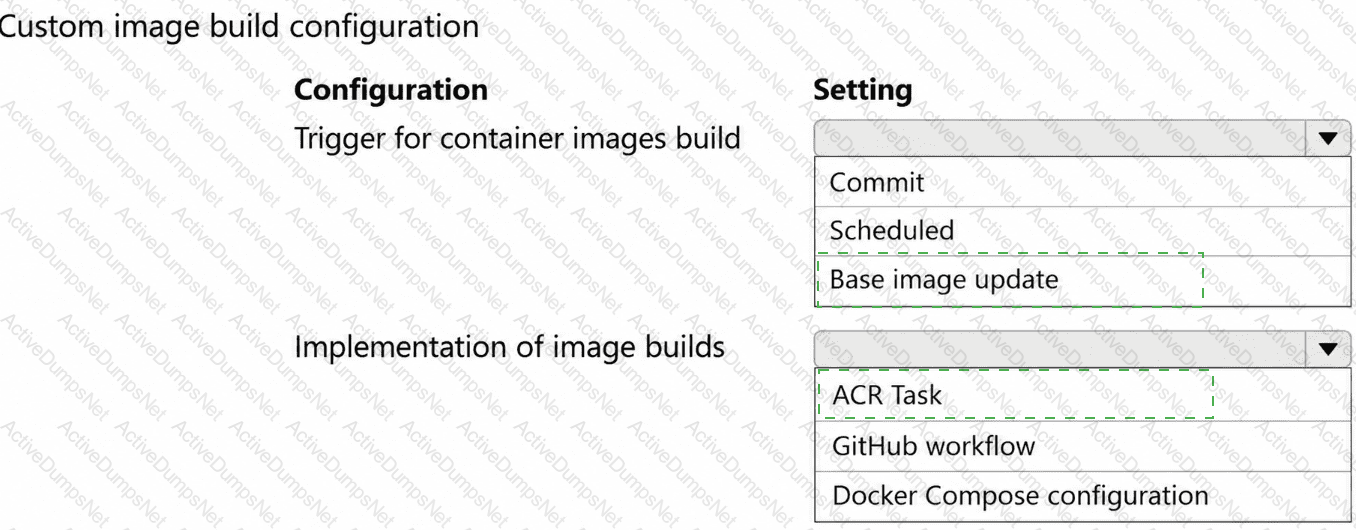
You need to configure image build automation based on the technical requirements.
Which settings should you configure? To answer, select the appropriate options in the answer area.
NOTE: Each correct selection is worth one point.
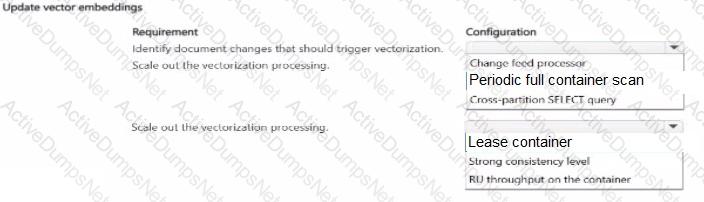
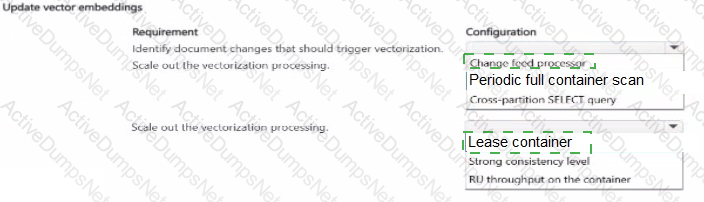
You need to configure vector embedding updates according to the business and technical requirements.
Which information should you use? To answer, select the appropriate option in the answer area.
NOTE: Each correct selection is worth one point.

You need to deploy Azure Function resources and apps to meet the business and technical requirements.
What should you use?
You need to deploy Azure function resources and apps by using an automated, version-controlled CI/CD pipeline that supports declarative infrastructure deployment. What should you use?
You need to address the known issue resulting from vector similarity queries.
Which two actions should you perform? Each correct answer presents part of the solution. Choose two.
NOTE: Each correct selection is worth one point.
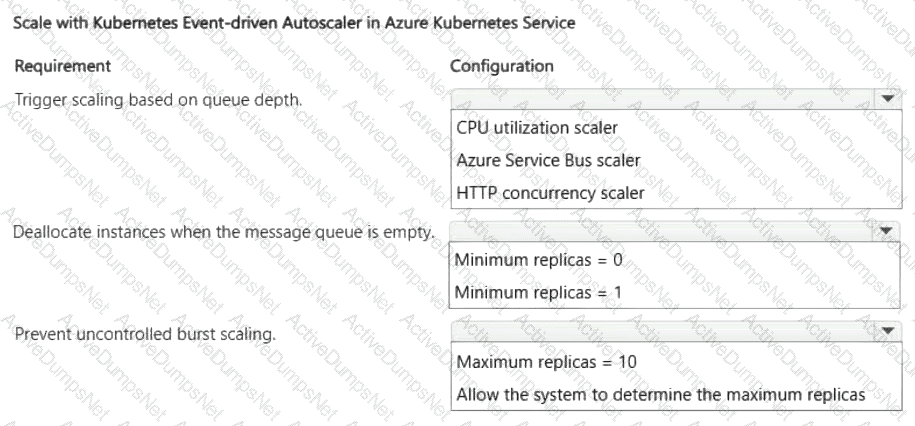
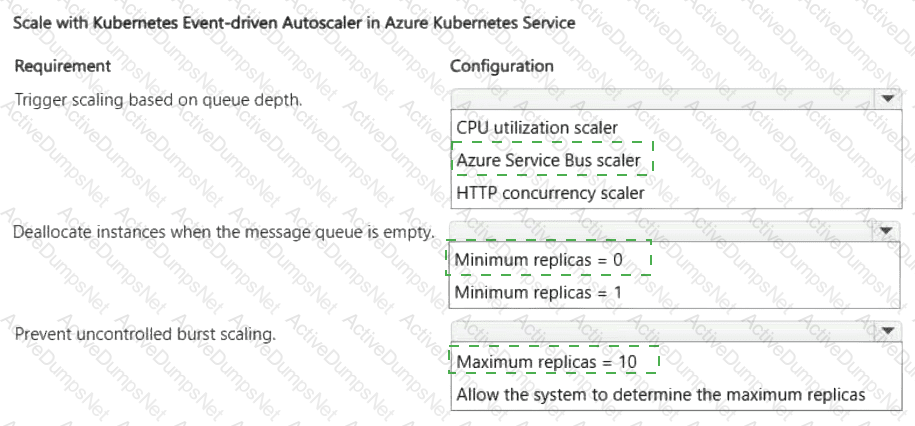
You need to deploy a batch retraining workload.
How should you complete the scaling configuration? To answer, select the appropriate options in the answer area.
NOTE: Each correct selection is worth one point.
You need to improve throughput for concurrent application requests to PostgreSQL.
What should you implement?
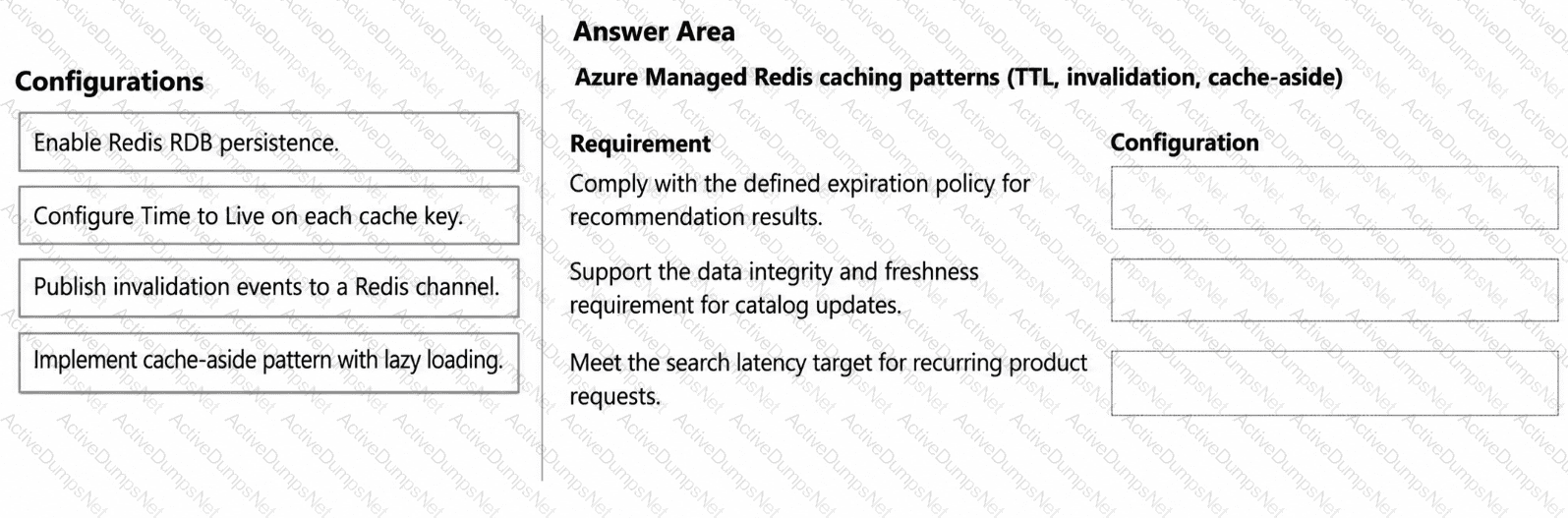
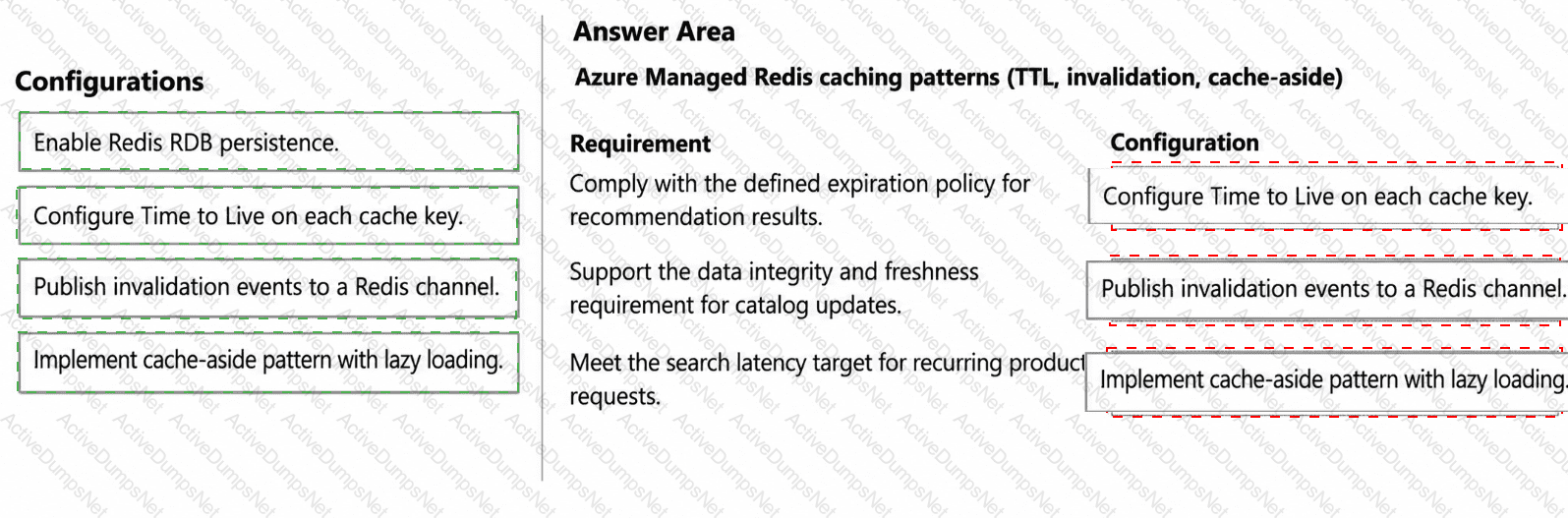
You need to configure the Redis integration for the Recommendation API.
Which configurations should you use? To answer, move the appropriate configurations to the correct requirements. You may use each configuration once, more than once, or not at all. You may need to move the split bar between panes or scroll to view content.
NOTE: Each correct selection is worth one point.
You need to deploy a batch embedding workload according to the planned application architecture.
What should you use?
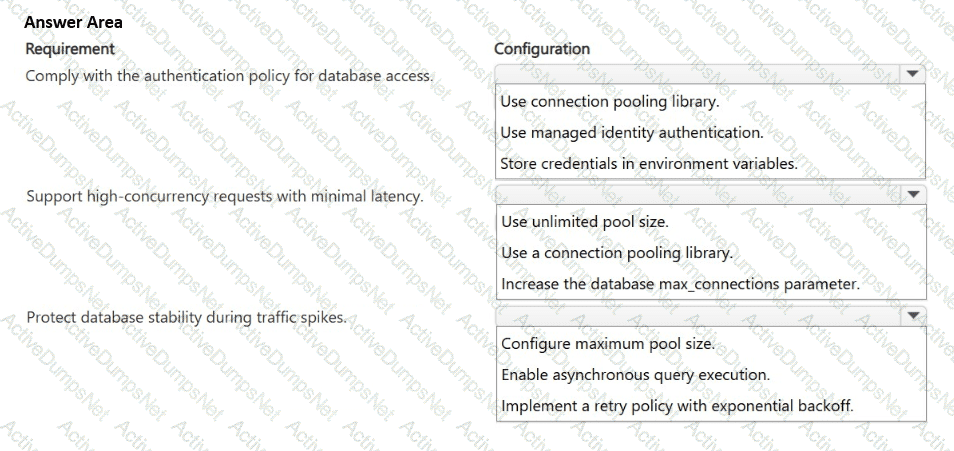
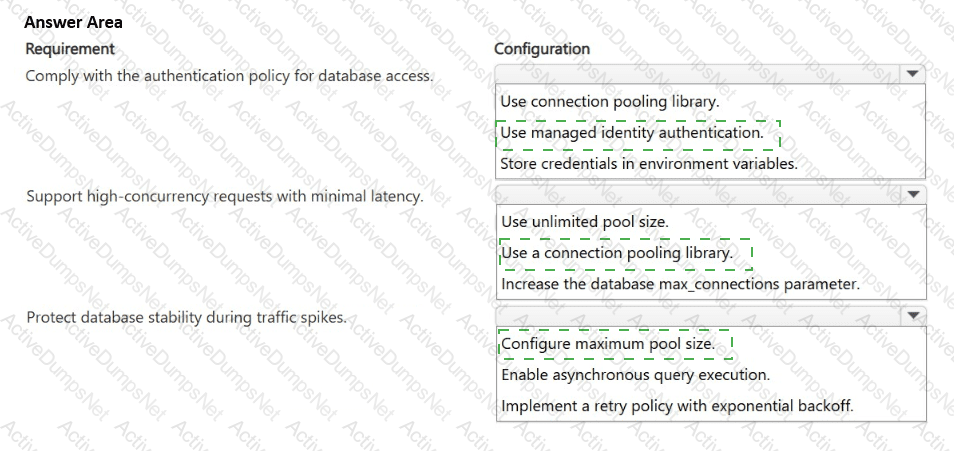
You need to optimize secure database connectivity from the containerized Recommendation API.
How should you configure the application?
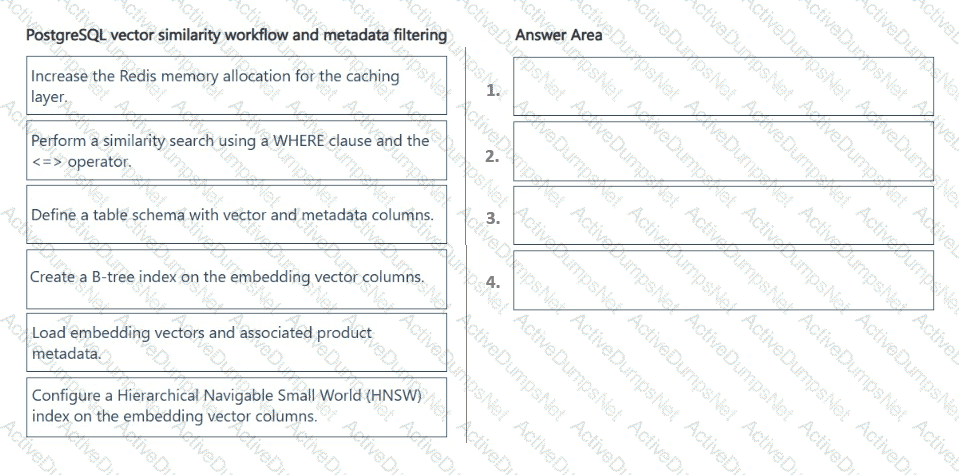
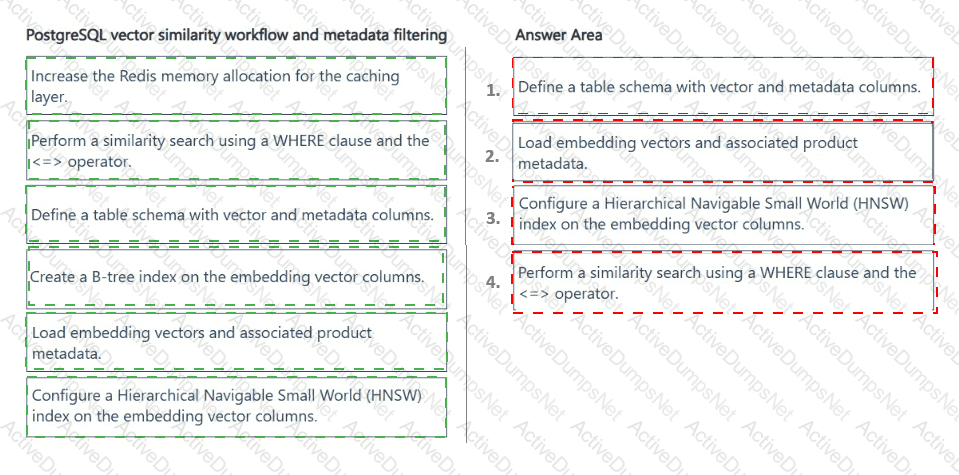
You need to implement the semantic retrieval workflow for the recommendation engine to meet the technical and performance requirements of Fabrikam Inc.
Which four actions should you perform in sequence? To answer, move the appropriate actions from the list of actions to the answer area and arrange them in the correct order.
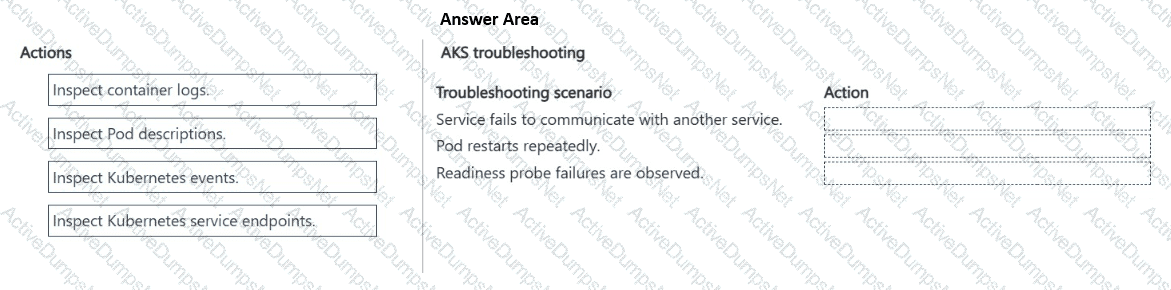
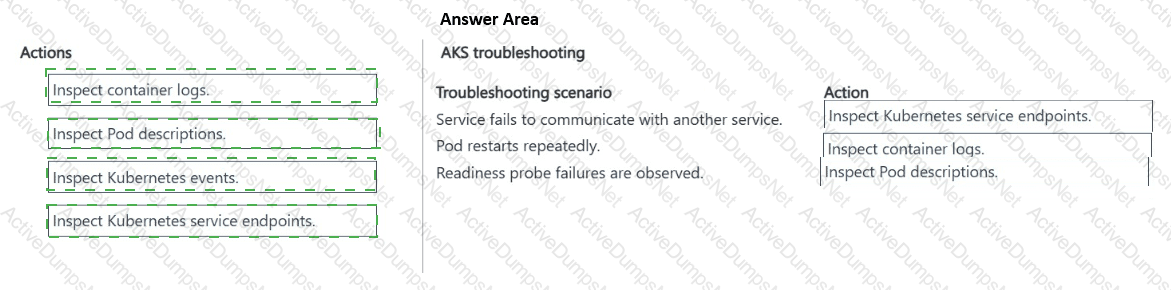
You need to troubleshoot connectivity failures between microservices running in AKS.
Which troubleshooting actions should you perform? To answer, move the appropriate action to the correct troubleshooting scenario. You may use each action once, more than once, or not at all. You may need to move the split bar between panes or scroll to view content.
NOTE: Each correct selection is worth one point.