Microsoft AB-250 Transforming Contact Center Experiences with AI in Dynamics 365 Exam Practice Test
Transforming Contact Center Experiences with AI in Dynamics 365 Questions and Answers
HOTSPOT
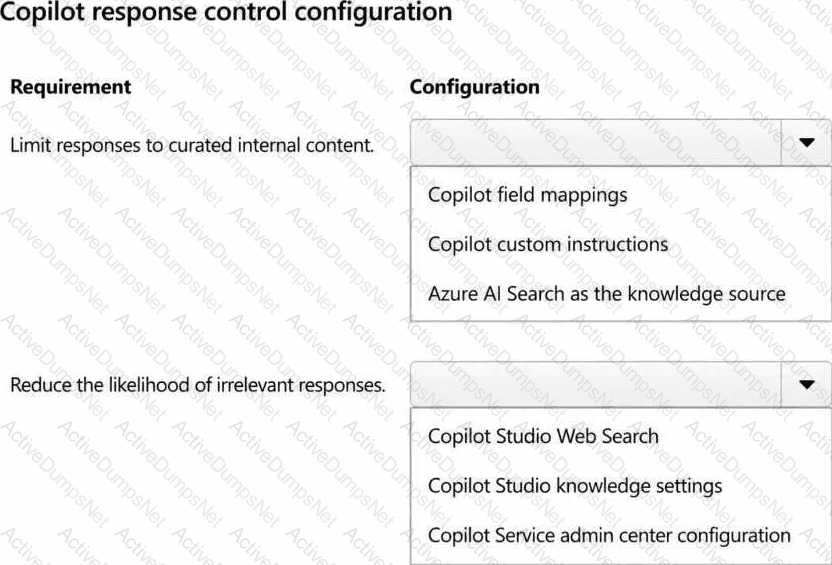
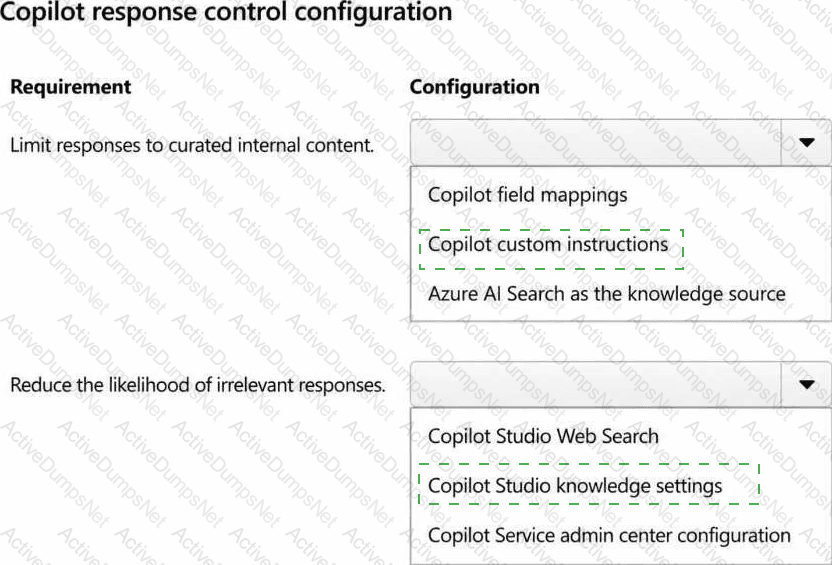
A company deploys Copilot in Dynamics 365 Customer Service to assist customer service representatives (CSRs) during customer interactions.
CSRs report that Copilot responses sometimes include inappropriate or unverified information.
The company must ensure that responses are based only on curated internal content and that irrelevant results are minimized.
You need to configure Copilot to meet the requirements.
What should you configure for each requirement? To answer, select the appropriate options in the answer area. NOTE: Each correct selection is worth one point.
A company uses Dynamics 365 Customer Service and plans to use internal knowledge sources, needing new knowledge articles automatically drafted for approval by knowledge managers, and improved accuracy of recommended articles for case resolutions. You need to configure case management to meet these requirements.
Which action most directly satisfies both the auto-drafting and improved-recommendation requirements?
A company uses Dynamics 365 Contact Center to handle incoming interactions, and CSRs report that when a new work item arrives, they cannot tell the type or context of the request until after they've already accepted it. CSRs need to see key details about work items before accepting them, so they can decide how to handle each interaction. You need to configure how work items appear to CSRs.
What should you do?
A company uses AI-enabled routing, and the customer service manager wants the system to automatically predict required skills and then apply those predicted skills during routing. You need to configure the routing to meet these requirements.
Which capability predicts the required skills automatically?
HOTSPOT
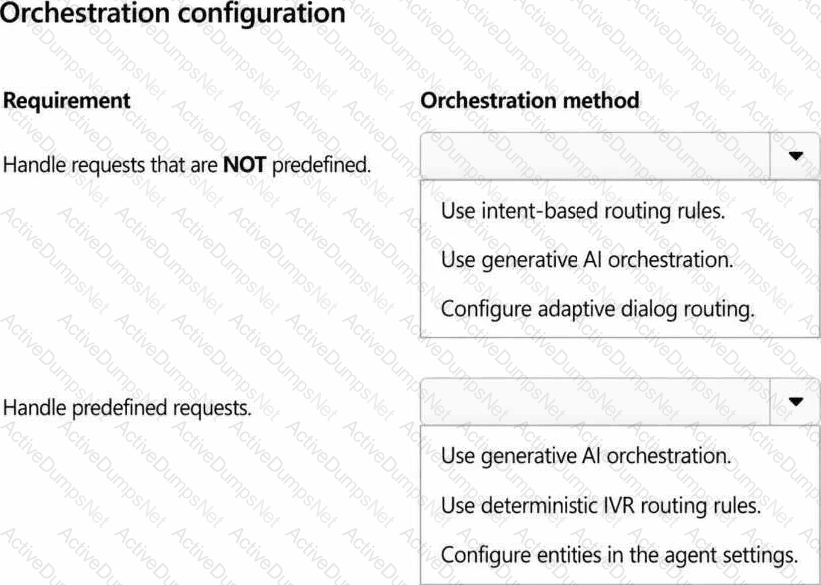
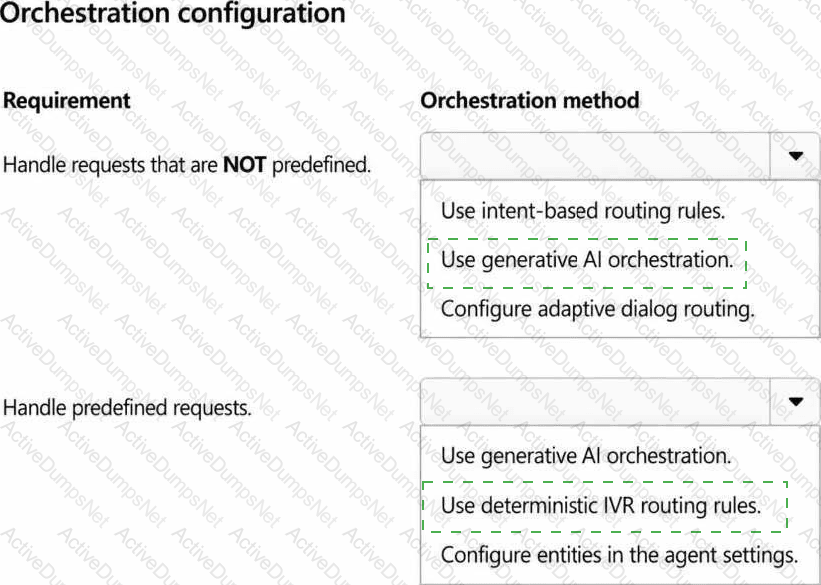
A company is designing an IVR solution.
The solution must enable the system to:
- Process natural language requests that are NOT predefined.
- Route calls by using predefined menu options.
You need to configure orchestration methods for the system.
How should you configure the solution? To answer, select the appropriate options in the answer area. NOTE: Each correct selection is worth one point.
A company needs work to keep routing even when there is a routing problem on voice queues or when the voice queues hit capacity. You need to configure the workstream and queue to meet that requirement.
Which two items should you configure? Each correct answer presents part of the solution.
A company uses skills-based routing for incoming service requests, relying on a skill-matching algorithm, and requests must only be assigned to the customer service representatives (CSRs) best qualified to resolve the issue. You need to make sure only qualified CSRs receive the work.
Which two actions should you perform? Each correct answer presents part of the solution.
A company is implementing Dynamics 365 Contact Center for Service team 1, which handles general inquiries, and Service team 2, which handles complex product issues, where each team must receive only its own work items, and Service team 1 must also be able to handle unidentified work items. You need to configure the Contact Center environment to meet these requirements.
What should you configure so Service team 1 handles both its own and unidentified work items?
A company uses Dynamics 365 Contact Center and must redirect work items once they reach a maximum wait time of 30 seconds. You need to configure Contact Center queues to meet this requirement.
What should you configure?
DRAG DROP
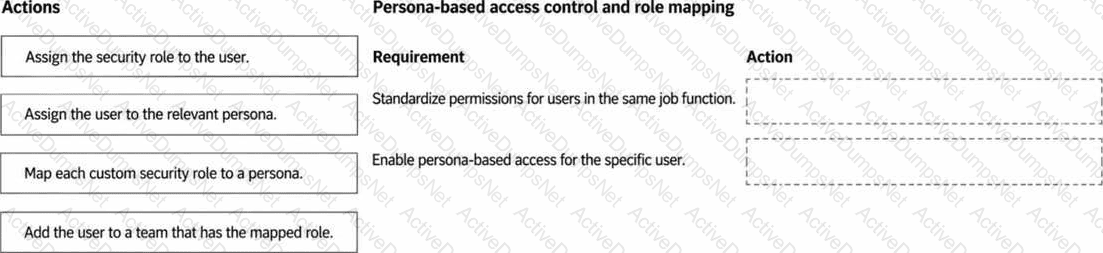
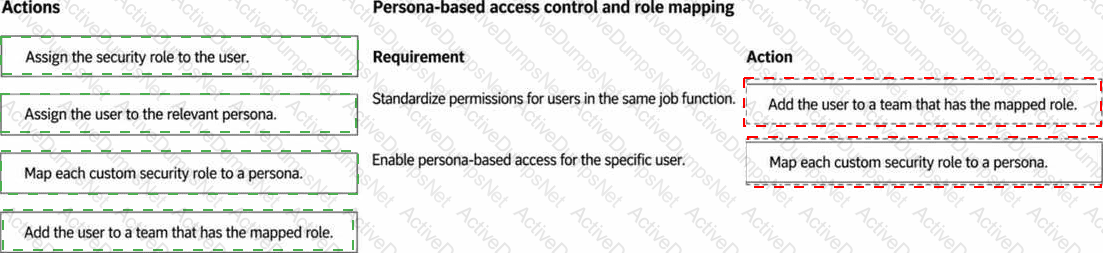
A company creates custom security roles for service representatives.
Users in the same job function must have consistent permissions. One individual requires access aligned to that individual's persona.
You need to configure access for the users.
Which actions should you perform? To answer, move the appropriate actions to the correct requirements. Each action may be used once, more than once, or not at all. You may need to move the split bar between panes or scroll to view content. NOTE: Each correct selection is worth one point.
HOTSPOT
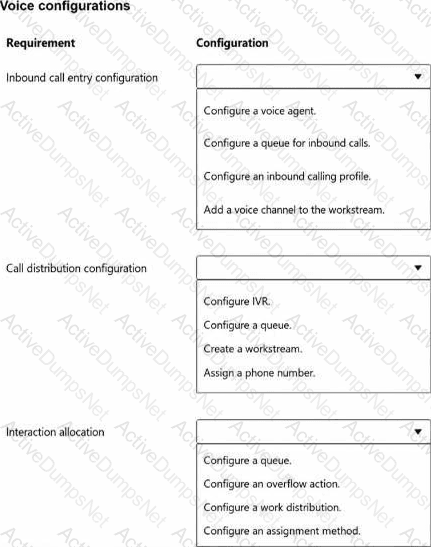
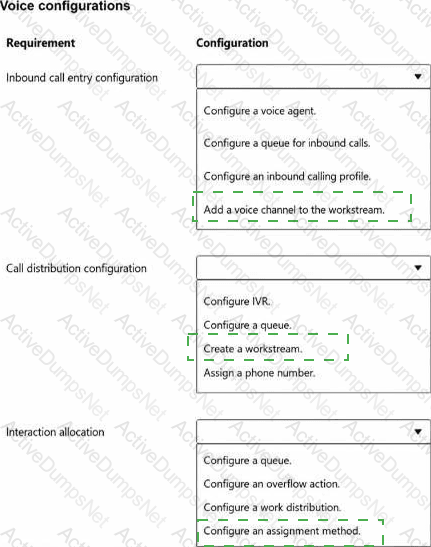
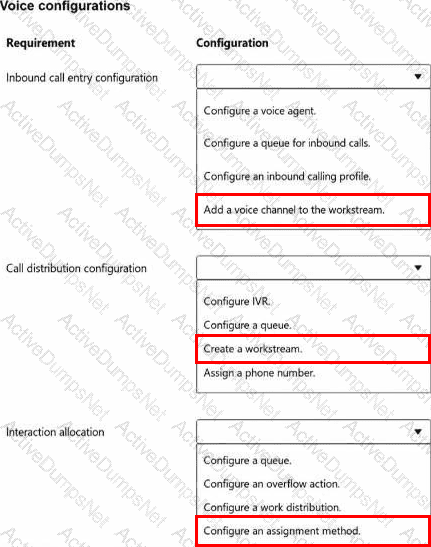
You need to configure inbound voice functionality and ensure that calls are routed to the appropriate CSR based on predefined criteria.
How should you perform the configurations? To answer, select the appropriate components in the answer area. NOTE: Each correct selection is worth one point.
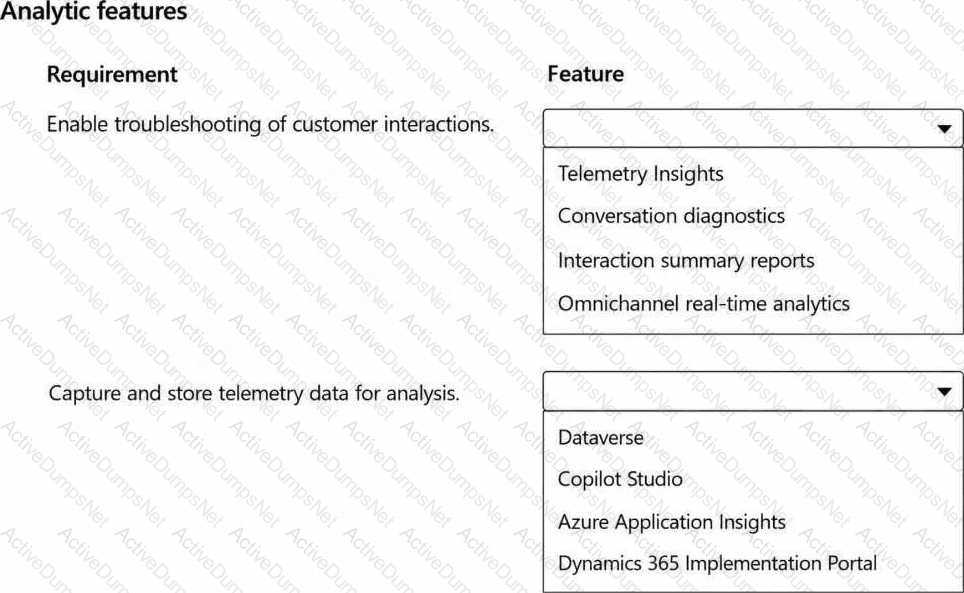
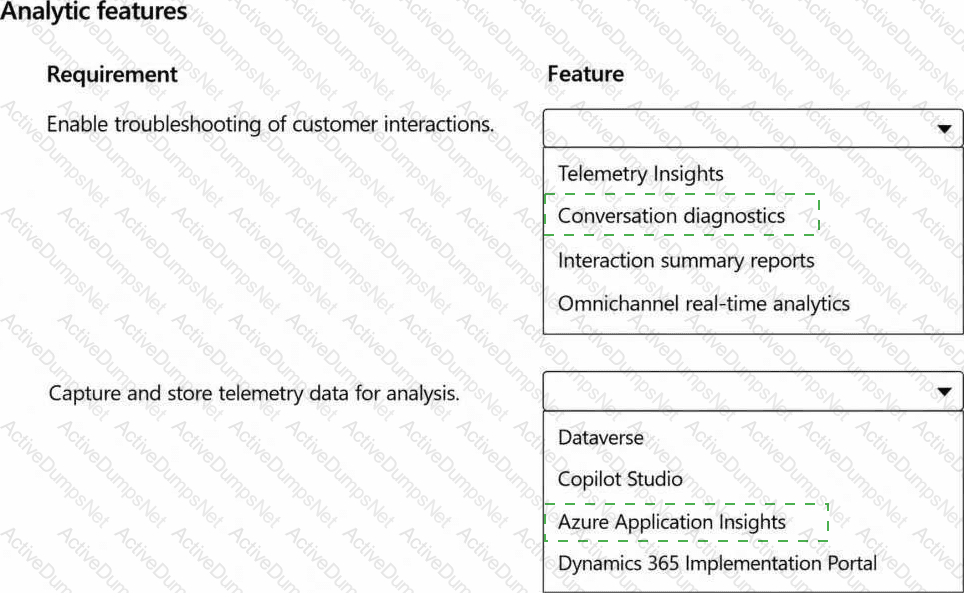
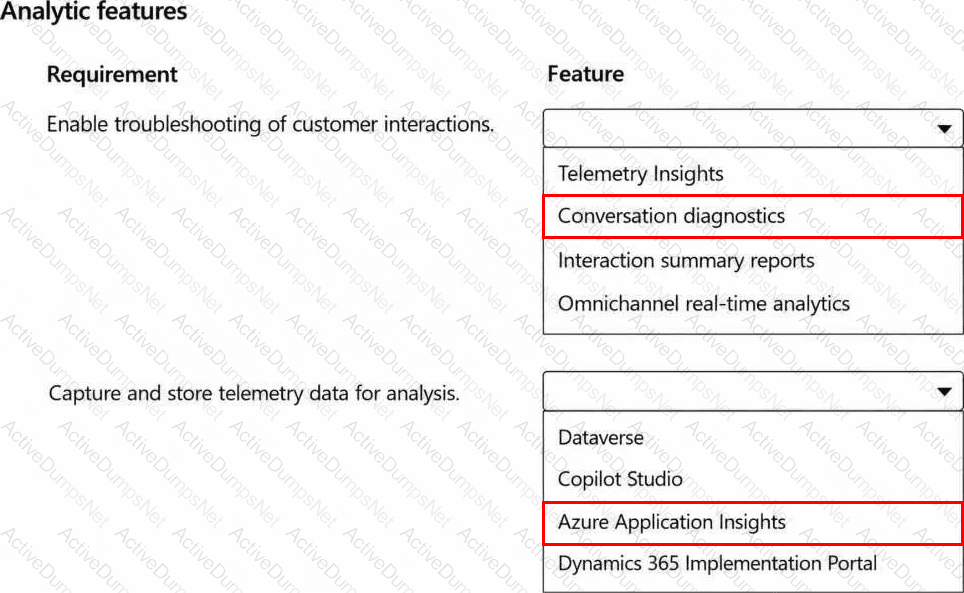
HOTSPOT
You need to meet the company’s business requirements for analytics and monitoring.
Which features should you configure? To answer, select the appropriate options in the answer area. NOTE: Each correct selection is worth one point.
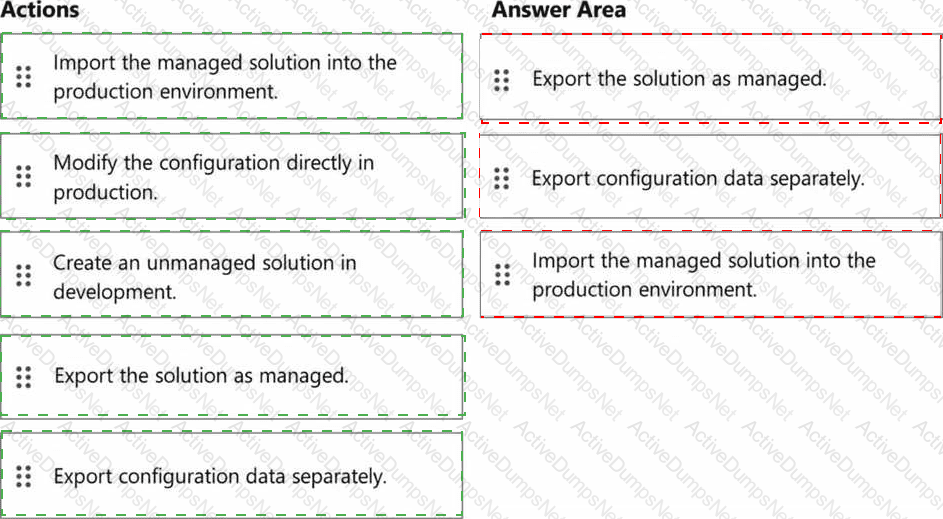
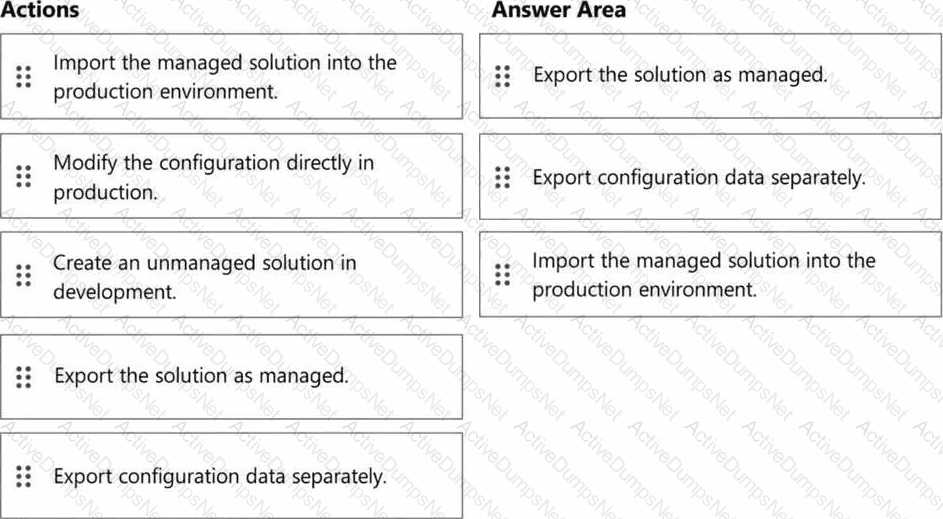
DRAG DROP
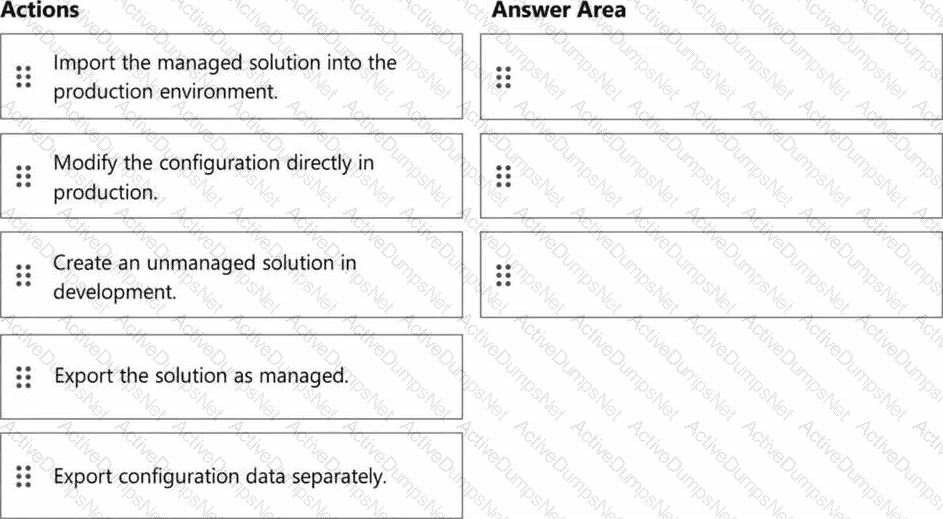
You need to deploy configuration changes across environments based on the technical requirements.
Which three actions should you perform in sequence? To answer, move the appropriate actions from the list of actions to the answer area and arrange them in the correct order.
For this question, refer to the Fabrikam, Inc. case study. You need to implement programmatic control of voice interactions to enable interactions with back-office CSRs.
Which capability should you use?
You need to design a voice agent that satisfies the voice channel and IVR technical requirements.
What should you do?
For this question, refer to the Fabrikam, Inc. case study. You need to design AI-driven interactions based on the voice channel business requirements, specifically resolving simple inquiries without a human representative while still giving CSRs the context collected earlier when escalation is required.
What should you configure?
For this question, refer to the Fabrikam, Inc. case study. You need to design AI-driven interactions that meet the AI and automation business requirements, specifically supporting generative, conversational interactions for handling frequently asked customer questions.
What should you configure?
For this question, refer to the Fabrikam, Inc. case study. You need to ensure that required information is collected during interactions with the agent in Copilot Studio, in a way that satisfies the business requirements.
Which sequence of actions, performed in order, achieves this?
You need to resolve inconsistent access across user personas.
What should you do?
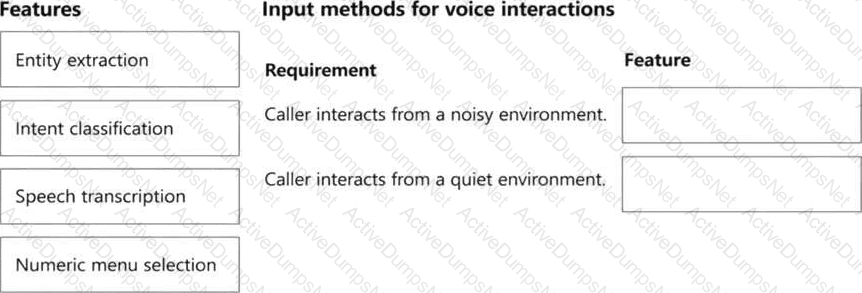
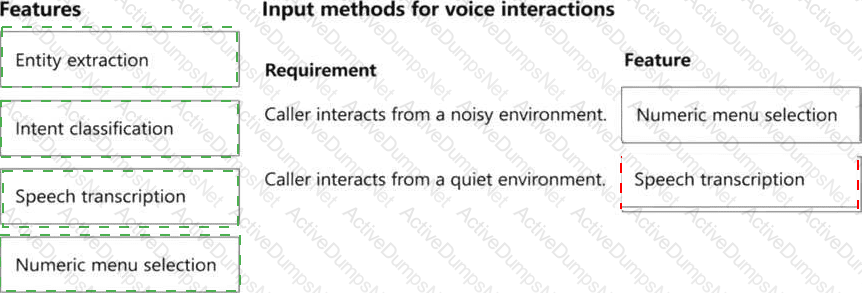
DRAG DROP
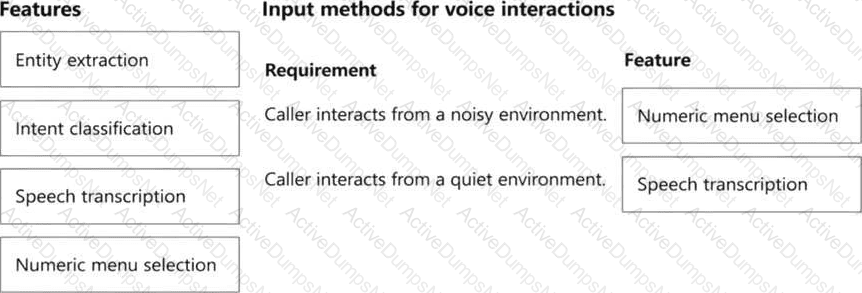
You need to design voice interactions that resolve the caller interaction issues.
Which input method should you configure? To answer, move the appropriate features to the correct requirements. You may use each feature once, more than once, or not at all. You may need to move the split bar between panes or scroll to view content. NOTE: Each correct selection is worth one point.
DRAG DROP
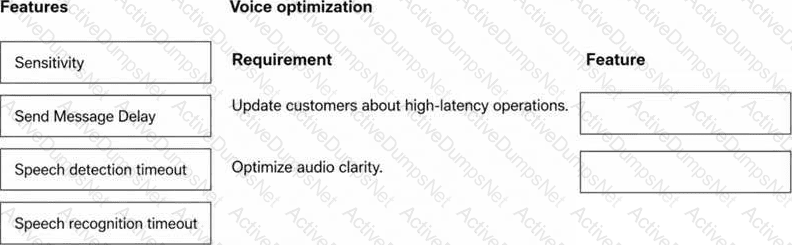
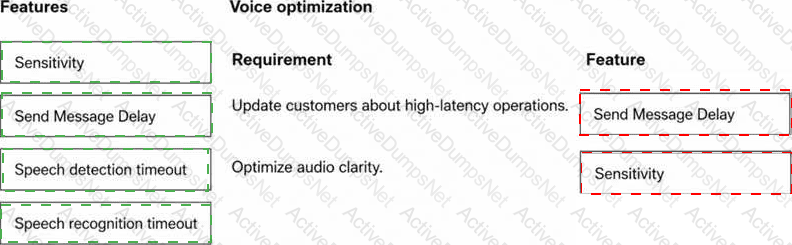
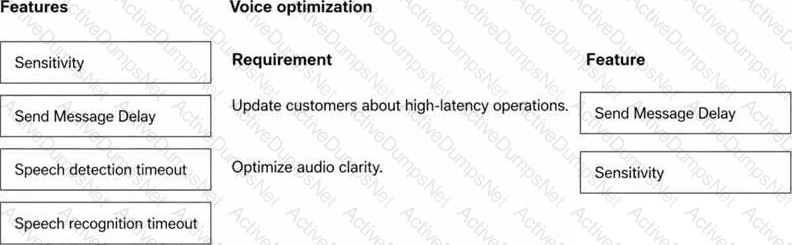
You need to optimize voice interaction performance based on the voice agent configuration requirements.
Which features should you configure? To answer, move the appropriate features to the correct requirements. You may use each feature once, more than once, or not at all. You may need to move the split bar between panes or scroll to view content. NOTE: Each correct selection is worth one point.
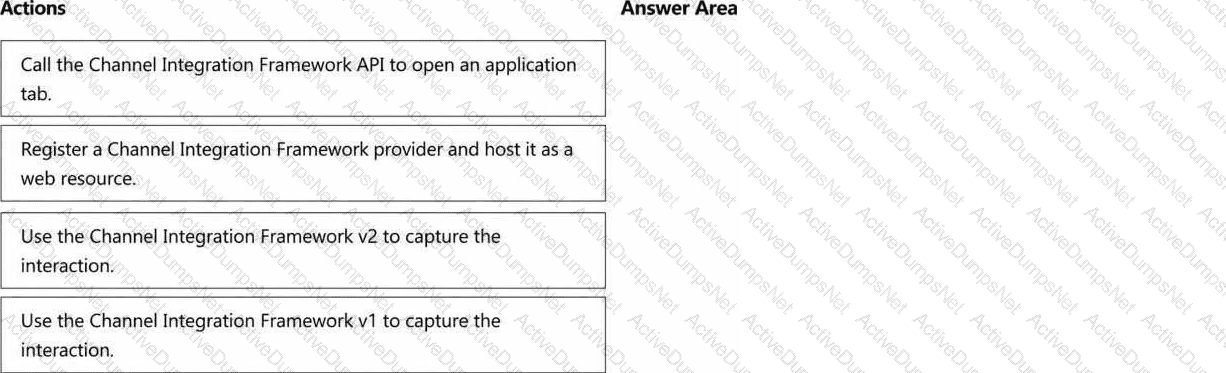
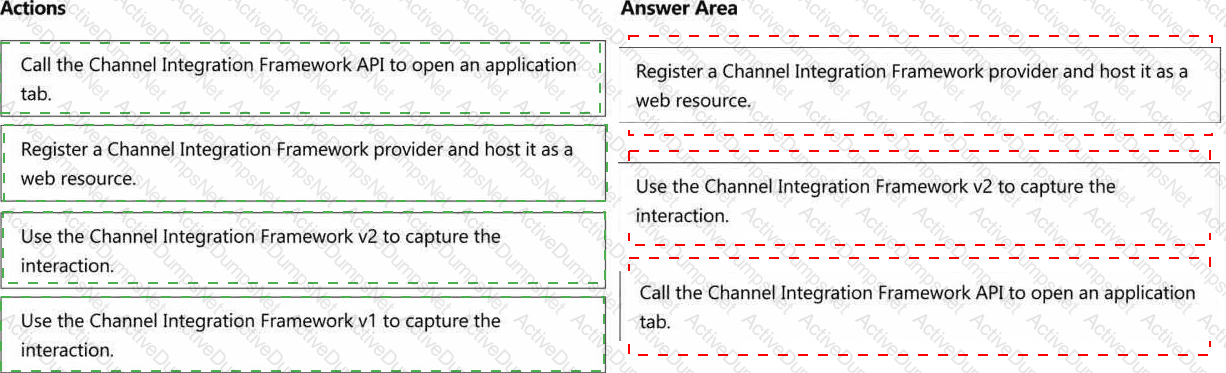
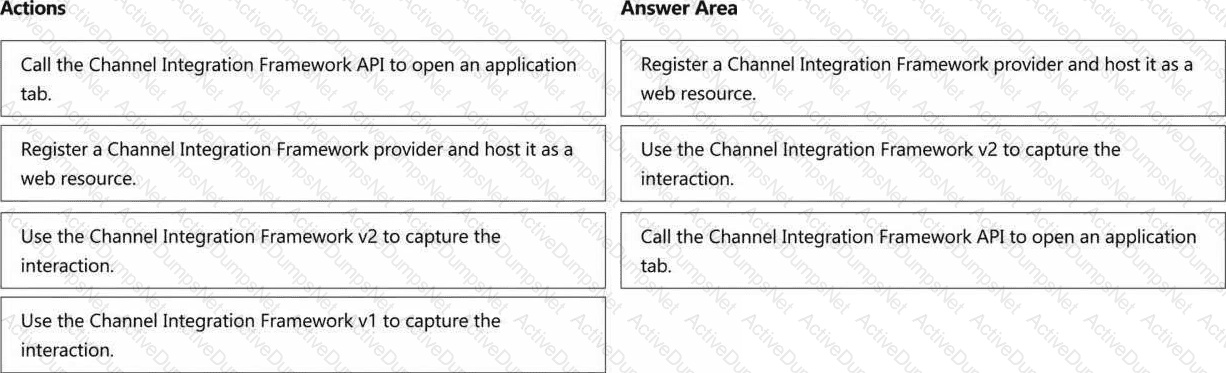
DRAG DROP
You need to ensure that CSRs can receive calls and view customer data in the first phase of the project.
Which three actions should you perform in sequence? To answer, move the appropriate actions from the list of actions to the answer area and arrange them in the correct order.
DRAG DROP
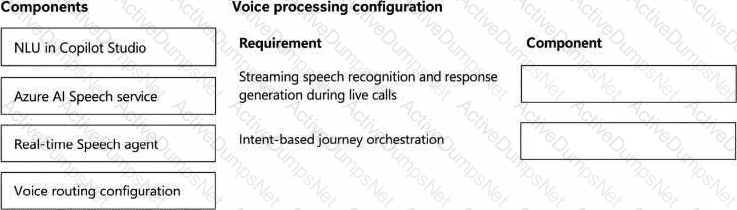
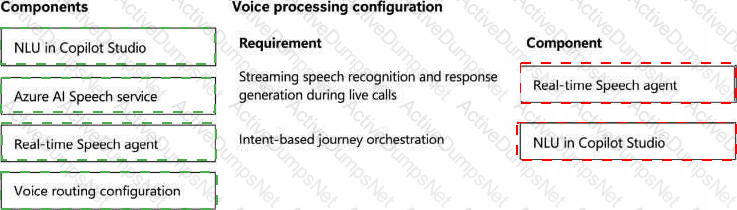
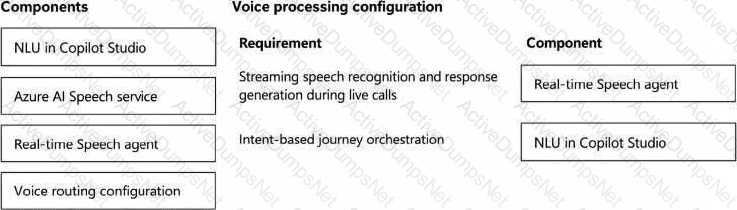
You need to configure voice interaction processing.
How should you complete the configuration? To answer, move the appropriate components to the correct requirements. You may use each component once, more than once, or not at all. You may need to move the split bar between panes or scroll to view content. NOTE: Each correct selection is worth one point.
DRAG DROP
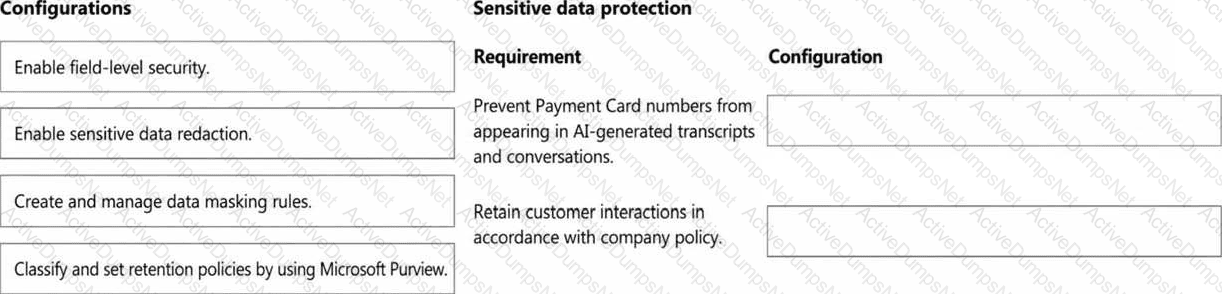
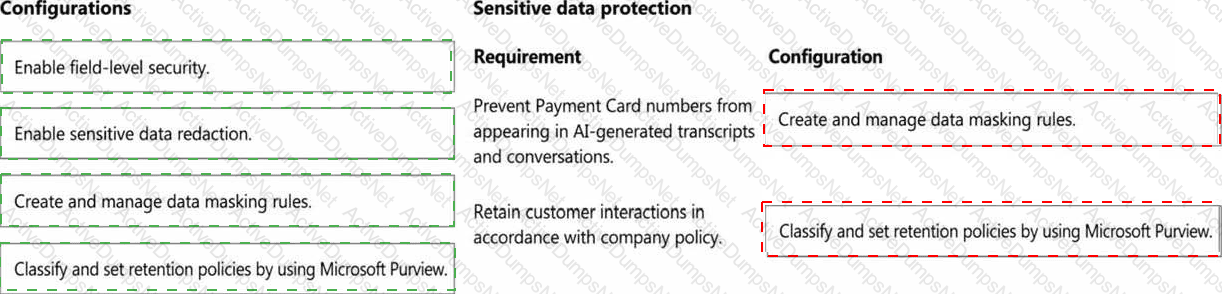
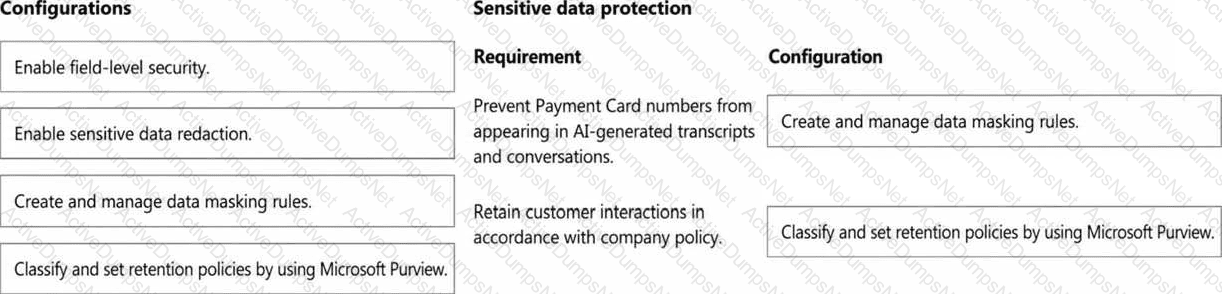
You need to configure the Dynamics 365 Contact Center solution based on the data protection and compliance requirements.
Which configurations should you apply? To answer, move the appropriate configurations to the correct contexts. You may use each configuration once, more than once, or not at all. You may need to move the split bar between panes or scroll to view content. NOTE: Each correct selection is worth one point.
You need to provide a solution for supervisors to monitor operations based on the technical requirements.
Which two actions should you perform? Each correct answer presents part of the solution. NOTE: Each correct selection is worth one point.
HOTSPOT
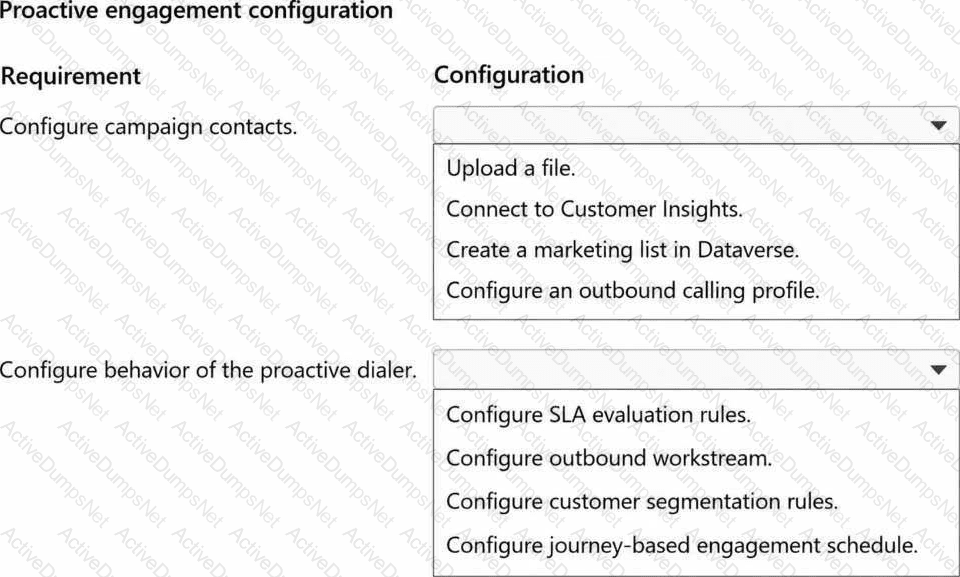
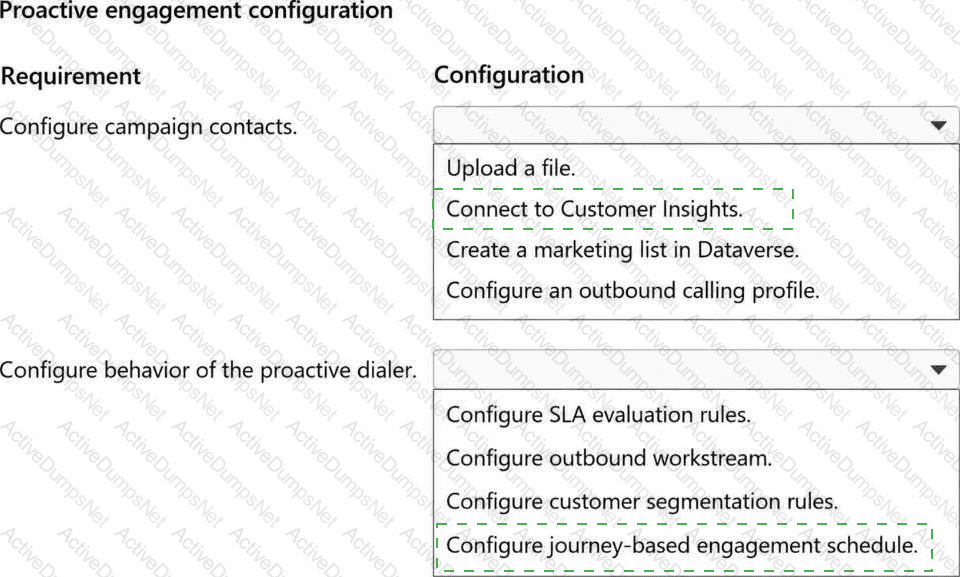
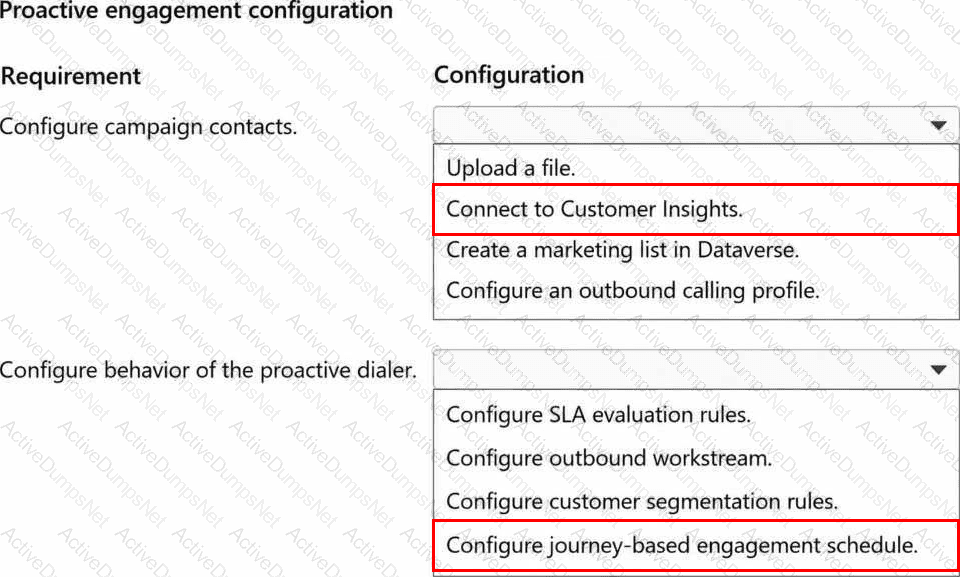
You need to configure proactive outbound engagement.
How should you complete the configuration? To answer, select the appropriate action in the answer area. NOTE: Each correct selection is worth one point.
DRAG DROP
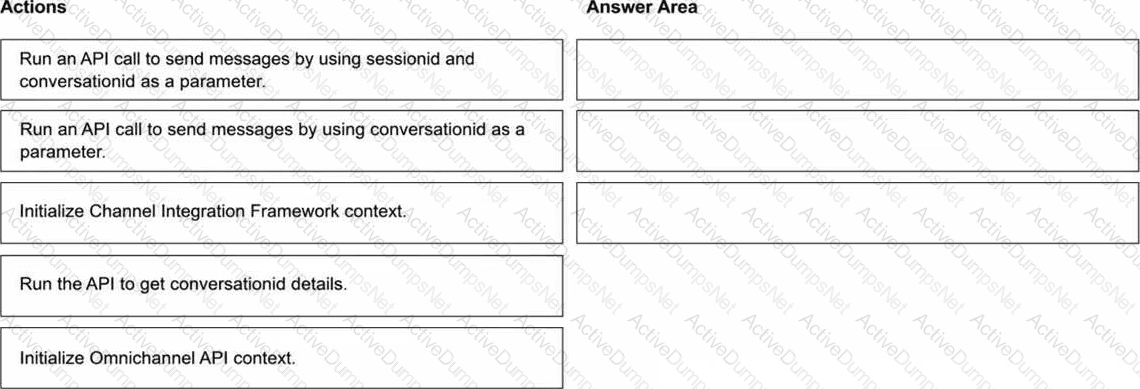
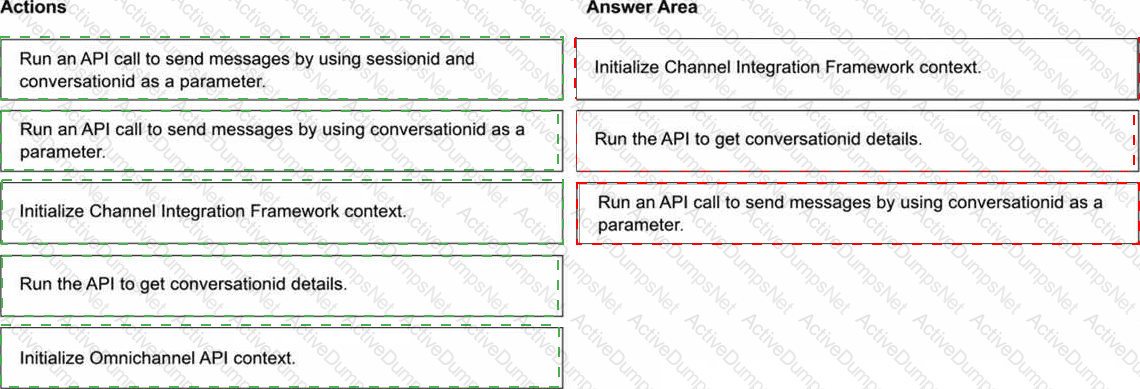
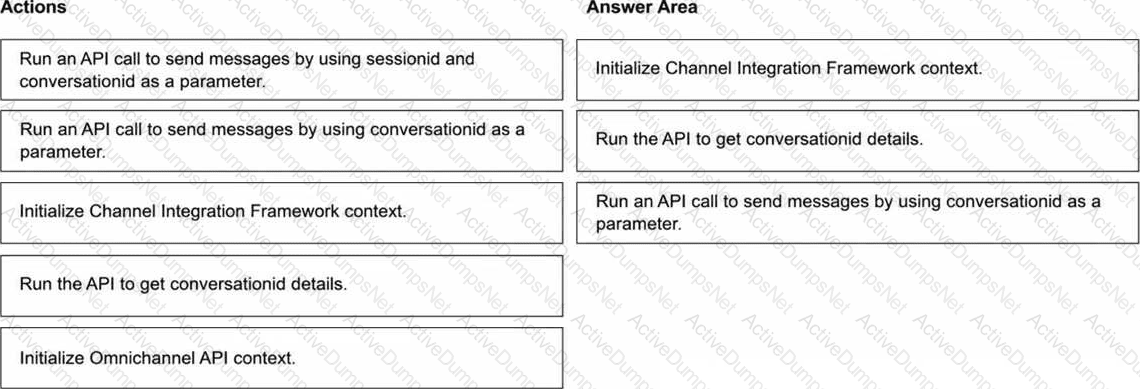
You need to configure the system to send messages to the CSR.
Which three actions should you perform in sequence? To answer, move the appropriate actions from the list of actions to the answer area and arrange them in the correct order.