
Fortinet NSE7_CDS_AR-7.6 Fortinet NSE 7 - Public Cloud Security 7.6.4 Architect Exam Practice Test
Fortinet NSE 7 - Public Cloud Security 7.6.4 Architect Questions and Answers
Refer to the exhibit.
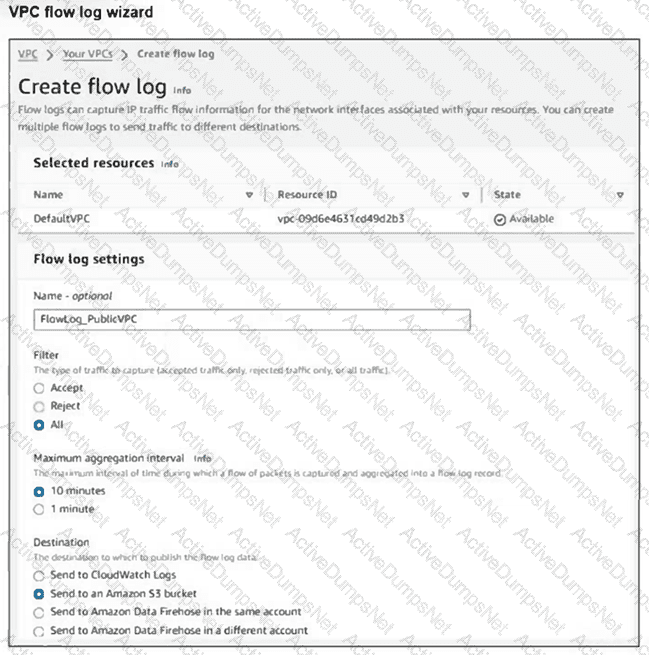
Your team notices an unusually high volume of traffic sourced at one of the organizations FortiGate EC2 instances. They create a flow log to obtain and analyze detailed information about this traffic. However, when they checked the log, they found that it included traffic that was not associated with the FortiGate instance in question.
What can they do to obtain the correct logs? (Choose one answer)
Refer to the exhibit.
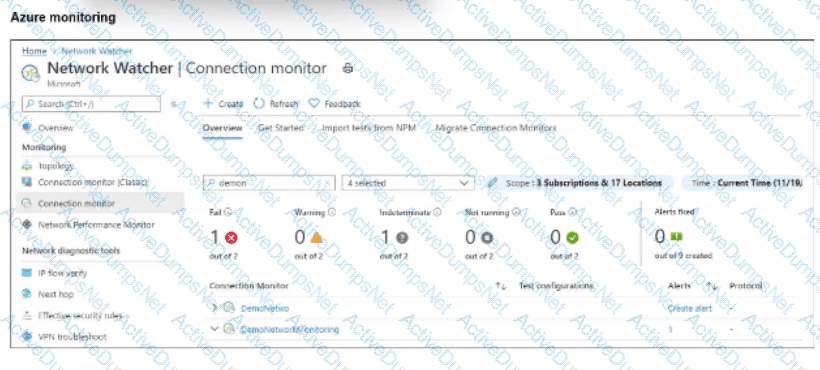
After analyzing the native monitoring tools available in Azure, an administrator decides to use the tool displayed in the exhibit.
Why would an administrator choose this tool?
How can the FortiCNAPP SmartFix feature assist security teams in handling vulnerabilities and code security?
What is the main advantage of using SD-WAN Transit Gateway Connect over traditional SD-WAN?
An administrator is configuring a software-defined network (SDN) connector in FortiWeb to dynamically obtain information about existing objects in an Amazon Elastic Kubernetes Service (EKS) cluster.
Which AWS policy should the administrator attach to a user to achieve this goal?
Exhibit.
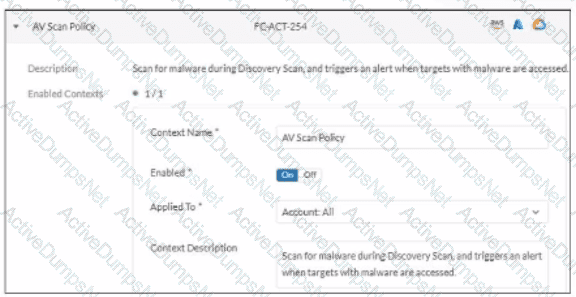
In which type of FortiCNP insights can an administrator examine the findings triggered by this policy?
You are investigating an attack path for a top risky host. You notice that the Common Vulnerability Scoring System (CVSS) and the vulnerability impact scores are very high. However, the attack path severity for the top risky host itself is low. Which two pieces of contextualized information can help you understand why? (Choose two answers)
An administrator is relying on an Azure Bicep linter to find possible issues in Bicep files.
Which problem can the administrator expect to find?
You are automating configuration changes on one of the FortiGate VMs using Red Hat Ansible.
How does Red Hat Ansible connect to FortiGate to make the configuration change?
Refer to the exhibit.
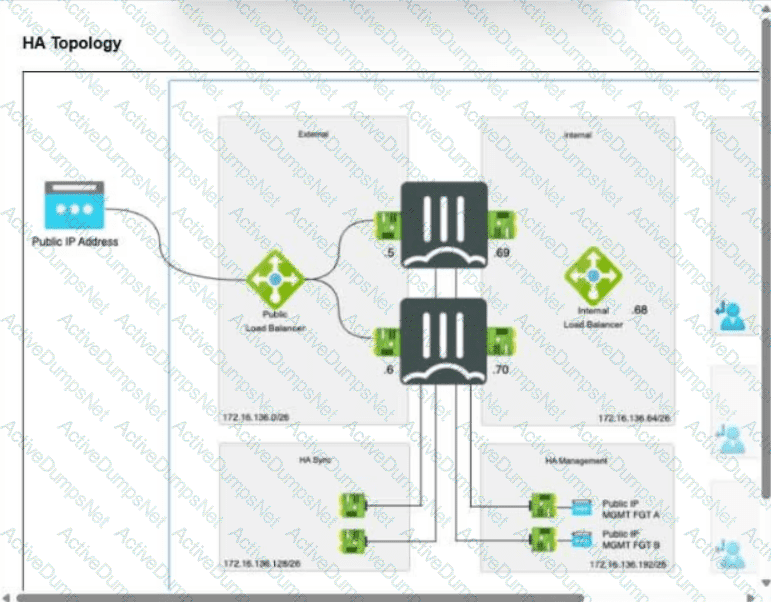
Consider the active-active load balance sandwich scenario in Microsoft Azure.
What are two important facts in the active-active load balance sandwich scenario? (Choose two.)
You have deployed a FortiGate HA cluster in Azure using a gateway load balancer for traffic inspection. However, traffic is not being routed correctly through the firewalls.
What can be the cause of the issue?
An administrator would like to use FortiCNP to keep track of sensitive data files located in the Amazon Web Services (AWS) S3 bucket and protect it from malware. Which FortiCNP feature should the administrator use?
Refer to the exhibit.
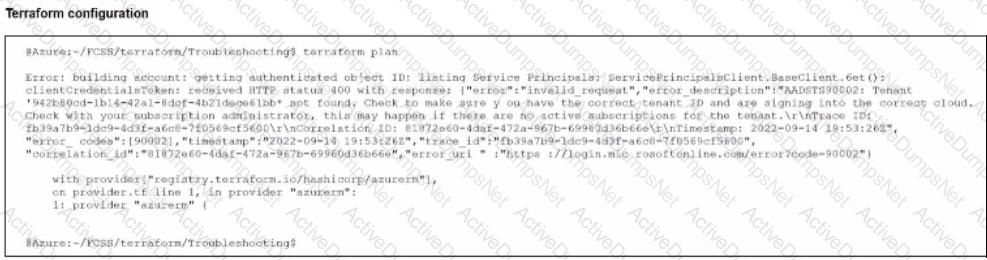
After the initial Terraform configuration in Microsoft Azure, the terraform plan command is run.
Which two statements about running the terraform plan command are true? (Choose two.)
Refer to the exhibit.
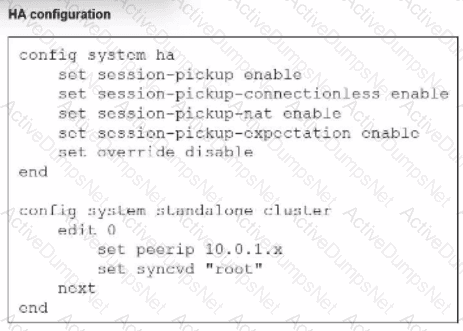
You deployed an HA active-active load balance sandwich with two FortiGate VMs in Microsoft Azure.
After the deployment, you prefer to use FGSP to synchronize sessions, and allow asymmetric return traffic. In the environment, FortiGate port 1 and port 2 are facing external and internal load balancers respectively.
What IP address must you use in the peerip configuration?
You are using Ansible to modify the configuration of several FortiGate VMs. What is the minimum number of files you need to create, and in which file should you configure the target FortiGate IP addresses?
Refer to the exhibit.
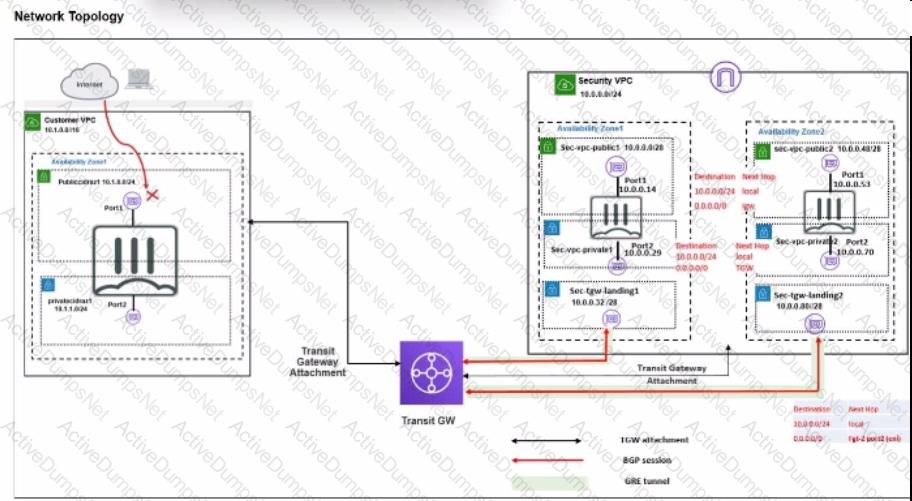
In your Amazon Web Services (AWS), you must allow inbound HTTPS access to the Customer VPC FortiGate VM from the internet. However, your HTTPS connection to the FortiGate VM in the Customer VPC is not successful.
Also, you must ensure that the Customer VPC FortiGate VM sends all the outbound Internet traffic through the Security VPC.
How do you correct this issue with minimal configuration changes? (Choose three.)
A customer would like to use FortiGate fabric integration with FortiCNP. When adding a FortiGate VM to FortiCNP, which three mandatory configuration steps must you follow on FortiGate? (Choose three answers)
Refer to the exhibit.
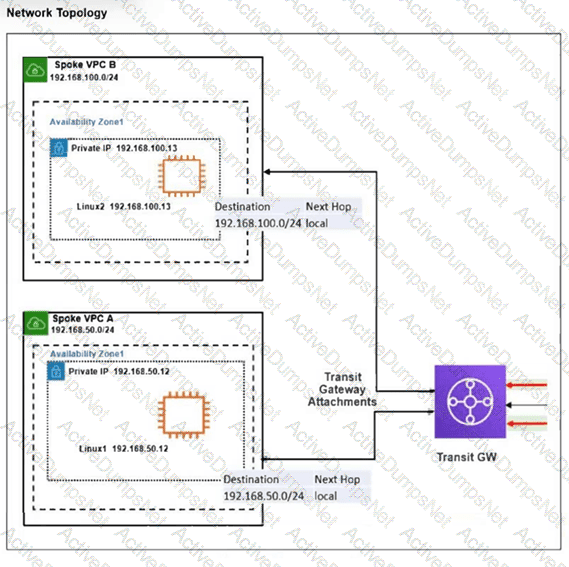
The exhibit shows a customer deployment of two Linux instances and their main routing table in Amazon Web Services (AWS). The customer also created a Transit Gateway (TGW) and two attachments. Which two steps are required to route traffic from Linux instances to the TGW? (Choose two answers)
Your administrator instructed you to deploy an Azure vWAN solution to create a connection between the main company site and branch sites to the other company VNETs. What is the best connection solution available between your company headquarters, branch sites, and the Azure vWAN hub? (Choose one answer)
In an SD-WAN TGW Connect topology, which three initial steps are mandatory when routing traffic from a spoke VPC to a security VPC through a Transit Gateway? (Choose three.)