
Spring Sale Limited Time Flat 70% Discount offer - Ends in 0d 00h 00m 00s - Coupon code: 70spcl

AIChE CCPSC CCPS Process Safety Professional Certification Exam Practice Test

Page: 1 / 11
Total 110 questions

CCPS Process Safety Professional Certification Questions and Answers

Question 1

For flashing liquids:

Options:

A.

the fraction flashed is always less than 10% of the total mass

B.

the fraction flashed is always more than 50% of the total mass

C.

the energy for the flashing comes from the enthalpy of the liquid

D.

flashing will never occur if the liquid is stored above its normal boiling point

Question 2

All three flammable gas detection alarms have indicated in the control room the presence of a flammable vapor in the containment area below a horizontal butane storage tank. The correct operator response to this emergency would include (select all that apply):

Options:

A.

Notify workers to leave the butane tank area

B.

Remotely isolate the inlet and outlet lines of the butane tank, if this capability exists

C.

Deploy an operator with a combustible gas meter to determine the extent of the flammable cloud

D.

Remotely activate the tank area deluge system, if one exists

E.

Notify management of the situation

Question 3

A field operator contacted the control room about a leaking connection on a heat exchanger. The control room operator instructed the field operator to bypass the heat exchanger. However, unknown to the control room operator, additional piping had recently been installed upstream of the heat exchanger, and had not been recorded on the P & ID. When the field operator incorrectly opened a valve in the new piping, the process stream was routed to an unintended location.

Which of the following groups of Risk Based Process Safety elements, if properly implemented, could have prevented this incident?

Options:

A.

Process Knowledge Management – Safe Work Practices – Management of Change

B.

Management of Change – Conduct of Operations – Emergency Management

C.

Process Knowledge Management – Management of Change – Training and Performance Assurance

D.

Asset Integrity – Training and Performance Assurance – Management of Change

Question 4

A material had been oxidized many times, without incident, under an oxygen atmosphere in a small pilot plant vessel. While scaling up to a larger vessel, the plant engineers decided they could improve gas/liquid contact by using a more efficient feed dispersing system. This dispersing system filled the reactor ' s vapor space with a fine combustible mist. Several hours after startup, the vessel was ruptured by an internal mist explosion. The source of ignition was a small amount of catalyst left over from an earlier set of experiments. This was a phenomenon that the engineers had not considered. Which of the following risk based process safety elements could have helped prevent this incident? (Select all that apply)

Options:

A.

Measurement and Metrics

B.

Management of Change

C.

Contractor Management

D.

Process Knowledge Management

E.

Emergency Management

Question 5

Which of the following are effective methods for verifying that an operator understood the training provided? (Select all that apply)

Options:

A.

The operator signing a form to indicate that they understood the training provided

B.

A written quiz or test that must be passed after the training has been completed

C.

An attendance sheet from the training course

D.

Documentation from the trainer that the operator demonstrated understanding of the training provided

Question 6

Which of the following is not a leading metric for emergency management?

Options:

A.

Number of actual process safety incidents in past year

B.

Number of trained emergency response team members on each shift

C.

Number of revisions to emergency response plans in past year

D.

Number of realistic emergency response drills in past year

Question 7

A facility has several processes that need to be audited. There are 120 P & IDs (Piping and Instrumentation Diagrams) for the processes to be audited. The auditor responsible for Process Knowledge Management should:

Options:

A.

Only review P & IDs from the processes with the highest process safety risk

B.

Request assistance from the lead auditor to distribute the load

C.

Plan to extend the time required to do the audit

D.

Review a representative sampling of P & IDs from all processes

Question 8

Which of the following are Hazard Identification and Risk Analysis methods? (Select all that apply)
Options:

A.

Root Cause Analysis

B.

Layer of Protection Analysis

C.

Bow-Tie Analysis

D.

What-If

E.

Fish Bone Analysis

F.

FMEA

Question 9

Question # 9

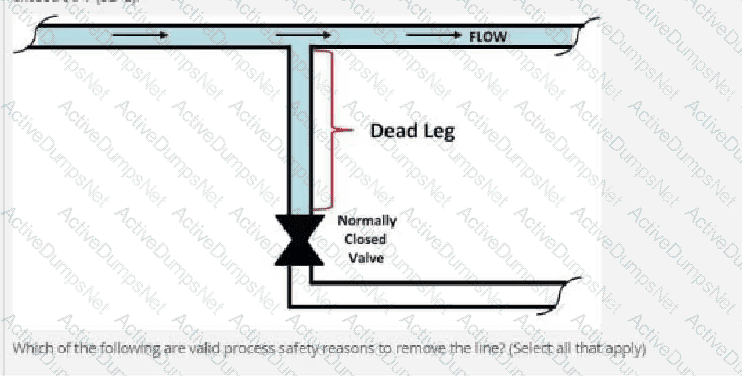
During a field inspection of the process piping in a production unit, a section of piping is identified as containing a dead leg in which stagnant liquid is trapped. It is determined that this dead leg branch line is used very infrequently. Assume that the plant is in a location where winter temperatures drop below 20°F (-7°C) and summer temperatures can exceed 90°F (32°C). Which of the following are valid process safety reasons to remove the line? (Select all that apply)

Options:

A.

The cost of removing the line will be greater if done at a later time

B.

Water could accumulate in the line and freeze during colder weather, potentially rupturing the piping

C.

The current position of the line may be a tripping hazard

D.

Stagnant liquids in piping could result in accelerated corrosion

Question 10

A rupture pin relief device operates when:

Options:

A.

A special spiral spring called a “pin spring” pushes against the valve seat - the valve opens when the pressure against the seat is high enough

B.

An electric solenoid operates a pin, allowing the valve seat to open

C.

A rod buckles at a specific pressure allowing the seat to open

D.

This is a special type of spring relief with a very small seat, called a pin seat

Question 11

Discuss the training needs for personnel who may be required to respond to a release of a hazardous substance within a chemical facility.

Options:

A.

Focus only on theoretical knowledge of chemicals and hazards

B.

Provide only basic PPE training without practical exercises

C.

Provide comprehensive training including hazard recognition, emergency response actions, PPE use, and incident command understanding

D.

Limit training to evacuation procedures only

Question 12

A Management of Change work process includes: (select all that apply)

Options:

A.

A review of Safe work practices

B.

A review of impact on process safety

C.

Written procedure

D.

Approval requirements

Question 13

A weak process safety culture can degrade the effectiveness of the incident investigation element, true or false?

Options:

A.

True

B.

False

Question 14

Secondary dust explosion consequences are often related to poor housekeeping, true or false?

Options:

A.

True

B.

False

Question 15

Which of the following would be most effective as a leading metric for a Management of Change program?

Options:

A.

Percentage of procedures revalidated per schedule/plan/period

B.

Percentage of work orders/requests which were misclassified as replacement-in-kind

C.

Number (or percent) of overdue inspection, testing, and preventative maintenance tasks

D.

Number of metrics for which data are collected

Question 16

A contract company that has never worked at your site is the only contract company technically capable of performing a critical task at your site. The contract company’s safety record is well below your company’s safety performance criteria. What activities do you take while they are working on-site? (select all that apply)

Options:

A.

Participate in job pre-plan activities daily with the contract company workers to understand the work they will be performing and their plan to do it safely

B.

Meet with the management of the contract company after the completion of the project to discuss their safety performance onsite

C.

If significant safety issues occur, stop all of the contract company work at the site and discuss/retrain as needed

D.

Conduct frequent observations of the worksite and stop any unsafe work, then provide timely feedback to the contract company on the observed safety issues

E.

Investigate and document any safety issues with the contract company activities

Question 17

Development and documentation of information about the equipment and chemicals is most closely related to which risk based process safety element?

Options:

A.

Hazard Identification and Risk Analysis

B.

Process Knowledge Management

C.

Process Safety Competence

D.

Compliance with Standards

Question 18

A combined pressure/vacuum inerting procedure is being used to reduce oxygen in a vessel prior to introducing a flammable gas. Which of the following statements is correct?

Options:

A.

Less inert is used if the vacuum is applied first.

B.

Less inert is used if the pressure is applied first.

C.

The same amount of inert is required using either approach.

Question 19

Which of the following are evidence that good workforce involvement exists at a facility? (Select all that apply)

Options:

A.

Operators are always included on PHA teams

B.

Operators are disciplined for not following procedures

C.

Operators are expected to report minor process safety incidents

D.

Operators participate on incident investigation teams

E.

Operators are consulted on the content of training programs

Question 20

A company has done a statistical/metric study on root causes of incidents over the last dozen years. It shows a steady, marked increase in the number of incidents with root cause being insufficient operator knowledge of the process. Which two of the following statements are most reasonable?

Options:

A.

The incident investigation element is clearly deficient

B.

The company’s training program might need improvement

C.

The company’s process safety competency could be deteriorating

D.

Facility audits are not detecting the issue

E.

Better writing of operating procedures will compensate for insufficient process knowledge by the operators

Question 21

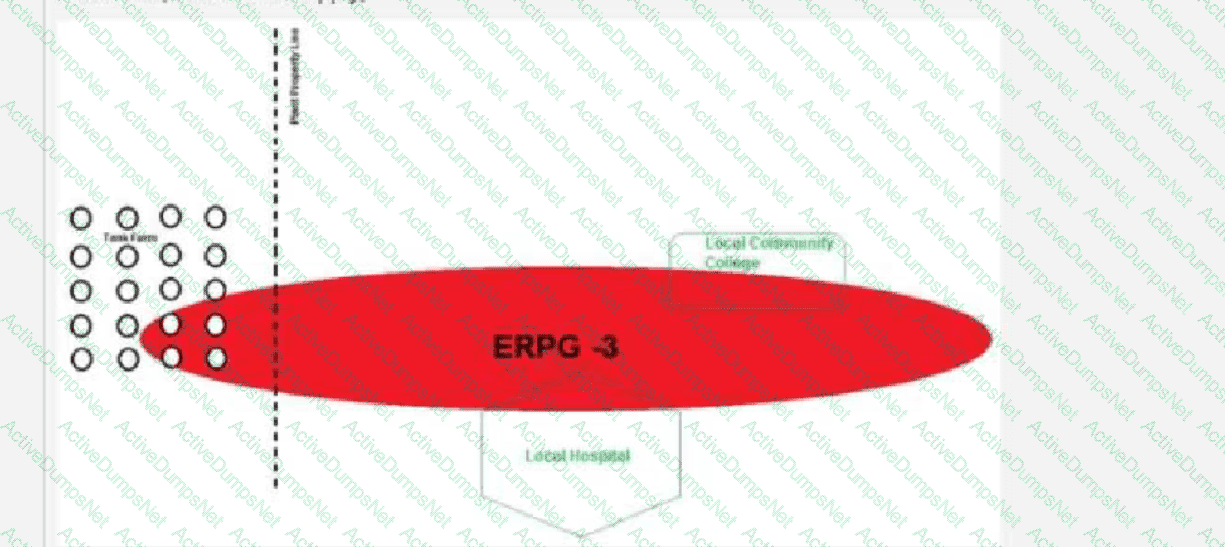
Consider the information shown on the diagram. Which Risk Based Process Safety elements are most relevant to this situation? (select all that apply)
Question # 21

Options:

A.

Auditing

B.

Hazard Identification and Risk Analysis

C.

Emergency Management

D.

Contractor Management

E.

Stakeholder Outreach

F.

Safe Work Practices

Question 22

A facility’s process safety staff does consequence modeling for releases of various toxic substances that the facility handles. Which elements of Risk Based Process Safety would be most likely to use the results of this modeling? (Select all that apply)

Options:

A.

Operational Readiness

B.

Measurement and Metrics

C.

Stakeholder Outreach

D.

Hazard Identification and Risk Analysis

E.

Emergency Management

Question 23

The Management of Change element: (select all that apply)

Options:

A.

Helps maintain safe process operations

B.

Makes the evaluation of the safety impact of a small change optional

C.

Helps avoid inaccuracies in process safety information

D.

Requires communicating approved changes to affected contractors

Question 24

Static Electricity accumulation could be a concern with which of the following fluids? (Select all that apply)

Options:

A.

Sea water

B.

Hexane

C.

Benzene

D.

Toluene

Question 25

Management of Change review should be done: (select all that apply)

Options:

A.

For process related changes

B.

Throughout the process lifecycle

C.

For replacement in kind

D.

To confirm operational readiness

E.

To evaluate compliance with safe work practices

Question 26

Which of the following Risk-Based Process Safety elements are expected to be most directly and frequently involved with the Emergency Management Element? (select all that apply)

Options:

A.

Stakeholder Outreach

B.

Management of Change

C.

Training and Performance Assurance

D.

Hazard Identification and Risk Analysis

Question 27

The maintenance department intends to repair a leaking pipe by applying a temporary leak repair fixture (pipe clamp). What should be considered when designing the proposed pipe clamp? (Select all that apply)

Options:

A.

Viscosity of the material within the pipe

B.

Operating pressure within the pipe

C.

Corrosive properties of materials within the pipe

D.

Weight of the pipe clamp

Question 28

Which of the following conditions could indicate performance problems in a plant’s Asset Integrity program? (select all that apply)

Options:

A.

An operator can identify each piece of equipment on the maintenance schedule and explain what is planned

B.

The metrics report related to Asset Integrity performance is 9 months out of date

C.

The rotating equipment is vibrating excessively

D.

Piping handling hazardous material within a containment area is not on the inspection list

Question 29

Sources of information on previous incidents to be reviewed during a Process Hazard Analysis can include: (select all that apply)

Options:

A.

Site operating experience

B.

Other locations within the company

C.

Publicly available sources such as trade and technical association incident databases

D.

The site safety department

Question 30

Which of the following criteria would justify not performing a periodic review of operating procedures?

Options:

A.

The site has an effective Management of Change program that covers procedures

B.

The process has been indefinitely suspended at this facility

C.

The facility is heavily automated

D.

There are no regulatory requirements to review the procedures

E.

The process is only operated a few times per year

F.

There is very low turnover of plant operators

Question 31

Individuals presenting information on a Risk Based Process Safety element during a Management Review are expected to: (select all that apply)

Options:

A.

Identify accident root causes

B.

Offer potential improvement opportunities for the element, where warranted

C.

Answer questions about the implementation of the element

D.

Present performance metrics for the element

E.

Conduct annual certification of operating procedures

Question 32

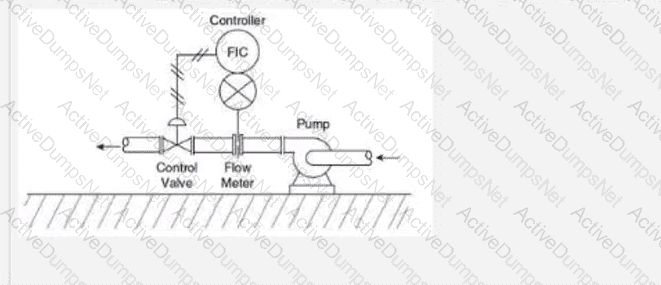
Which of the following statements are correct regarding the flow control loop in the illustration? (Select all that apply)
Question # 32

Options:

A.

The component failure probabilities are multiplied together to determine the overall failure probability for the control loop.

B.

The component reliabilities are multiplied together to determine the overall reliability for the control loop.

C.

The overall failure of the control loop requires failure of all of the components.

D.

The overall failure of the control loop requires failure of only one of the components.

Question 33

During a Risk Based Process Safety audit, one operator states that refresher training should be provided more frequently. What actions should the auditor take? (Select all that apply)

Options:

A.

The auditor should classify this as a finding. No additional information is required

B.

The auditor should record this input, but not classify this as a finding based on a single observation

C.

The auditor should not classify this as a finding because the operator should not have been interviewed

D.

The auditor should interview additional operators before deciding whether to classify the observation as a finding

Page: 1 / 11
Total 110 questions